
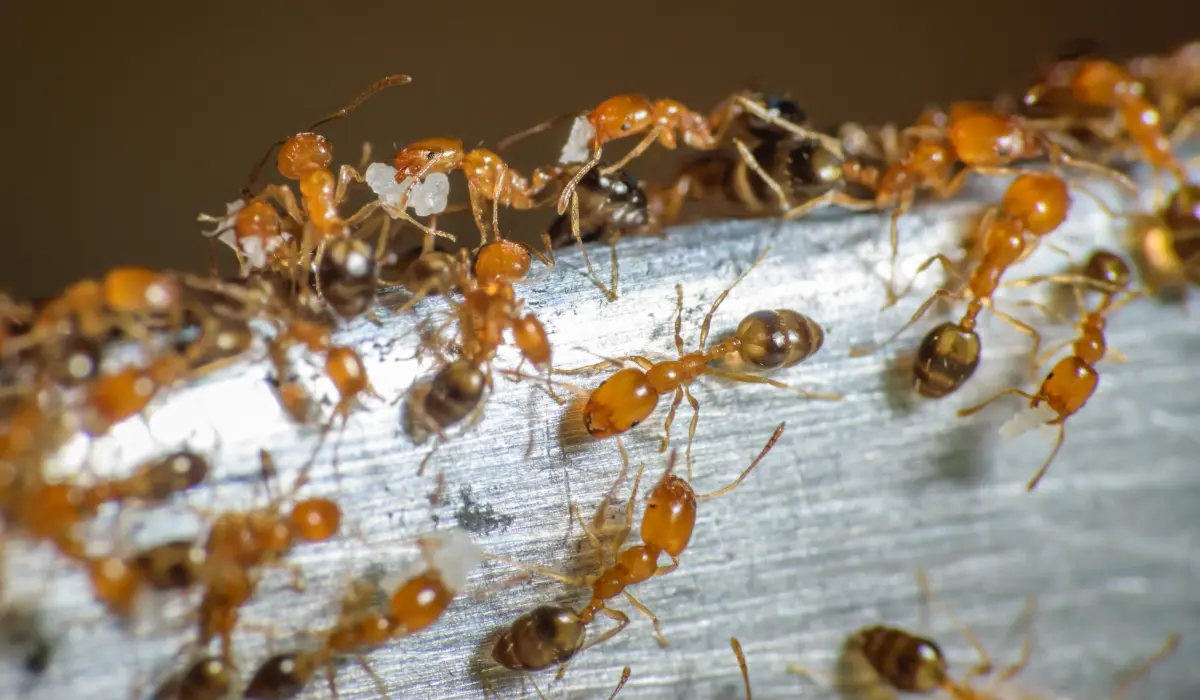
As summer ends and cool weather arrives in Georgia, many homeowners notice ants marching across counters, floors, and pantries. A fall ant problem in Georgia means ants are moving inside, looking for food and shelter as the seasons change.
From Roswell to Atlanta, Smart Solutions Wildlife Removal sees a surge in calls about fire ants, carpenter ants, and other indoor invaders. Even a small trail can grow fast, turning into colonies that are hard to control without professional help.
In this guide, we cover why fall ant problems are common in Georgia, which ants you may see, how they enter homes, why DIY control fails, and how professional pest control can stop infestations for good.
Key Takeaways
- A fall ant problem in Georgia happens as cooler weather drives ants indoors in search of food, water, and shelter.
- Fire ants, carpenter ants, and Argentine ants are the most common invaders, each requiring different treatment strategies.
- DIY sprays and store-bought insecticides rarely solve infestations because they don’t eliminate hidden ant colonies.
- Working with a licensed exterminator provides long-term ant control, fewer pest problems, and lasting protection.
Why fall ant problems are so common in Georgia
Georgia’s fall ant problem occurs due to seasonal changes. As temperatures drop, ants leave outdoor nesting sites to find a warm place indoors. Kitchens, crawl spaces, and basements provide warmth and moisture, making them ideal for ant colonies.
Fire ants and Argentine ants are especially active in the fall. Fire ants build large mounds outdoors, but heavy rain or cool soil often drives them inside. Argentine ants build massive nests around gutters, mulch beds, and foundations, then move indoors to find food.
Unlike pests such as stink bugs or wasps, ants remain indoors and spread colonies. Once inside, they build trails to pantries, pet bowls, or even electrical wiring. Without professional pest control, the problem often lasts into the winter months.
Types of ants Georgia homeowners face in the fall
One reason ant infestations feel overwhelming is the variety of species that invade Georgia homes. Each type has different behaviors and risks:
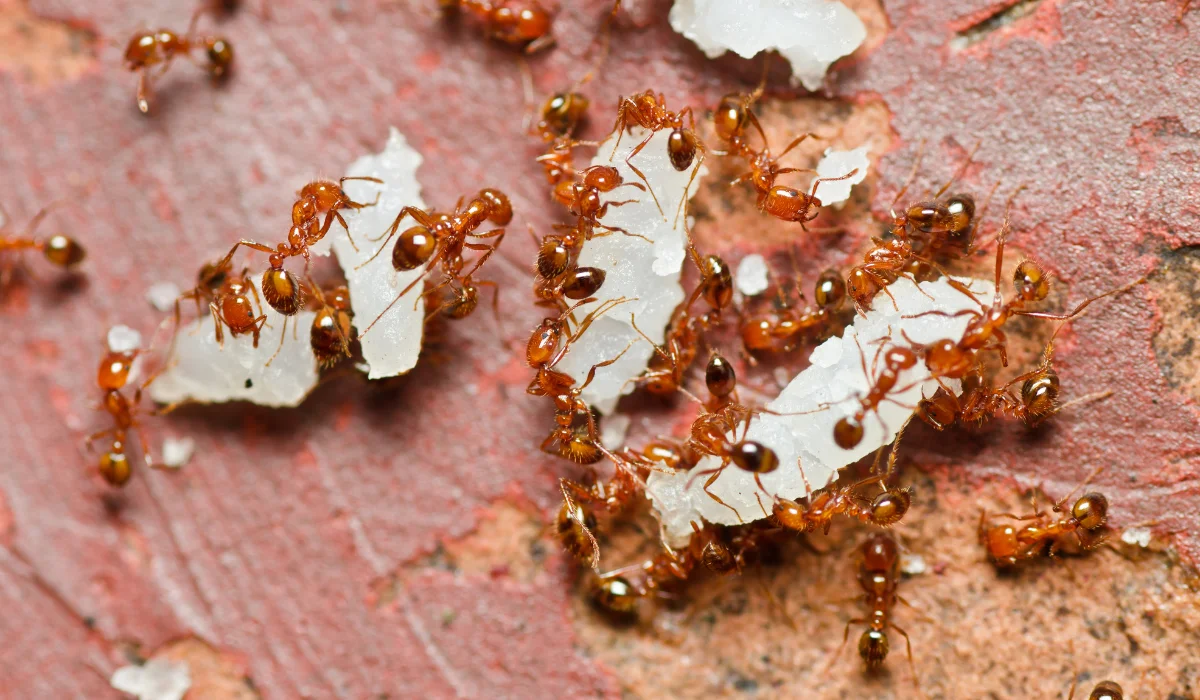
- Fire ants: Aggressive and painful to encounter, especially in yards and near foundations. They can enter homes when outdoor colonies flood.
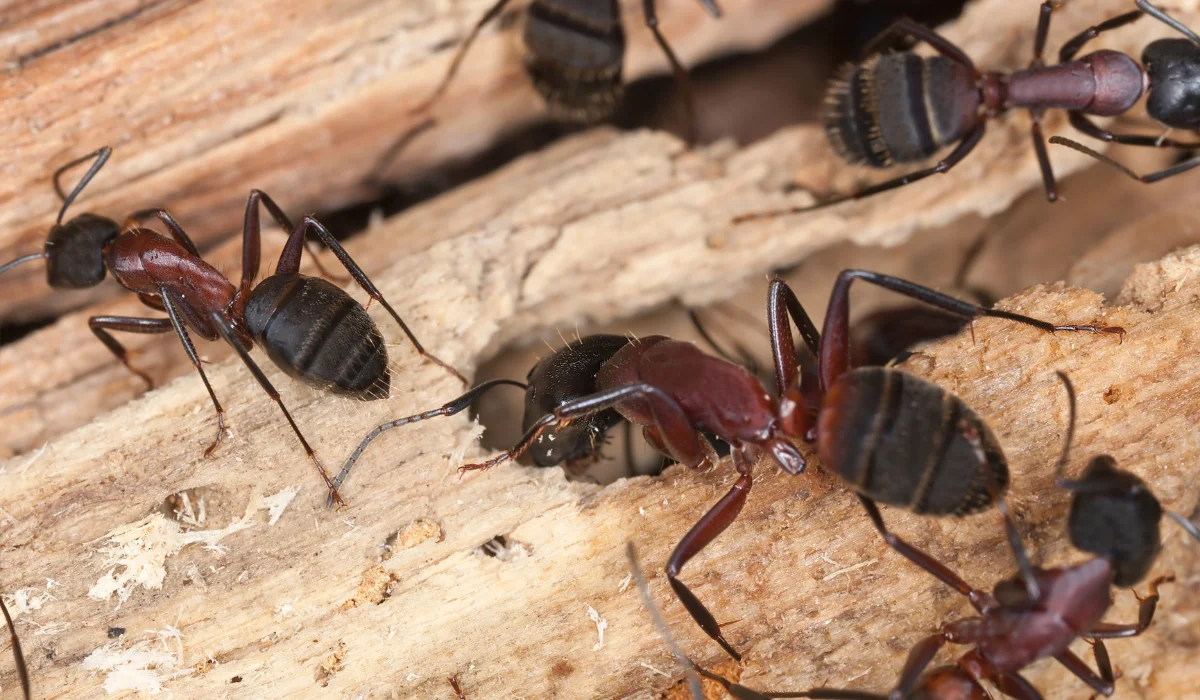
- Carpenter ants: Known for burrowing into wood, which can weaken structures over time if left untreated.
- Argentine ants: Form super colonies that stretch across neighborhoods, making DIY treatments with ant bait far less effective.
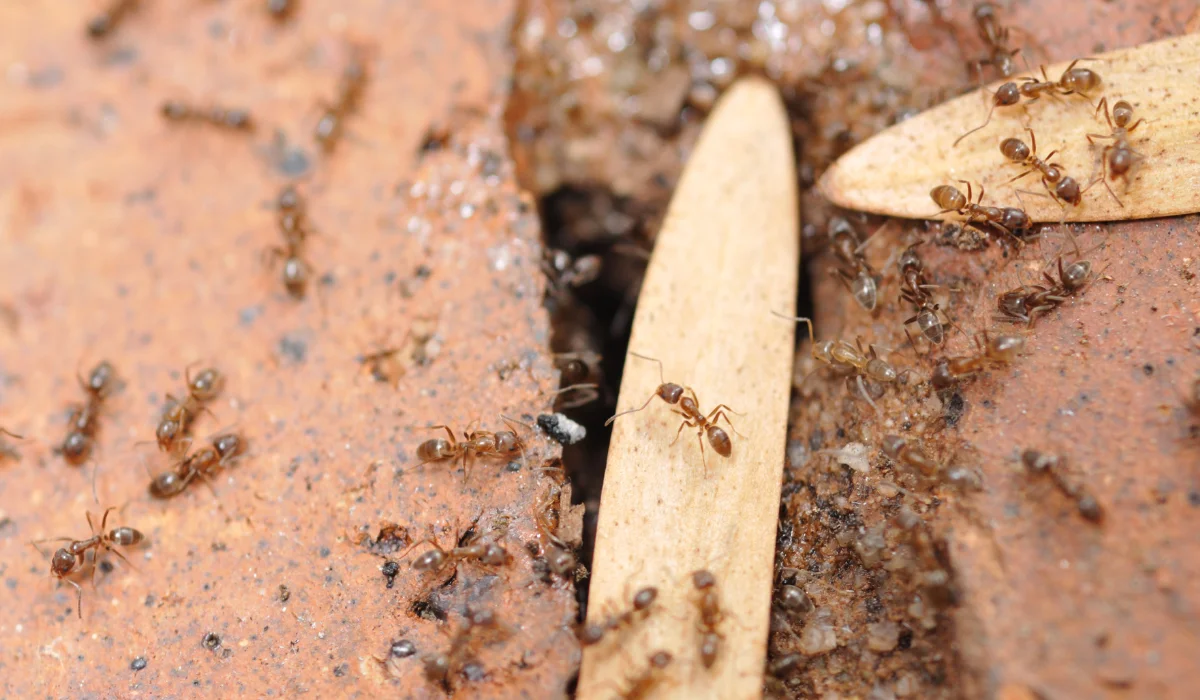
Each species requires a specific approach to ant control. While some respond to baiting, others need direct treatment of nesting sites, along with sealing entry points to keep them out.
How ants enter Georgia homes during cooler weather
Ants search for ways to enter homes as soon as fall temperatures drop. Small cracks in the foundation, gaps around windows, or spaces near plumbing can all let ants inside.
Gutters clogged with leaves or heavy mulch near your foundation give ants cover to enter your home and start colonies unnoticed.
Once inside, ants head for the pantry and kitchen, feeding on sugar, cereal, and pet food. Crawl spaces often shelter them.
Hidden nests may go unnoticed until ants start foraging, turning a minor problem into a full infestation.
You can prevent ants from entering your home by sealing cracks with caulk, repairing damaged weatherstripping, and maintaining gutters. However, these preventive measures can only do so much. If you already have an ant infestation, we recommend calling in professional pest control services for effective management.
Why DIY ant control rarely works long-term
Many Georgia homeowners try DIY methods, but sprays and powders only target visible ants and rarely reach colonies hidden in walls, soil, or crawl spaces.
Ant bait works only when matched to the right species and placed correctly. Otherwise, colonies may split and spread. Store insecticides look like a quick fix, but without a targeted plan, they only provide short-term relief.
For recurring infestations, a licensed exterminator offers a more reliable solution. Professionals apply treatments with precision, identify and eliminate nesting sites, and use long-term strategies to prevent ants from coming back.
Professional pest control solutions for fall ant problems
At Smart Solutions, our SmartGuard plans protect your home from fall pests, including ants, cockroaches, and stink bugs. Each plan starts with a full inspection to find colonies, food sources, and entry points.
Unlike companies that use one-size-fits-all treatments, we create custom plans tailored to your pest problem. Through targeted treatment and prevention, we stop the pests you see and prevent new infestations.
- Targeted baiting systems for Argentine ants and fire ants.
- Residual insecticide treatments along foundations, gutters, and mulch beds.
- Sealing and exclusion services to block entry points.
- Ongoing monitoring and follow-ups to keep Georgia homes pest-free.
For homeowners facing repeated infestations, SmartGuard Plus provides added protection against termites and other high-risk pests.
Making the right ant control choice for your Georgia home
A fall ant problem in Georgia can quickly grow from a few foragers to a full infestation. Knowing why ants move indoors helps you reduce their impact.
Quick fixes aren’t enough for lasting protection. With Smart Solutions Wildlife Removal, you get expert ant control backed by years of Atlanta experience. Our treatments stop infestations and provide lasting protection through the winter.
If you’re ready to get rid of ants and protect your home year-round, contact us today for a customized pest management plan that fits your needs.
FAQs
Why do ants invade Georgia homes in the fall?
Ants come indoors during cooler weather to find food, water, and shelter. Entry points around foundations, windows, and crawl spaces make homes attractive nesting sites.
Which types of ants are most common in Georgia homes?
Fire ants, carpenter ants, and Argentine ants are the most frequent invaders. Each requires a different ant control method for effective elimination.
How can I prevent an ant infestation this fall?
Seal cracks with caulk, maintain clean gutters, and store food in airtight containers. For long-term results, schedule professional pest control services to target ant colonies directly.




