
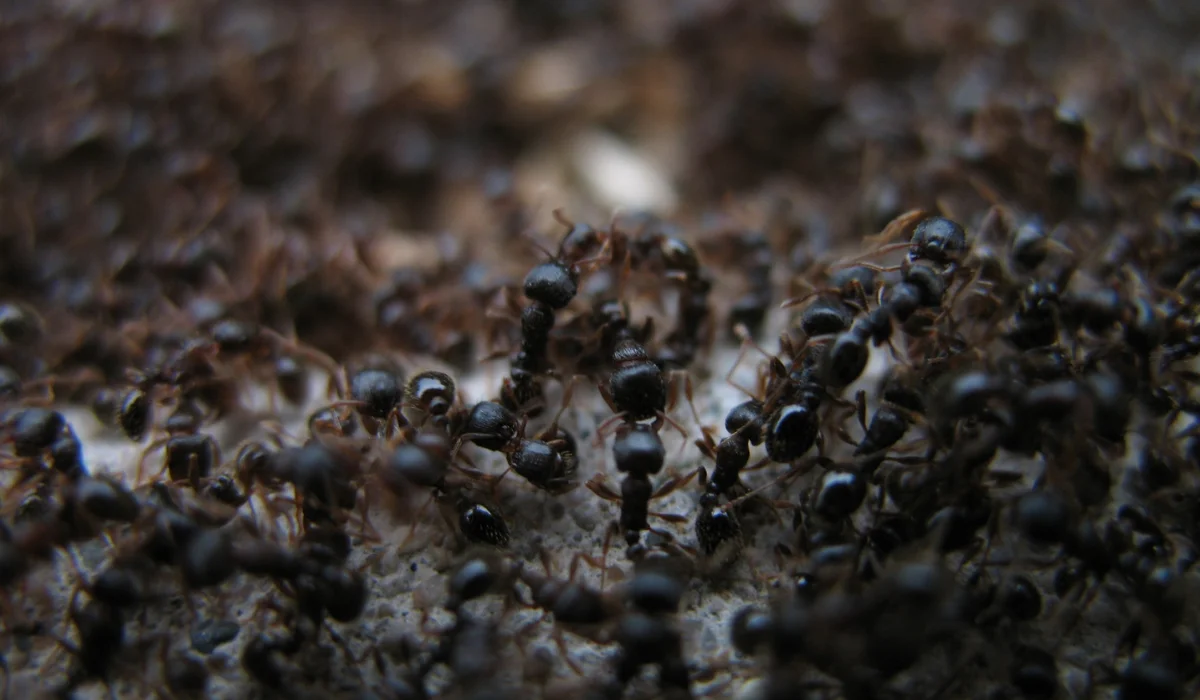
Have you ever squished ants on your kitchen counter, only to see more show up minutes later? You are not alone. Many Georgia homeowners wonder if killing ants attracts more ants.
Yes, killing ants often attracts more ants, and science explains why.
When an ant dies, its body gives off pheromones. These chemicals warn nearby ants of danger or death. Worker ants react fast. They investigate the area and carry the dead ant back to the colony. This behavior can make a small ant problem look much worse.
Knowing why dead ants attract more ants helps you stop the problem. In this guide, you will learn how ants communicate, why DIY methods fail, and how professionals remove ants for good.
Key Takeaways
- Killing ants can release pheromones that attract more ants.
- Worker ants are drawn to dead ants to clean up and protect their colony.
- Cleaning up carcasses and scent trails helps prevent recurring infestations.
- Professional pest control services eliminate the entire colony, not just visible ants.
Video Guide: 10 Common Types Of Ants You May Encounter
Before you try to get rid of ants, it helps to know exactly what kind you’re dealing with. This video shows the most common ant species found in homes and yards. By correctly identifying the ants, you can choose the right treatment method or explain the problem more clearly when you call for professional pest control help.
Why Killing Ants Can Attract More Ants
When you squish ants, their bodies release pheromones that warn the colony of danger. These pheromones act like chemical messages. When worker ants smell them, they rush in to investigate or remove the dead ant.
This cleanup behavior is normal for most ants. They remove dead ants to stop bacteria from spreading in the nest. As they do this, they form trails that lead to your counter, sink, or pantry.
To stop this cycle, you must do more than kill ants. You need to clean the area right away. If pheromones or dead ants remain, more ants will return.
If you live in the Atlanta metro area and see ants every day, professional ant control can help target the entire colony, not just the ants you see.
How Pheromones Control Ant Activity
Pheromones are the main way ants communicate. According to a study published in the National Library of Medicine, ants deposit trail pheromones that guide nestmates to food sources.
Every common ant species in Georgia, including Argentine ants, fire ants, and carpenter ants, depends on them. They use pheromones to create scent trails to food sources, mark safe routes, and signal danger.
If you’re wondering whether killing ants attracts more ants to your home, pheromones are the reason this happens. When an ant dies, it releases a special type of pheromone called a necromone. This chemical tells nearby worker ants that a nestmate has died.
These signals guide worker ants to food, danger, and dead ants you crush. Worker ants follow the trail and carry the dead ant to a midden, which is the colony’s trash area.
These pheromone trails can last for hours. Even after cleaning, the scent can stay on surfaces and attract more ants. Regular cleaners often fail to remove the trail. That is why you need cleaners that break down pheromones.
Professional pest control removes pheromone trails and treats hidden nests to stop repeat problems.
What Happens Inside Ant Colonies When An Ant Dies
Inside a colony, each ant has a specific job. Worker ants gather food, protect the queen ant, and care for young ants. When an ant dies, worker ants act fast to keep the nest clean.
Worker ants pick up the dead ant and place it in the midden with others. This process helps stop disease and keeps the colony clean.
When ants die outside the nest near counters or walls, cleanup ants follow the scent. This cleanup behavior increases ant activity inside your home.
When you kill visible ants, you remove only a small part of the colony. The rest of the colony keeps growing. Real ant control targets the entire colony by addressing the queen, workers, larvae, and nests hidden in walls or soil.
Why DIY Methods Usually Fail
It’s tempting to try a few DIY tricks to kill ants fast. According to a Texas A&M guide, you can help control ant infestations by removing their food sources, cleaning up spilled food, and storing food in airtight containers.
Some homeowners mix borax with sugar, while others use vinegar or essential oils. These methods may reduce visible ants, but they do not fix the main problem.
Borax can kill ants, but strong mixes kill them before they reach the nest. Essential oils like peppermint or lemon repel ants but do not reach the queen or nest.
Other DIY methods include diatomaceous earth, which dries out ants only where you apply it. Without reaching hidden nests, ants will return.
Professional exterminators use a different approach. They use non-repellent bait that worker ants think is food. These ants carry the bait back to feed the colony, including the queen. Over time, this destroys the whole colony, not just the ants you see.
How To Stop Attracting More Ants After Killing Them
You can reduce ant activity by acting right after killing visible ants. Start by cleaning the area right away. Wipe countertops and floors with a strong cleaner or mild bleach to remove pheromones.
Pick up dead ants and place them in a sealed outdoor trash bin. Next, check your home for ant entry points. Ants enter through cracks in walls, window sills, and door frames. Seal these openings with caulk.
Remove or protect food that attracts ants. Store dry food in airtight containers, wipe crumbs, and fix leaks. Even small drips attract ants.
If ant trails return, use professional ant bait systems. Unlike sprays, ant bait spreads through the nest and reaches the queen.
Why Ant Identification Matters
Different ant species behave differently, so accurate identification is essential. Carpenter ants burrow into wood, while Argentine ants form large colonies across neighborhoods. Fire ants build outdoor mounds but enter homes through foundation cracks.
Each ant type needs a different treatment. Using a general repellent might scatter them, but it will not remove the queen.
Local pest control experts in Georgia accurately identify ant species. After identification, experts choose the right bait and treatment plan.
When To Call Professional Pest Control Services
If DIY methods fail or ant trails return daily, it is time to call for help. Signs you need professional pest control include:
- Ants return within days after cleaning.
- More than one ant type appears in your home.
- Carpenter ants damage decks or baseboards.
- Finding many dead ants near baseboards or windows.
- Finding ant nests or growing middens outdoors.
Professional pest control does more than spray chemicals. Technicians inspect, identify, treat, and monitor the problem. Service plans can include ant control, routine inspections, and coverage for pests like termites, spiders, and roaches.
Making The Right Ant Control Choice For Your Georgia Home
Seeing ants again and again usually means the problem runs deeper than what you can see. Long-term control depends on stopping the colony that keeps sending workers back into your home. When treatment focuses on the source, ant activity can eventually slow and remain under control.
At Smart Solutions Wildlife Removal, we provide ant control services across the Atlanta area with a focus on accurate identification and targeted treatment. This approach helps address the root cause of the problem rather than repeating short-term fixes.
Contact us today to schedule an inspection and take the next step toward lasting ant control.
FAQs
Why do dead ants attract more ants?
When an ant dies, it releases pheromones that alert worker ants to remove it. These pheromones attract more ants until the scent fades or you remove it.
How can I stop ants from coming back into my Atlanta home?
Clean up food and water sources, seal entry points, and use professional ant control treatments. Regular SmartGuard service helps prevent recurring infestations.
Which ant species are most common in Georgia?
Georgia homeowners often deal with fire ants, carpenter ants, and Argentine ants. Each type behaves differently and requires a specific pest control method for complete elimination.




