
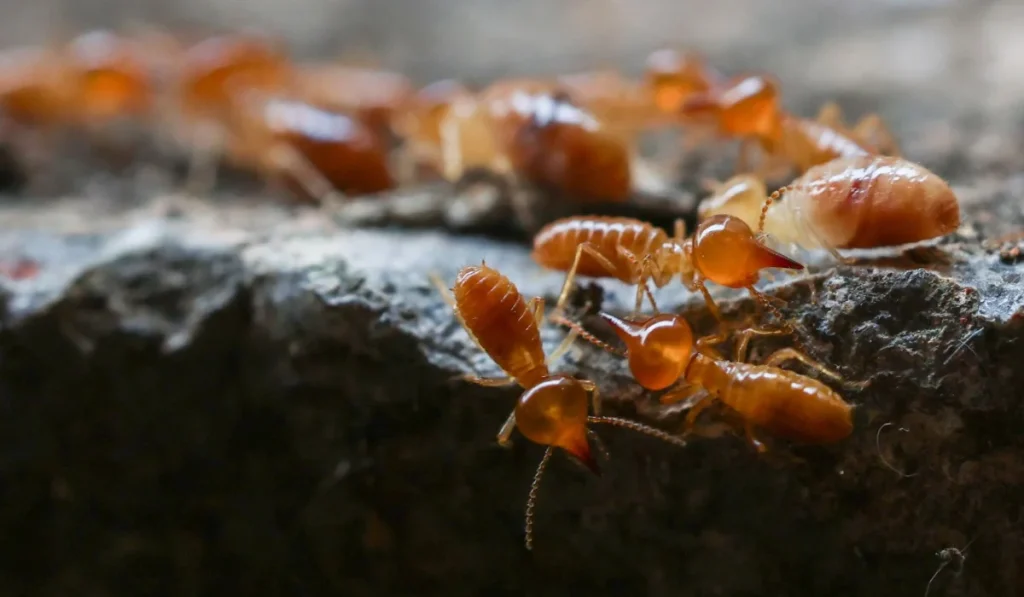
If you’ve found pale insects in damaged wood or a pile of wings near a window, you’re likely asking, “What do termites look like in Georgia?” Worker termites are small, creamy white, and wingless. Soldiers have larger heads and strong jaws, while reproductive termites, called swarmers, are usually dark brown or black with long wings. In Metro Atlanta, subterranean termites are a particular concern because they can enter homes from the soil and feed inside wood without being easily noticed. Knowing how to identify these insects, distinguish them from flying ants, and recognize early damage can help you decide when your home needs a termite inspection.
What Do Termites Look Like in Georgia?
Termites look different depending on their job within the colony. Some spend their lives feeding and maintaining tunnels, while others defend the colony or leave to reproduce. Knowing these differences helps you identify insects found around your foundation, crawl space, or windows.
Subterranean termite colonies contain three recognizable groups: workers, soldiers, and swarmers. Each has six legs and antennae, but their coloring, head shape, and wings provide useful identification clues.
Worker Termites: Creamy White and Wingless
Worker termites have soft, pale bodies that range from whitish to cream-colored. They’re small, often comparable in length to a grain of rice, and don’t have wings. Their antennae are straight and beadlike.
Workers collect food, feed other colony members, and maintain the tunnels that connect their nest to wooden materials. You usually won’t find them crawling across an open floor because they spend most of their time underground or inside protected galleries.
If you lift a damp piece of firewood or expose damaged wood, you may see workers moving together. Their pale coloring, soft bodies, and location within the wood can help distinguish them from ants and other insects.
Soldier Termites: Darker Heads and Large Jaws
Soldier termites are similar in general appearance to workers, but their heads are noticeably larger and often yellowish brown. They also have prominent jaws, called mandibles, that help them defend the colony.
Soldiers are less likely to appear alone. They typically stay near workers within mud tubes and wooden galleries, where they respond to disturbances or threats from other insects.
Finding soldiers alongside pale workers provides another clue that you’ve uncovered termite activity. Identifying the exact species, however, requires more than head color or jaw shape.
Termite Swarmers: Dark Bodies With Long Wings
Swarmers are reproductive termites that leave established colonies to mate and form new ones. Eastern subterranean termite swarmers usually have dark brown or black bodies and four wings extending beyond their abdomens. Other species, including Formosan termites, can have lighter-colored swarmers.
Swarmers become visible during reproductive flights. Around Atlanta homes, they may gather near windows, doors, and exterior lights.
After landing, swarmers shed their wings. If you notice several winged insects or piles of similarly sized wings indoors, photograph the evidence and note exactly where it appeared.
What Types of Termites Are Found in Georgia?
Georgia has several termite species, but subterranean termites are the primary concern for Metro Atlanta homeowners. Eastern subterranean termites are widespread in the state, while Formosan subterranean termites are another species found in Georgia. Drywood termites are also present, although they are less commonly encountered in the Atlanta area.
These termites differ in where they establish colonies, how they reach wooden structures, and the evidence they leave behind. Knowing those differences can help you recognize a potential infestation without assuming every type of termite behaves the same way.
Eastern Subterranean Termites
Eastern subterranean termites are among the most common wood-destroying termites in Georgia. Their workers have creamy white bodies, while soldiers have yellowish-brown heads and prominent jaws. Reproductive swarmers are typically dark brown or black with long, similarly sized wings.
These termites establish colonies in soil and travel into structures through foundation cracks, plumbing openings, and other concealed entry points. Workers construct mud tubes to maintain moisture as they move between their colony and wooden food sources.
In Metro Atlanta homes, you may find these tubes along crawl-space walls, foundation piers, or areas where wooden framing meets masonry. Because workers often remain hidden inside wood, mud tubes or discarded swarmer wings may be the first visible evidence.
Formosan Subterranean Termites
Formosan subterranean termites are an invasive species established in parts of Georgia. They are not as broadly encountered across Metro Atlanta as eastern subterranean termites, so finding subterranean termite activity doesn’t automatically mean Formosan termites are responsible.
Formosan workers are pale and resemble other subterranean termite workers. Their soldiers typically have rounded, orange-brown heads, while winged reproductives are generally yellowish brown rather than the darker coloring associated with eastern subterranean swarmers.
These termites can establish large colonies and feed on structural wood. Like other subterranean termites, they use protected pathways, although Formosan termites can also establish aboveground nests when sufficient moisture is available.
Accurate identification matters because their nesting behavior may affect where inspectors search for colony activity.
Drywood Termites
Drywood termites differ from subterranean termites because they can establish colonies entirely inside wood without maintaining contact with soil. They are less commonly associated with Metro Atlanta infestations than subterranean termites.
Instead of a distinct worker caste, drywood termite colonies have immature termites that perform many feeding and maintenance tasks. Soldiers have enlarged heads and strong jaws, while reproductive termites develop wings for dispersal.
One distinguishing sign is frass, which consists of small, hard fecal pellets. Drywood termites push these pellets out of their galleries, sometimes leaving piles beneath infested trim, furniture, or other wooden materials.
Unlike subterranean termites, drywood termites don’t construct soil-based mud tubes to reach their food sources. Finding pellet-like droppings instead of mud tubes can help guide identification, although a professional inspection is needed to confirm the termite type.
How to Tell Different Types of Georgia Termites Apart
The easiest way to distinguish termite species in Georgia is to examine their appearance and the evidence they leave behind. Workers from different subterranean species often look alike, so soldiers, swarmers, mud tubes, and droppings provide more useful identification clues.
Eastern subterranean termites usually have dark brown or black swarmers, while Formosan termite swarmers are typically yellowish brown. Their soldiers also differ. Eastern subterranean soldiers have elongated, yellowish-brown heads, while Formosan soldiers have more rounded, orange-brown heads.
Drywood termites are often easier to distinguish by their nesting habits and droppings. Rather than building mud tubes from the soil, they live inside wood and can leave small piles of hard, pellet-like frass beneath infested areas.
| Termite Type | What to Look For | Common Evidence |
| Eastern subterranean | Cream-colored workers, soldiers with elongated heads, dark brown or black swarmers | Mud tubes, discarded wings, damaged wood |
| Formosan subterranean | Pale workers, soldiers with rounded orange-brown heads, yellowish-brown swarmers | Mud tubes, damaged wood, possible aboveground nesting in moist locations |
| Drywood | Termites living within wood, with winged reproductives varying in color by species | Hard, pellet-like droppings, discarded wings, galleries inside wood |
For homeowners, the location of the evidence is often more useful than the insects’ color. Mud tubes running up a foundation strongly suggest subterranean termites, while pellet-like droppings beneath wooden trim or furniture may indicate drywood termites.
These clues aren’t enough to confirm the exact species. Different termites can share similar physical features, and wood-boring insects can leave debris that resembles termite evidence. If you find suspicious insects, preserve a specimen or take clear photographs of the insects and surrounding damage.
How to Tell Flying Ants From Termites
Flying ants are among the insects most frequently mistaken for termite swarmers. Both can appear suddenly around windows or porch lights, and both may shed their wings after mating.
The clearest differences are in their antennae, waist shape, and wing lengths. Looking closely at these features is more useful than relying on color alone.
Termite Swarmers vs. Flying Ants
| Physical Feature | Termite Swarmers | Flying Ants |
| Antennae | Straight or beadlike | Elbowed |
| Waist | Broad, without a sharp constriction | Narrow and pinched |
| Wings | Front and hind wings similar in length | Front wings usually longer |
| Body shape | Relatively uniform through the waist | Clearly narrowed between body sections |
| Wing shedding | Shed wings after swarming | Can also shed wings after mating |
If you see a dark insect with a pinched waist and elbowed antennae, it’s more consistent with a winged ant. A broad waist and two pairs of similar-length wings point toward a termite swarmer.
The distinction matters because flying ants in Georgia may appear in the same places as termite swarmers but don’t necessarily indicate the same problem.
What Discarded Wings Mean
Termite swarmers leave their wings behind after dispersing, sometimes creating noticeable piles on windowsills or floors. Wings alone don’t confirm a termite colony, however, since winged ants can leave similar evidence.
Try to find an intact insect and examine its body shape. If you can’t identify it, save a specimen in a small container or take a clear photograph that shows the wings and antennae.
The EPA’s termite identification and control guidance provides information on termite recognition and management.
What Are the Early Signs of Termites in a Georgia Home?
You don’t have to see live termites to suspect an infestation. Subterranean termites often work inside wooden materials or behind finished surfaces, leaving only small clues where they travel or feed.
Mud tubes, discarded wings, weakened wood, and certain types of droppings are worth investigating. The type and location of the evidence help determine which termite group may be responsible.
Mud Tubes on Foundations and Crawl-Space Walls
Subterranean termites build narrow, earth-colored tunnels from soil and other materials. These tubes help maintain the moist environment workers need as they move between the colony and a food source.
Look along concrete block foundations, crawl-space piers, and the edges where walls meet the ground. Tubes may extend vertically up masonry or disappear behind siding and wooden trim.
Don’t scrape away suspected mud tubes before documenting them. A damaged or apparently empty tube doesn’t mean the termites have left, and the original location can help an inspector trace their travel route.
Wings Near Windows, Doors, and Baseboards
After a swarm, termite wings may collect beneath windows, along baseboards, or near exterior doors. A cluster of wings in one room is worth noting, particularly if you also find mud tubes or wood damage nearby.
Indoor swarmers may have emerged from a colony associated with the structure, or they may have entered from outside. The location and surrounding evidence help distinguish these situations.
Hollow Wood, Damaged Trim, and Uneven Floors
Termites feed inside wood and can leave a thin outer layer intact. Affected trim may feel soft, break apart easily, or sound hollow when tapped. In more advanced cases, you may notice damaged baseboards, weakened floor supports, or changes in flooring.
Blistered paint and distorted wood can also result from water intrusion. Termites shouldn’t be assumed to be the cause until the material has been examined.
Recognizing damage early is one part of protecting your home from termite damage in Georgia, especially where moisture and concealed wooden framing occur together.
Termite Frass and Other Wood Debris
Frass is the fecal material produced by insects. Drywood termites can leave small, hard pellets that collect beneath infested furniture, trim, or other wood.
Subterranean termites generally don’t leave these distinct piles. They use soil, fecal material, and other substances in their protective tubes and galleries.
Fine sawdust or wood particles may also come from carpenter ants or wood-boring beetles. Photograph the debris and inspect its source rather than identifying the insect from the material alone.
Where Should Metro Atlanta Homeowners Check for Termites?
The first visible clues often appear where wooden materials are close to soil or where termites can move into a building without crossing an exposed surface. Those locations vary according to the home’s foundation and construction.
You can check accessible areas during routine home maintenance, but avoid entering confined crawl spaces or touching damaged structural supports when conditions appear unsafe.
Crawl Spaces and Foundation Piers
Crawl spaces contain wooden joists and beams that support the floor above. Their proximity to soil makes them relevant places to look for subterranean termites, particularly where standing water, plumbing leaks, or damp soil are present.
Check accessible foundation walls and support piers for mud tubes. Look for wooden debris left on the ground, damaged supports, and framing that touches soil.
A professional inspector can assess areas that are difficult to reach and distinguish termite evidence from moisture-related deterioration.
Slab Foundations and Garage Edges
Concrete slabs don’t prevent termites from entering a house. Workers may find passage through cracks, expansion joints, or openings surrounding plumbing and utility lines.
In slab-built homes, pay attention to garage wall edges, wooden baseboards, and areas where plumbing passes through floors or walls. Interior damage may appear some distance from the original entry point.
Brick Veneer and Exterior Wood Contact
Termites can travel behind brick veneer, siding, and other finishes that conceal the foundation. Landscaping, raised soil levels, or stored materials may also obstruct the areas you’d otherwise inspect.
Wooden posts, steps, and trim in direct contact with soil offer access to cellulose. Reducing that contact and keeping foundation edges visible can make activity easier to detect.
Why Georgia Homes Face Termite Risk Throughout the Year
Subterranean termite colonies depend on favorable moisture and temperature conditions. Georgia’s humid climate and recurring rainfall can help create those conditions, especially around foundations and poorly drained areas.
Termite swarming is seasonal, but underground colonies can remain active in protected environments outside the spring months. A home without visible swarmers can still have termite activity.
How Soil Moisture and Drainage Affect Termites
Subterranean termites use moist soil and protective tubes to avoid drying out. Water collecting near a foundation, leaking plumbing, and damp crawl spaces can create conditions that support their movement and survival.
Pay attention to downspouts that discharge beside the house, air-conditioning condensation that pools near the foundation, and plumbing leaks under the floor. Correcting these issues also helps prevent wood deterioration.
Wood debris, buried stumps, and firewood stored against the house provide additional cellulose sources nearby. Moving these materials away from structural wood reduces some of the conditions associated with termite activity.
The University of Georgia Extension offers regional educational information on termite biology and conditions affecting pest activity in Georgia.
When Do Termites Swarm in Georgia?
Eastern subterranean termites commonly swarm during spring, often between March and May in Georgia. Exact timing depends on the species and local weather conditions.
Warm weather and sufficient moisture can encourage reproductive flights. You may notice winged insects near outdoor lights or find discarded wings after a swarm.
Winter doesn’t guarantee an absence of termites. Workers can remain active in sheltered soil or structural spaces when conditions allow, even though swarmers aren’t visible.
What Should You Do if You Find Termites?
If you’ve discovered suspicious insects, wings, or mud tubes, document what you’ve found before disturbing the area. Clear photographs and the location of each sign can help a professional determine where to investigate.
If possible, preserve an intact insect for identification. Avoid spraying household products into mud tubes or opening damaged walls to search for a colony. Killing visible insects doesn’t establish whether the remaining colony has been controlled.
How a Professional Termite Inspection Works
An inspector examines accessible areas for termite activity, entry points, damage, and building conditions that may contribute to the problem. This can include foundation walls, crawl spaces, plumbing penetrations, and other exposed structural features.
The findings help determine whether the evidence indicates an active infestation, previous activity, or another source of wood damage. The inspector can then recommend a treatment plan suited to the property rather than selecting a method based on appearance alone.
Termite Treatment and Ongoing Protection
Smart Solutions Wildlife Removal and Pest Control provides termite treatment options for Metro Atlanta properties, including liquid foundation treatments, sub-slab applications, and termite bait stations.
Soil treatments address potential entry routes around or beneath a structure. Bait stations provide an approach to managing subterranean termite colonies through strategically installed stations and ongoing servicing. Localized treatments may be necessary when activity is found in interior structural areas.
Smart Solutions also uses the Trelona termite bait system and offers continuing protection options. The treatment selected depends on the inspection results, construction features, and the terms of the service agreement.
What Homeowners Can Do Between Inspections
Keep gutters clear, repair leaking pipes, and direct roof runoff away from the foundation. Where practical, correct damp crawl-space conditions and avoid allowing soil or mulch to cover the visible foundation edge.
Store firewood away from the house, remove unnecessary wood debris, and inspect accessible areas for new mud tubes or damaged wood. These measures help reduce favorable conditions, although they don’t replace professional treatment when termites are present.
Protect Your Metro Atlanta Home With a Professional Termite Assessment
Understanding what termites look like in Georgia gives you a practical starting point for identifying a problem. Pale workers, large-headed soldiers, winged swarmers, and the evidence they leave behind can help you recognize suspicious activity before more damage becomes visible.
Annual professional inspections are a sensible part of termite prevention, particularly for homes with previous activity, damp crawl spaces, or concealed foundation openings. A qualified technician can evaluate visible evidence, examine accessible entry points, and recommend treatment or monitoring based on the property’s condition.
Since 2008, Smart Solutions Wildlife Removal and Pest Control has helped homeowners and businesses across Metro Atlanta manage pests and nuisance wildlife. The company offers free termite assessments, customized treatment options, and ongoing termite protection through SmartGuard Plus. You can also find information about local service availability in Roswell and surrounding communities.
If you’ve found discarded wings, mud tubes, or suspicious wood damage, contact Smart Solutions to schedule a free termite assessment. You’ll get a professional evaluation of the evidence and guidance on the next steps for your property.




