
Seeing wasps around your home can feel scary, especially when nests appear under eaves or inside attics. Many Georgia homeowners mistake harmless insects for aggressive wasps, which can lead to the wrong response. Knowing what type of wasp you see helps you stay safe and choose the right solution.
Smart Solutions Wildlife Removal helps homeowners across Metro Atlanta, Roswell, and Marietta with wasp control in Georgia, including paper wasp nests on porches and yellowjacket nests in wall voids. Our licensed pest control specialists identify each wasp species and remove nests safely.
In this guide, you will learn how to spot common wasps in Georgia, how each type acts, and when to call a pest control professional.
Key Takeaways:
- Georgia is home to paper wasps, hornets, bald-faced hornets, and yellowjackets.
- Some wasps help plants, while others defend their nests aggressively.
- Paper wasps build open nests under eaves and attics, while yellowjackets and hornets create enclosed or underground nests.
- Professional pest control offers a safe way to remove wasp nests, especially in high or hard-to-reach areas.
Video Guide: What’s the Difference Between Bees, Wasps, Yellow Jackets, and Hornets?
This video helps you tell the difference between helpful honeybees and stinging insects that you may need to remove. Knowing what’s buzzing around your home helps you decide when it’s time to call Smart Solutions Wildlife Removal for wasp control.
Identifying the Most Common Wasps in Georgia
Georgia’s warm and humid climate attracts many types of wasps. The most common types include paper wasps, hornets, and yellowjackets. You may also see cicada killer wasps digging in lawns during late summer.
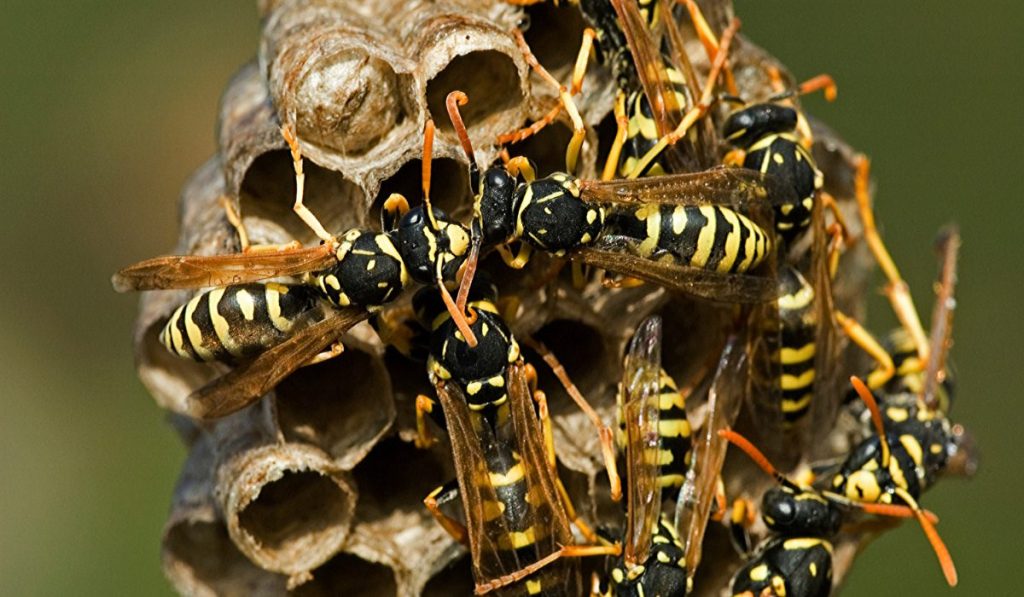
Paper wasps have thin bodies with reddish-brown or yellow markings. Hornets, like the bald-faced hornet, have black bodies with white or yellow markings. Yellowjackets are smaller and show bright yellow and black stripes.
Each type builds a different nest. Paper wasps make open comb nests. Hornets build enclosed gray nests. Yellowjackets hide nests underground or inside wall voids.
If you notice steady wasp activity near your home, our team can identify the species and remove the nest before it grows larger.
Paper Wasps: The Most Common Southern Stingers
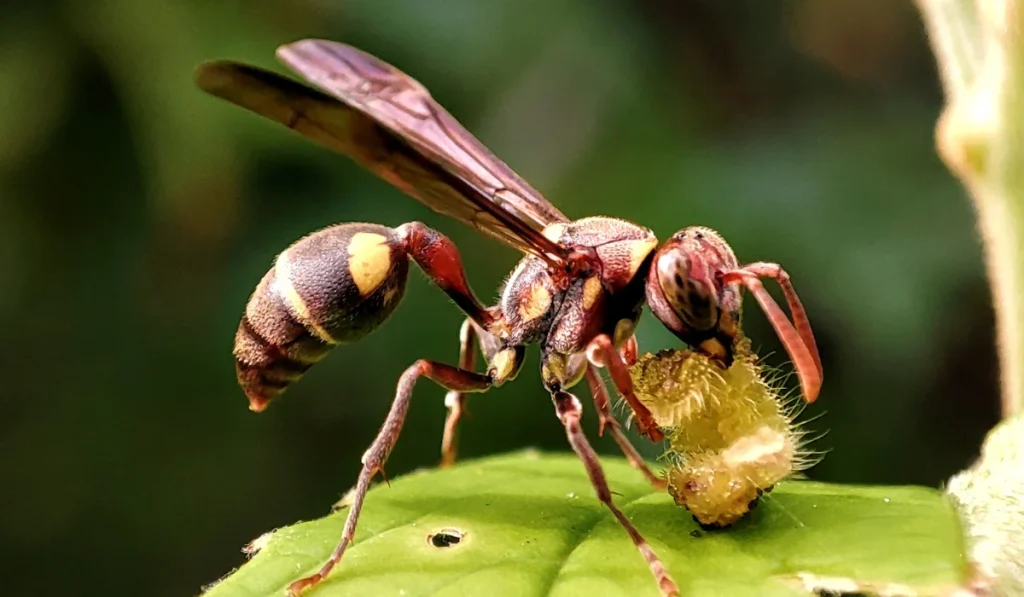
Paper wasps are among the most common wasps in Georgia. These wasps build nests from chewed wood fibers, forming open, umbrella-shaped structures under eaves, decks, and porch ceilings. Residential neighborhoods frequently host northern paper wasps and other Polistes species.
Paper wasps act less aggressively than hornets or yellowjackets, but they will sting if people get too close. Their stings cause pain and swelling, similar to bee stings. Because these insects build nests in high places, professionals can remove them more safely.
Our team treats paper wasp nests and applies protective treatments around eaves and attics to help stop new colonies from forming.
Hornets and Yellowjackets: Aggressive Wasps You Don’t Want to Disturb
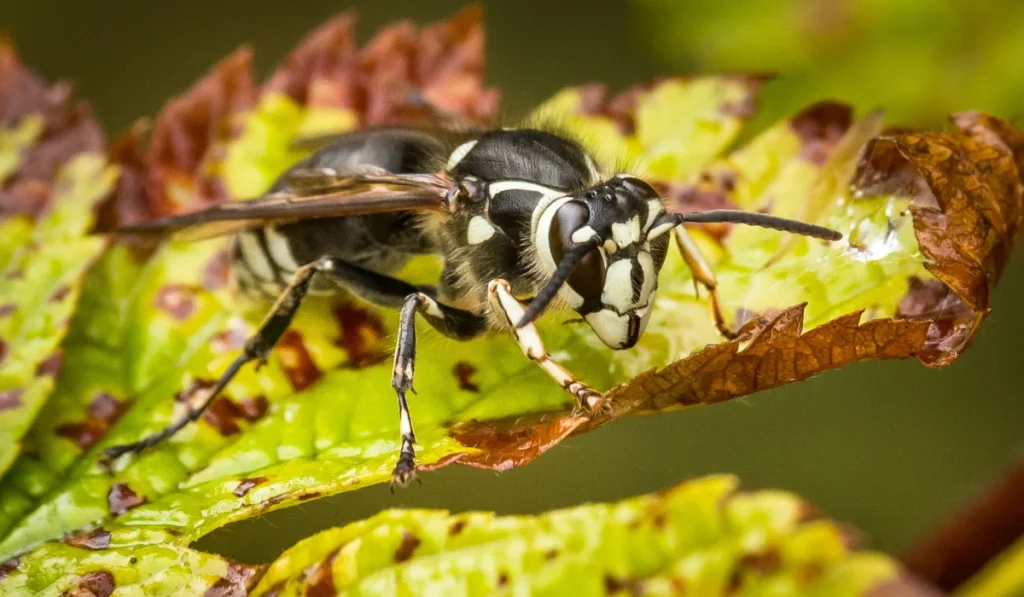
Hornets are large wasps that act aggressively when threatened. The bald-faced hornet has a black body with white markings. The European hornet has reddish-brown and yellow markings. Both build nests in trees, bushes, and sometimes attics.
Yellowjackets are smaller but more aggressive. The southern yellowjacket, common across Georgia, builds nests underground or inside wall voids. When disturbed, they swarm and sting many times.
According to Alabama A&M University and Auburn University Extension, yellowjackets often attack when someone accidentally steps near or disturbs an underground nest, posing a serious risk to people and pets.
Our technicians treat these infestations with professional-grade products that reach deep into hornet and yellow jacket nests for complete elimination. We then remove the nest once all activity has stopped.
Beneficial Wasps and Their Role in the Ecosystem
Georgia’s wasps, identified
Many homeowners mistake a beneficial insect for an aggressive wasp, then pick the wrong response. Here is how to tell the common stingers apart.
Yellowjacket
Bald-faced Hornet
European Hornet
Paper Wasp
Cicada Killer
Beneficial Wasp
Not every wasp is a pest. Some wasps help control caterpillars, flies, and other insects. This natural control supports gardens and reduces pest problems.
Research from Princeton University Press indicates that adult wasps also feed on nectar and other natural sugars, such as honeydew, which supports plant growth when flowers are scarce.
Pollinators such as honeybees also share spaces with wasps, but are not pests. Honeybees help plants grow and are essential for Georgia’s crops and flowers. We never treat honeybees, protecting these important pollinators while focusing only on nuisance or aggressive wasp species.
If you are unsure whether you see bees or wasps, our trained team can inspect your property and explain what is happening.
When to Call for Professional Wasp Control in Georgia
If wasps keep entering one spot or you see small nests under your roof, call for help. DIY sprays often make wasps more aggressive. Treating nests in attics or wall voids can also be unsafe.
We provide complete wasp control services, including:
- Identifying wasp species and nest locations
- Safe treatment inside eaves, attics, and wall voids
- Removing treated paper wasp, hornet, and yellowjacket nests
- Follow-up visits to help stop future infestations
Our SmartGuard and SmartGuard Plus pest control plans include coverage for stinging insects, termites, and other common Georgia pests.
Protecting Your Home From Wasps Year-Round in Georgia
Wasps build nests throughout the warmer months as part of their life cycle, but prevention starts early. In spring, check for small nests under eaves, deck boards, or patio furniture.
Keeping wasps out of your attic starts with sealing vents, repairing screens, and closing small openings near the roofline before nests can form. Seal gaps around rooflines and keep trash bins tightly closed to prevent yellowjacket attraction.
By late summer, wasps become more active and aggressive. Signing up for routine pest control services helps stop nests before they form. Our technicians inspect voids, crawl spaces, and attics during each visit to ensure no stinging insects are settling in.
Our professional pest control services help keep your home protected season after season.
Making the Right Wasp Control Choice for Your Georgia Home
Whether you’re dealing with paper wasps near your Georgia home’s porch or a large hornet colony in your trees, you should never handle wasps alone. The safest and most effective way to remove them is through professional pest control.
At Smart Solutions Wildlife Removal, we use proven, humane methods that remove hornets, yellowjackets, and other stinging insects without harming pollinators or damaging your property.
Contact us today to schedule your inspection and get lasting wasp control for your Georgia home.
FAQs
How do I know if wasps in my Georgia home are dangerous?
Aggressive wasps, such as hornets and yellowjackets, defend their nests fiercely. If you see them flying in and out of one area or reacting when you get close, stay away and call Smart Solutions Wildlife Removal for professional pest control services.
Are cicada killer wasps harmful in Georgia?
Cicada killers look scary, but rarely sting. They dig holes to lay eggs and catch cicadas for food. Although they aren’t aggressive, their digging can damage lawns, so Smart Solutions Wildlife Removal can treat the area if they become a nuisance.
When is wasp season in Georgia?
Most wasp activity begins in spring and peaks in late summer when colonies are largest. Early prevention with routine wasp control helps keep nests from forming around your home.




