
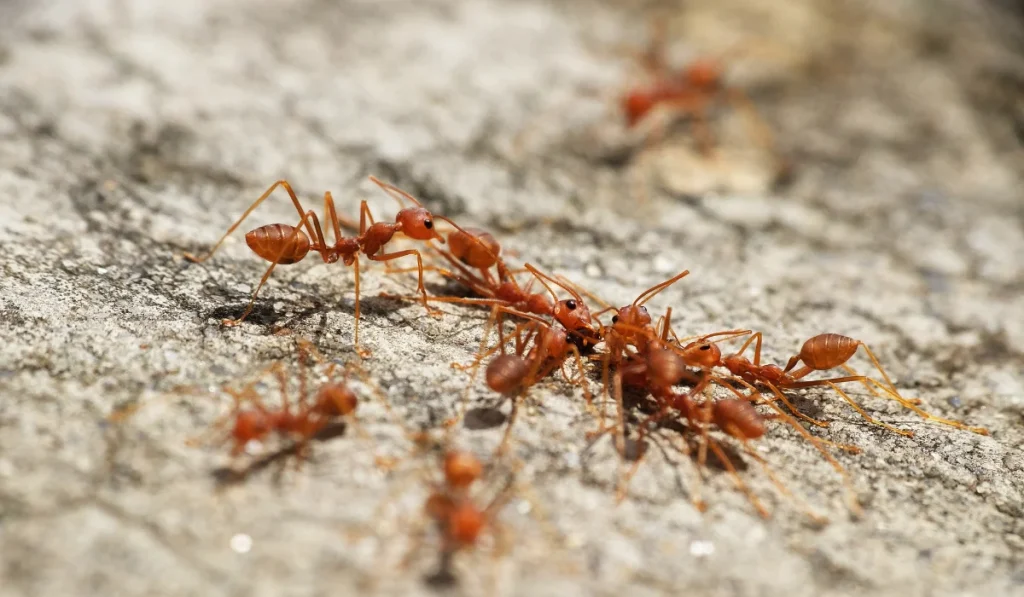
Ants in Georgia can show up in lawns, kitchens, bathrooms, and other parts of your property, but the right response depends on the species and where the activity originates. Fire ants, carpenter ants, and other household ants can create very different problems, so identification should come before treatment. This overview explains the ant problems Georgia homeowners may encounter, what attracts ants to homes, when recurring activity deserves professional attention, and how Smart Solutions approaches ant control across the Atlanta area.
What Types of Ants in Georgia Should Homeowners Know?
Different ants use different nesting sites and food sources, which is why ant identification matters. A mound in the yard, activity around wood, and a trail along a kitchen counter should not automatically receive the same response.
The University of Georgia Cooperative Extension provides Georgia-focused resources on household pests and ant identification. When you find ants around your property, note where they appear, whether they follow an obvious trail, and whether their activity is associated with soil, wood, food, moisture, or an opening in the building.
| Ant Type | Where You May Notice Activity | Why Identification Matters |
|---|---|---|
| Fire ants | Lawns and other outdoor areas | Colonies can defend nesting areas by stinging |
| Carpenter ants | Wood and areas around structural components | They excavate wood to create nesting galleries |
| Other household ants | Kitchens, pantries, bathrooms, and entry points | Indoor activity may be connected to food, moisture, or access from outside |
Fire Ants
Fire ants in Georgia are an outdoor pest that deserves particular attention when colonies are located near areas your family regularly uses. Smart Solutions includes ants, including fire ants, among the common insects covered by its standard SmartGuard plan.
The concern is greater when a colony is close to a walkway, patio, play area, or another high-traffic part of the yard. Fire ants defend their nests by stinging when disturbed. CDC and NIOSH information on outdoor insect hazards notes that insect stings can produce local reactions and, in susceptible people, serious allergic reactions.
If you discover fire-ant activity, avoid disturbing the nest while you determine how it should be handled. Repeatedly disrupting a mound does not replace identifying and addressing the active colony.
Carpenter Ants
Carpenter ants require a different approach because their activity can involve wood. University extension guidance distinguishes carpenter ants from termites in an important way: carpenter ants excavate wood to make galleries, while termites feed on wood.
That difference makes accurate identification especially useful if you notice large ants repeatedly appearing around wooden parts of your home. The presence of ants alone does not establish where a colony is located, so an inspection should focus on the source of activity rather than simply removing workers that happen to be visible.
Smart Solutions treats carpenter ants differently from ordinary ants. Company service information lists carpenter ants among specialized pests that can be added to a plan, while common ants and fire ants are included in standard SmartGuard coverage.
Other Household Ants
Small household ants often become noticeable when workers travel along counters, walls, baseboards, cabinets, or plumbing areas. These trails can be frustrating, but they can also help you understand where the ants are traveling.
Before wiping away a trail, follow it in both directions when you can do so safely. You may find that the ants are entering through a small gap, traveling toward a food source, or appearing near an area with recurring moisture.
The goal is not simply to remove the workers you see. Understanding the route they are using gives you more useful information for prevention and, when necessary, professional ant control.
Why Ants in Georgia Show Up Around Homes
Ants in Georgia may enter structures when they find access to food, water, or shelter. Kitchens and pantries deserve close attention because crumbs, spills, open food, and pet feeding areas can support ant activity. Keeping food sealed and removing residues helps reduce these attractants.
Moisture is another condition worth checking. Leaking plumbing, standing water, damp areas, and other moisture problems can contribute to pest activity around a structure. Smart Solutions includes moisture issues, food sources, nesting areas, and structural vulnerabilities among the conditions technicians consider during a pest inspection.
The exterior of your home also affects what happens indoors. Cracks and gaps along the foundation, openings around the structure, and vegetation touching the house can create routes that pests use to approach or enter a building.
Smart Solutions’ general pest inspection covers both interior and exterior conditions. Kitchens and pantries are inspected for ant and other pest activity, while exterior inspections look for foundation gaps, vegetation against the home, and other conditions that can contribute to pest access.
That is why wiping down a counter may solve the immediate mess without solving the reason ants are returning. Prevention works best when you address the food, moisture, access, or nesting conditions connected to the activity.
When Ants in Georgia Need More Attention
A few ants near an obvious food spill present a different situation from trails that return after the area has been cleaned. Recurring activity can justify a closer look, especially when ants repeatedly appear in the same room, around plumbing, or near an opening in the structure.
Location matters just as much as frequency. Consider professional inspection when you notice:
- Repeated ant trails after food and spills have been cleaned up
- Fire-ant activity near frequently used parts of the yard
- Ants repeatedly associated with wooden structural areas
- Activity that appears to originate from a wall gap or other concealed area
- Ants appearing in several parts of the home without an obvious source
These observations do not identify the species by themselves. They give a technician useful starting points for determining what ant is present and what conditions are supporting the problem.
Avoid assuming that every ant problem needs the same treatment. A fire-ant colony in the yard and carpenter ants associated with wood involve different nesting conditions, while household ants entering a pantry may be responding to an entirely different set of attractants.
How Ant Control in Georgia Works
Professional ant control in Georgia should begin with an inspection rather than a one-size-fits-all treatment. The first objective is to identify the pest, determine where activity is concentrated, and look for food sources, moisture, access points, and other conditions that may be involved.
Smart Solutions uses a 155-point checklist for pest inspections. Its general process includes an interior and exterior evaluation, photo documentation of problem areas, identification of structural and environmental conditions, and development of a treatment plan based on the pest and the property.
Inspection and Identification
A technician begins by reviewing where you have seen activity and examining those areas more closely. Kitchens, pantries, entry points, foundations, and exterior conditions may all provide useful evidence when ants are involved.
Identification helps determine what comes next. Carpenter-ant activity may call for attention to wood and nesting areas, while an outdoor fire-ant problem requires a different focus.
Targeted Ant Treatment
Smart Solutions’ general pest-control protocol allows for several treatment methods depending on the situation. For ants, those methods may include targeted interior treatments and baiting systems, along with exterior service when appropriate.
Bait placement and other treatment decisions should be based on what the inspection finds. Applying the same approach everywhere can overlook the source of the activity and the conditions allowing it to continue.
Prevention and Follow-Up
Treatment is only part of the process. Smart Solutions also provides recommendations for sanitation, food storage, moisture correction, vegetation management, and other property conditions that can contribute to pest activity.
Follow-up recommendations depend on the problem and the service selected. SmartGuard and SmartGuard Plus provide ongoing pest-service options, with common ants and fire ants included in standard SmartGuard coverage.
How to Prevent Ants Around Your Georgia Home
Ant prevention is most useful when it focuses on the specific conditions ants can use around the property. You do not need to make your home spotless at every moment, but routine food storage, moisture control, and exterior maintenance can remove common attractants and access routes.
Reduce Food Sources
Keep pantry goods and other food securely stored, wipe up spills, and remove crumbs from counters and floors. Check beneath appliances and around pet feeding areas, where residues can be easy to overlook.
Trash should be kept in closed containers, especially when it remains near the house. Smart Solutions also recommends keeping food sealed and reducing attractants as part of its general prevention guidance for ants and other household pests.
Address Moisture
Repair leaks and investigate damp areas around plumbing, sinks, basements, and crawl spaces. Outside, correct drainage problems and standing water where practical.
Moisture correction is useful beyond ant prevention because damp conditions can support several household pest problems. The important point is to correct the source rather than repeatedly drying the same wet area without addressing why it returns.
Check the Exterior
Walk around the outside of the house and look for obvious gaps, damaged openings, and vegetation contacting the structure. Trim back shrubs or branches that touch the home and remove unnecessary debris near the foundation.
These steps help reduce potential pest access without requiring you to guess where a particular ant colony is located. If ants continue returning after reasonable prevention measures, an inspection can help determine whether the problem is connected to a nest, an entry route, or another condition you have not found.
Choosing the Right Ant Control for Your Georgia Property
The most useful response to ants in Georgia starts with knowing what you are dealing with. Fire ants around a lawn, carpenter ants associated with wood, and recurring household ants indoors each deserve an approach based on the species, location, and conditions around the property.
Smart Solutions Pest and Wildlife Removal provides general pest inspections and ant-control services throughout its Atlanta-area service market. The company combines detailed inspections, targeted treatment options, prevention recommendations, photo documentation, and follow-up service based on the problem found at the property.
If ants continue returning or you are unsure which type is active around your home, you can learn more about Smart Solutions Pest and Wildlife Removal and contact Smart Solutions about an inspection for a plan based on the activity found at your property.




