
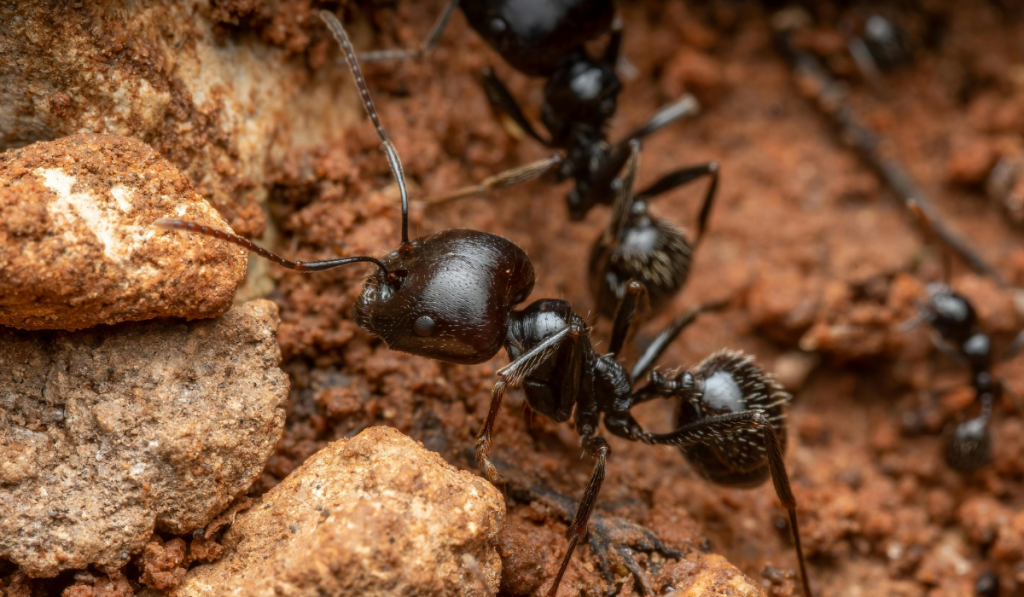
A carpenter ant infestation is a common problem for homeowners in Georgia. These ants do not eat wood like termites, but they tunnel into it to build nests. Over time, this can cause structural damage in your home.
You may first notice black carpenter ants near baseboards, window sills, basements, or crawl spaces. You might also see piles of sawdust or wood shavings near damaged areas. This pest problem often starts where damp wood meets easy entry points.
You can reduce and control carpenter ant activity with a clear plan. When you know what attracts them, where they hide, and when to call ant control, you can limit carpenter ant problems before they spread.
Key Takeaways
- A carpenter ant infestation starts in damp wood, wall voids, crawl spaces, or other hidden nesting sites.
- Common signs include worker ants, winged ants, piles of sawdust, and damaged wood near wooden structures.
- Moisture problems, tree stumps, aphids, and nearby food sources support carpenter ant colonies.
- Professional ant control and pest management help stop carpenter ants and provide year-round protection.
Why Carpenter Ants Show Up in Georgia Homes
These ants need shelter, moisture, and access. Homes that provide these conditions have more carpenter ant problems.
Damp Wood Creates Nesting Sites
Damp wood and water-damaged areas attract carpenter ants. Leaks around gutters, roofs, and plumbing soften wood, making it easier for carpenter ant colonies to tunnel inside and build nests.
Carpenter ant activity often starts in crawl spaces, basements, and wall voids where moisture builds up. These dark, damp areas allow colonies to grow if not fixed.
Outdoor Wood Helps Colonies Grow
Tree stumps, decaying wood, and old wood piles can hold carpenter ant nests outside. From there, worker ants can enter your home through gaps around windows, siding, or the foundation.
Tree branches touching the roof give ants direct access to attics. Aphids can also contribute by producing honeydew, which carpenter ants use as a food source.
What Attracts Carpenter Ants Indoors
When ants enter the home, certain conditions keep them there. Pest control and preventive measures help remove these conditions.
Food Sources Keep Ants Coming Back
Carpenter ants search for sweets, grease, crumbs, and pet food. They may also feed on aphid honeydew outside before moving indoors.
Even small amounts of food can support worker ants, while carpenter ant colonies remain hidden in wall voids or other protected nesting sites.
Moisture Problems Make Homes More Appealing
Ongoing moisture problems allow carpenter ant infestations to grow. Damp areas around baseboards, basements, and window sills help colonies stay hidden and expand.
If these conditions continue, colonies grow larger and spread into nearby wooden structures.
Signs the Problem Is Getting Worse
A small trail of ants can become a larger carpenter ant infestation. These signs mean the problem is growing.
Piles of Sawdust and Wood Shavings
Carpenter ants push out sawdust as they tunnel through wood. You may notice piles of sawdust near baseboards, window sills, or below wall voids, which show nearby carpenter ant nests.
Winged Ants and More Worker Ants
Winged ants, also called swarmers, appear when colonies are mature and expanding. They are often mistaken for termites, especially during warm weather in Georgia.
You may also see worker ants moving along the same paths, which points to nearby nesting sites.
How to Get Rid of Carpenter Ants
To get rid of carpenter ants, make the home less inviting and address the source.
Seal Entry Points and Dry Out Damp Areas
Start by sealing entry points around windows, doors, and the foundation. Fix leaks, clean gutters, and repair water-damaged areas to limit access to wall voids, basements, and crawl spaces where nests may form.
Use Ant Bait and Call for Professional Help
Ant bait helps track activity, but DIY steps do not reach deep carpenter ant colonies. A pest control service inspects nesting sites, identifies the ant species, and applies effective treatment.
We offer pest control services for carpenter ants, plus termite services through SmartGuard Plus for homes that also need termite protection.
Making the Right Carpenter Ant Control Choice for Georgia Properties
Carpenter ants can cause serious damage. They spread through damp wood, wall voids, and wooden structures before you notice how large the infestation is.
At Smart Solutions Pest Control, we help homeowners, tenants, and property owners in Georgia find the source and protect their structures.
If you need pest control, ant control, or termite coverage through SmartGuard Plus, contact us to schedule an inspection.
FAQs
How do I get rid of carpenter ants for good?
To fix carpenter ant infestations, find nests, remove food sources, fix moisture issues, and seal entry points. Professional pest control is a reliable way to control and eliminate carpenter ants.
Are carpenter ants the same as termites?
No. Termites eat wood, while carpenter ants tunnel through it to build nests. Both can damage wooden structures, so correct identification is important.
When should I call an exterminator for carpenter ants?
Call an exterminator when you see winged ants, piles of sawdust, repeated worker ants, or signs of damaged wood. These signs point to an active infestation.




