
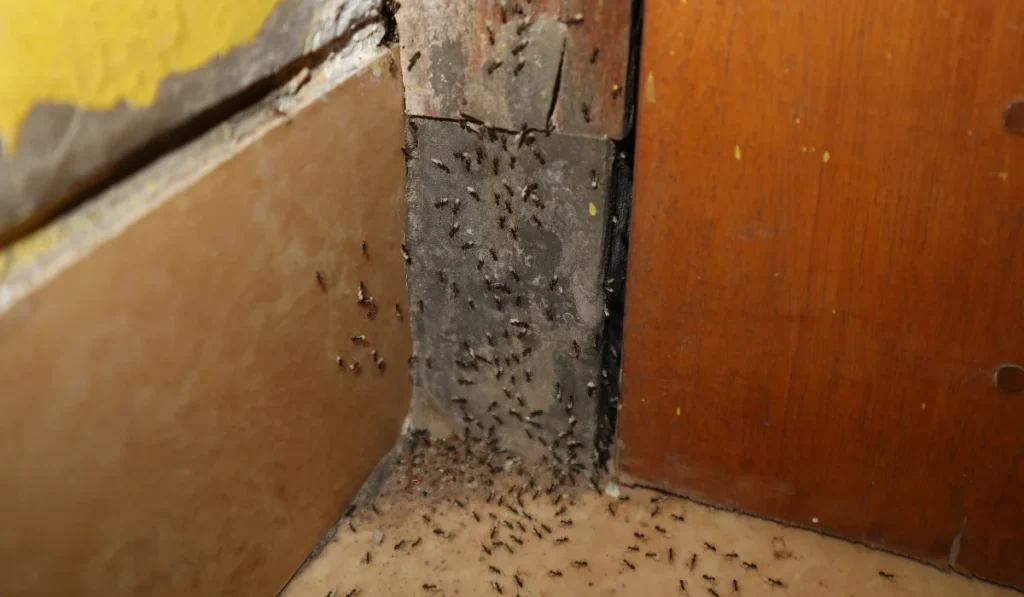
Ants rarely stay in plain sight. When an ant infestation grows in walls, most activity happens out of sight in wall voids, behind baseboards, and near hidden moisture. By the time you see ants, a colony may already be nearby.
Kennesaw homeowners and businesses can prevent structural damage and recurring infestations by recognizing early warning signs and using the right ant control approach. The key is knowing what these signs mean.
Key Takeaways
- Ants nesting in walls often leave subtle clues, such as faint sounds, debris, and recurring ant trails.
- Different ant species, including carpenter ants, need different solutions.
- Repeated ant activity often means a deeper ant problem, not just stray ants.
- Professional pest control finds nesting sites, removes colonies, and seals entry points to stop future activity.
Signs of Ants Nesting Inside Walls
Ants inside walls are hard to detect. They leave small signs that point to hidden activity.
Faint Rustling Sounds Inside Walls
You may hear light rustling at night when worker ants are most active. This often happens in wall voids, basements, and crawl spaces.
Carpenter ants are especially known for this. As they move through wooden structures, the sound may resemble faint scratching or crinkling.
Small Piles of Debris or Sawdust
One clear sign of an infestation is sawdust or wood shavings near baseboards or window sills.
Carpenter ants create frass, a mix of wood particles and debris, as they expand their ant nest. If you often see sand-like piles forming, it may indicate a carpenter ant infestation.
Ant Trails Appearing and Disappearing
You might see a line of ants one day and none the next. These ant trails follow scent trails made by pheromones that guide worker ants to food sources and back to the colony.
When the trail disappears, it often means the route has shifted, not that the ant problem is gone. This pattern is common with odorous house ants and pavement ants.
Winged Ants Indoors
Winged ants, also called swarmers, often signal the presence of a nearby mature colony. These reproductive ants appear when colonies are ready to expand.
Homeowners often confuse them with termites. If you see winged ants near window sills or light sources, there may be an ant nest inside the walls or nearby.
What Those Wall Signs Usually Mean
These signs have clear causes. Each sign shows how the colony is growing behind the walls.
A Hidden Colony Inside Wall Voids
When ants are active inside walls, the colony is likely using wall voids as a nesting site. These areas offer protection and easy access to nearby food sources.
In Kennesaw homes, this often occurs near kitchens, bathrooms, or areas with a water source, such as leaky pipes.
Moisture Is Attracting Ants
Moisture drives ant activity. Damp wood, condensation, and leaks attract ants indoors.
Carpenter ants prefer moisture-damaged wood, which increases the risk of structural damage over time.
Multiple Entry Points Exist
Ants enter through small gaps and crevices around the structure.
Common entry points include gaps around window sills, cracks in foundations, openings near utility lines, and unsealed trim or caulk. If you do not seal these gaps, ant activity may continue.
The Entire Colony Is Established
Consistent warning signs often indicate an established colony rather than a few stray ants.
Cleaning and DIY methods may reduce ants indoors, but they do not remove the entire colony hidden in the structure.
How to Tell It Is More Than Stray Ants
Not every ant means a serious problem. The difference is consistency and pattern.
Repeated Sightings in the Same Areas
Ants near food sources are common. Repeated sightings in the same areas, especially along baseboards or window sills, can indicate a larger ant problem.
Activity in Multiple Rooms
If ants appear in multiple areas, such as the kitchen, basement, and crawl spaces, it often suggests the colony is operating within the structure.
Ants Returning After Clean Up
You can clean food crumbs, but ants return if the scent trail and colony stay active. Without addressing the ant nest, the cycle continues.
Presence of Larger Black Ants
Large black ants are often carpenter ants, though proper identification is needed to confirm the ant species.
Unlike smaller ant species, carpenter ants can cause structural damage to wooden structures over time.
Schedule an Ant Inspection in Kennesaw
If you notice ongoing ant activity, basic fixes may not be enough.
A professional inspection reveals where ants are nesting and why the problem keeps returning. Fixing the source early helps prevent bigger infestations.
Smart Solutions Pest Control provides targeted ant control for homes and businesses in the Kennesaw area, based on how ants behave in real homes.
If you are dealing with signs of an ant infestation in Kennesaw, it is time to address the problem at the source. Contact us to schedule your inspection.
FAQs
What are the first signs of an ant infestation?
Early signs include ant trails, small piles of frass or wood shavings, and occasional winged ants indoors. These often point to hidden ant colonies.
Are ants in the walls dangerous?
Most ants are not directly harmful, but carpenter ants can cause structural damage. Large infestations also indicate underlying moisture or access issues.
How are ants different from termites?
Ants have bent antennae and narrow waists, while termites have straight antennae and thicker bodies. Both can appear similar during swarming, but require different pest control strategies.




