
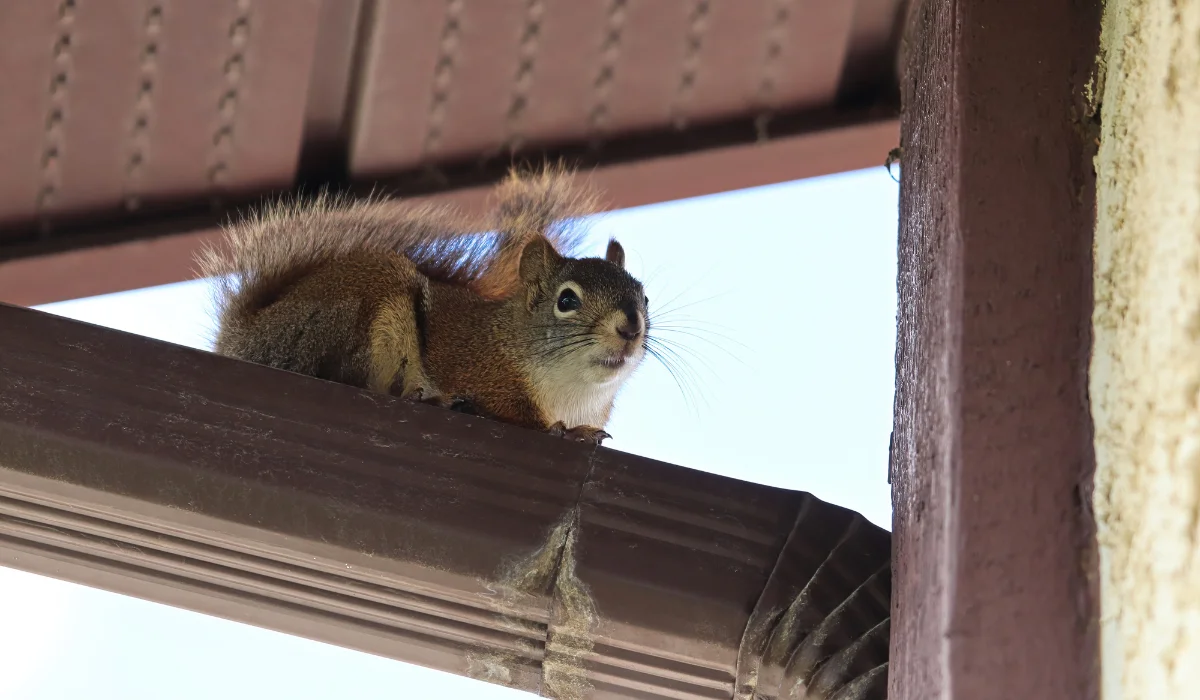
You’ll spot squirrels in Georgia backyards. They hop across trees and race along power lines. When squirrel season peaks, many move from the yard into attics. Homeowners then hear scratching overhead and find chewed vents and shredded insulation.
Families in Roswell, Marietta, and metro Atlanta face this challenge every year. If you hear early-morning scratching or see roofline chew marks, squirrels may already be inside. Act quickly to prevent wiring damage, leaks, and more extensive repairs.
This guide explains when squirrel season is busiest, the signs of attic nesting, why homes attract squirrels, and how pros remove them. We’ll also note how state hunting rules relate to squirrels, and when those rules do not apply inside homes.
Key Takeaways
- Season peaks in colder months. Gray and fox squirrels seek shelter and often choose attics when temperatures drop.
- Watch for scratching, chew marks, droppings, and shredded insulation.
- Hunting laws are for the outdoors. Inside a home, use humane removal services provided by a licensed professional.
- Smart Solutions Wildlife Removal removes squirrels, seals every entry point, and sanitizes attics to prevent repeat problems.
When Squirrel Season Peaks in Georgia
When squirrels move into attics in Georgia
Based on the article and typical Georgia patterns. Squirrels stay active outdoors year-round, so attic intrusion windows shift with breeding and cold weather.
Squirrels in Georgia stay active year-round, but late fall and winter bring the most attic problems. Cold nights prompt them to seek warm, safe havens. Any gap or vent can invite them inside.
Georgia’s squirrel hunting season runs from mid-August to late February. Both new and experienced hunters head out with shotguns or muzzleloaders, making the most of public lands and wildlife management areas (WMAs).
At the same time, deer hunting, feral hog control, and alligator season bring extra outdoor activity. With more hunters in the woods, squirrels often move closer to neighborhoods. Coyotes and bobcats also add predator pressure, making attics in Georgia’s urban areas even more appealing.
Signs Squirrels Are Nesting in Your Attic
The first sign of squirrels indoors is usually the sound they make. You may hear scratching, running, or rolling as squirrels build their nest in your attic this fall and move food or bedding. The noises are often loudest at sunrise and sunset.
Chewing is another clear clue. Squirrels gnaw wood, insulation, and even wires, which can start fires. Outside, check roof edges, soffits, and vents for chew marks. Do not ignore these signs.
Look for droppings, shredded insulation, and piles of leaves or twigs. Waste builds up quickly, has a strong odor, and can attract more wildlife.
Why Georgia Homes Attract Squirrels
In the wild, squirrels nest in hollow trees. In neighborhoods, attics serve the same role. They offer warmth, safety from predators, and quick access to food like gardens, oaks, and bird feeders.
Activity on public lands can encourage squirrels to move toward quieter neighborhoods. When pressured, they seek calm, warm spots and often choose attics as their preferred retreats.
Cities have fewer predators. Attics feel safe, so squirrels settle in. Without exclusion, they come back year after year.
How Georgia Manages Hunting and Wildlife
The Georgia Department of Natural Resources (DNR) oversees hunting regulations across the state. Through its Wildlife Resources Division (WRD), it manages small game, deer season, migratory bird hunts, grouse, bobcats, and even coyote hunting to keep harvests balanced statewide.
Hunters must have a valid hunting license before heading to public access areas. They can confirm rules, daily bag limits, and season dates on georgiawildlife.com or gooutdoorsgeorgia.com. Law enforcement officers with the DNR patrol WMAs to ensure fair game management and protect wildlife resources.
Many hunters enjoy squirrel hunting as a sport, while others pass down squirrel recipes as part of their family traditions. Either way, DNR hunting regulations help maintain a balanced small-game harvest.
For homeowners, these rules highlight a key point: hunting laws apply to outdoor lands, not your attic. If squirrels get inside, the legal and safe solution is calling a licensed wildlife removal company.
Humane Solutions for Squirrel Infestations
Removing squirrels requires more than setting a trap. If you don’t block squirrel entry points in your Georgia homes, they’ll chew a new hole or return later. If you don’t clean nesting materials, new squirrels may move right back in.
At Smart Solutions Wildlife Removal, we follow a complete process:
- Inspection: We check rooflines, soffits, vents, and crawlspaces for every gap.
- Humane trapping: We utilize safe traps designed explicitly for gray squirrels and flying squirrels.
- Exclusion: We seal openings with steel mesh, flashing, and durable sealants to prevent infiltration.
- Sanitation: We clean droppings, remove pheromones, and replace insulation if needed.
This step-by-step approach helps stop repeat squirrel problems. Our SmartGuard plans include routine inspections and comprehensive pest coverage for a wide range of pests, including rodents, ants, spiders, and other common household pests.
Protecting Your Home During Squirrel Season
Homes in Metro Atlanta face special challenges during squirrel season. As neighborhoods expand, squirrels adapt quickly and find attics even more inviting.
At Smart Solutions Wildlife Removal, we provide expert wildlife removal services in Atlanta and offer long-term wildlife exclusion solutions throughout Georgia, helping homeowners remain protected year after year.
Ready to safeguard your home this season? Contact us today.
FAQs
When does squirrel hunting season start in Georgia?
It opens in August and runs through late February. A valid hunting license is required, and hunters can confirm regulations and bag limits by visiting georgiawildlife.com or gooutdoorsgeorgia.com.
What types of squirrels nest in Georgia attics?
Gray squirrels are the most common attic invaders, but fox squirrels and flying squirrels also cause problems. All can chew through vents, roof gaps, and soffits.
How do professionals remove squirrels from attics?
Experts start with a full inspection, set humane traps, and seal every entry point. They also sanitize the attic to remove droppings and odors, preventing new infestations.




