
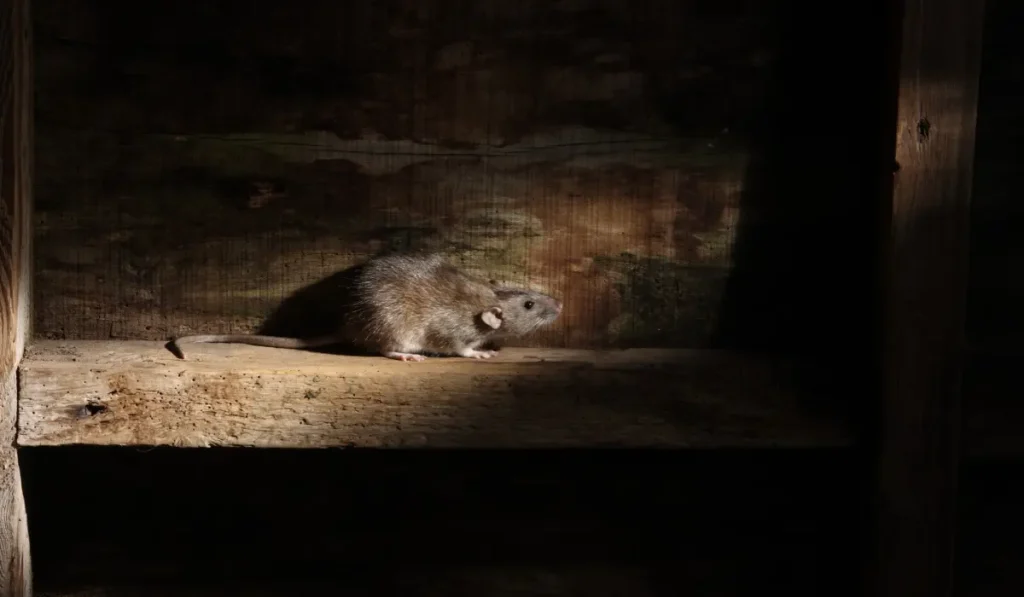
Hearing scratching in your attic or finding droppings in your garage? You could be dealing with rats in Georgia, particularly roof rats or Norway rats. Both species can enter homes through gaps in roofing, siding, or foundations, damaging insulation and wiring along the way. For homeowners across Metro Atlanta, knowing which rats are present, where they’re getting in, and how to keep them out is the first step toward solving the problem.
What Types of Rats Are Found in Georgia?
The two main types of rats in Georgia homes are roof rats and Norway rats. Both seek food and shelter around residential properties, but their appearance and behavior offer clues about where to look for activity.
Roof Rats
Roof rats (Rattus rattus) have slender bodies, pointed muzzles, relatively large ears, and tails that are usually longer than their head and body combined.
They’re skilled climbers that travel along tree branches, fences, and other elevated surfaces. Around Georgia homes, they often enter through damaged roof vents, soffit gaps, or openings along the roofline.
Homes in wooded neighborhoods around Roswell, Alpharetta, and Sandy Springs can have branches extending close to rooftops, giving roof rats convenient access. Once inside, they may settle in attic insulation or wall voids.
Norway Rats
Norway rats (Rattus norvegicus) are stockier, with blunt muzzles, relatively smaller ears, and shorter tails.
Unlike roof rats, they spend much of their time near the ground. They commonly burrow beside foundations, shelter beneath decks, and move through crawlspaces or garages.
If you notice burrows along your home’s foundation or other signs of Norway rats in Georgia, inspect nearby gaps around pipes, siding, and crawlspace vents. Norway rats can also climb, so ground-level activity doesn’t rule out access to other parts of the house.
Roof Rats vs. Norway Rats
The University of California Integrated Pest Management Program identifies species recognition and rodent behavior as useful factors in rat management.
| Feature | Roof Rats | Norway Rats |
| Body | Slender | Stocky |
| Muzzle | Pointed | Blunt |
| Tail | Usually longer than head and body combined | Usually shorter than head and body combined |
| Typical shelter | Attics, rooflines, wall voids | Burrows, crawlspaces, foundations |
| Movement | Strong climbers | Strong burrowers |
| Droppings | Often tapered | Often blunt or capsule-shaped |
These differences help narrow down the possibilities, but neither the location nor the droppings alone can reliably confirm the species. Both rats can move through different parts of a Georgia home.
What Are the Signs of Rats in Your Georgia Home?
You may find evidence of rats before seeing one. Check areas where rodents can move undisturbed, including attics, garages, pantries, crawlspaces, and spaces behind appliances.
Droppings and Gnaw Marks
Rat droppings often appear along walls, near stored food, and in areas rodents travel repeatedly. They are generally larger than mouse droppings, although the difference between mouse and rat droppings can be difficult to judge without other evidence.
Gnaw marks on food packaging, cardboard boxes, wood, or plastic are another warning sign. You may also notice damaged materials around a gap that rats have been using to enter.
If you discover droppings, avoid sweeping or vacuuming them dry. Rodent waste needs careful handling to reduce potential exposure to harmful organisms.
Greasy Rub Marks and Damaged Insulation
Rats tend to follow familiar routes along walls, pipes, and narrow openings. Repeated contact can leave dark, greasy marks from the dirt and oils on their fur.
In your attic, look for disturbed insulation, compressed trails, or nesting debris. Rats may move or shred insulation while creating sheltered nesting areas.
Multiple signs in one location provide stronger evidence than a single dark mark or patch of disturbed insulation.
Scratching Noises at Night
Rats are primarily nocturnal, so you may hear scratching, scurrying, or gnawing after sunset.
However, not every attic noise comes from rats. Squirrels and mice can produce similar sounds. The signs of rats in a Marietta attic can include droppings, gnawed materials, and insulation disturbance alongside nighttime activity.
If the noises continue, an inspection can help identify the animal and locate where it’s entering rather than relying on sound alone.
Why Do Rats Enter Georgia Homes During Fall?
Georgia’s relatively mild climate allows rats to remain active throughout the year. Still, cooler fall weather and changes in outdoor food sources can make sheltered spaces inside homes appealing.
An attic offers protection from rain and wind, while garages and crawlspaces provide cover and access to stored materials. Rats can take advantage of existing openings whenever conditions suit them.
Common Fall Attractants Around Georgia Homes
Several property conditions can encourage rats to remain near your house:
- Tree branches touching or extending close to the roof
- Pet food left outdoors overnight
- Garbage containers without secure lids
- Firewood and clutter stacked against exterior walls
- Gaps around roof vents, garage doors, and utility lines
- Sheltered areas beneath decks and sheds
These conditions matter throughout the year, but fall is a convenient time to address them before cooler weather arrives.
What Georgia Homeowners Should Inspect Before Winter
Start with the roofline, soffits, and attic vents, especially if your property has mature trees. Check foundation openings, garage door seals, crawlspace vents, and gaps around pipes.
Effective rodent-proofing before fall includes repairing accessible openings and reducing food sources near the home.
If you’ve experienced a previous infestation, revisit the areas where rats entered before. Damaged repairs or new construction gaps can create another route inside.
What Damage Can Rats Cause in Georgia Homes?
Once rats enter your home, they can damage building materials and contaminate areas that are difficult to inspect. Attics and crawlspaces are particularly concerning because activity may continue unnoticed.
Chewed Electrical Wiring
Rats gnaw on wood, plastic, and protective coverings around electrical wires. Damaged wire insulation can expose conductors and create electrical hazards.
If you discover chewed wiring in your attic or crawlspace, avoid handling it. Have a qualified electrician inspect the affected area and determine whether repairs are necessary.
Contaminated Attic Insulation
Rats may leave droppings, urine, and nesting debris in attic insulation. They can also compress or move insulation while traveling through the space.
A small affected area may require targeted sanitation. More extensive contamination may call for removing and replacing insulation, depending on the damage.
Food Contamination
Rats can chew through food packaging in pantries, garages, and storage rooms. Food showing signs of rodent contact or contamination should be discarded.
Store dry goods and pet food in secure containers, and check nearby shelving for droppings or damaged packages.
Are Rats in Georgia Dangerous to Your Health?
Rats may carry organisms associated with human illness, and their waste can contaminate surfaces and stored food. Finding droppings doesn’t mean you’ve contracted a disease, but contaminated areas need to be handled carefully.
The Centers for Disease Control and Prevention’s rodent cleanup guidance recommends avoiding activities that disturb dry rodent waste.
How to Clean Up Rat Droppings Safely
Don’t sweep or vacuum dry droppings. Instead, follow CDC instructions for ventilating enclosed spaces, wearing gloves, wetting contaminated materials with an appropriate disinfectant, and safely removing waste.
Keep children and pets away from affected areas during cleanup.
If droppings and nesting debris are widespread throughout your attic or crawlspace, professional sanitation may be more appropriate than attempting the cleanup yourself.
Why Won’t Traps or Bait Alone Get Rid of Rats?
Catching a rat doesn’t mean your Georgia home is protected from another infestation. As long as rodents can enter through damaged vents, soffits, or foundation gaps, additional rats may follow.
Effective rat control needs to address the animals already inside and the openings that allow access.
The Limitations of Rat Traps
Snap traps can capture rats when placed along active travel routes. However, trap placement, competing food sources, and inaccessible nesting areas can affect results.
A professional trapping program generally involves inspecting the property, monitoring activity, and adjusting trap placement when needed. The number of visits depends on the extent of the infestation and the conditions found during inspection.
Why Indoor Bait Can Create Problems
Rodent bait can be useful in certain management programs, particularly in secured exterior stations. However, bait doesn’t prevent new rats from entering the house.
If a rat consumes bait and dies inside a wall or inaccessible attic space, the carcass can create persistent odors and may be difficult to remove.
For homeowners dealing with indoor rat activity, a plan combining appropriate trapping, entry-point repairs, and outdoor prevention measures is more comprehensive than bait alone.
How Can Georgia Homeowners Keep Rats Out?
Keeping rats out requires repairing entry points and reducing the food, water, and shelter available around your property.
The U.S. Environmental Protection Agency’s rodent control resources address prevention and responsible rodent management. For homeowners, the most practical improvements involve building maintenance and outdoor sanitation.
Seal Roofline and Foundation Openings
Inspect roof vents, soffits, siding gaps, garage doors, foundation openings, and utility penetrations.
Repairs should use durable materials suited to the opening. Depending on the structure, exclusion work may involve galvanized steel mesh, metal flashing, and other gnaw-resistant barriers.
Ordinary expanding foam or caulk alone may not prevent rats from chewing through a vulnerable repair.
Before sealing all openings, confirm that active rodents have been addressed. Trapping rats inside walls or attics can create additional problems.
Remove Food, Water, and Shelter
Keep garbage containers tightly closed and store pantry foods and pet food securely. Avoid leaving pet food outdoors overnight.
Fix leaking pipes, reduce clutter near the foundation, and move stacked firewood away from your home. Trim branches that provide access to the roof.
For homeowners in wooded Metro Atlanta neighborhoods, preventing rat infestations also involves checking beneath decks, around sheds, and along heavily landscaped exterior walls.
Check for New Activity
After removal and exclusion, inspect previously affected areas for fresh droppings, new gnaw marks, or recurring noises.
Storms, roof repairs, and utility work can sometimes create new openings. Periodic exterior checks can help identify these vulnerabilities before rats begin using them.
What Happens During Professional Rat Removal?
Professional rat removal typically begins with an inspection to identify rodent activity, potential nesting areas, and openings around the home.
The findings help determine which control measures and repairs are appropriate for the property.
Inspection and Trapping
A rodent inspection may include accessible attics, crawlspaces, rooflines, and foundations. The inspector looks for droppings, gnaw marks, nesting materials, and possible entry points.
When rats are active inside the structure, a trapping program can target identified travel routes. Follow-up visits help assess results and determine whether additional trapping is necessary.
Exclusion Repairs
After active rodents have been addressed, exclusion work focuses on closing openings that could allow future entry.
Depending on the home’s construction, repairs may involve securing roof vents, closing soffit gaps, and sealing openings around foundations or utility lines with durable materials.
The scope of repairs depends on the condition of the structure and the access points found during inspection.
Attic Sanitation and Follow-Up
Removing rats doesn’t automatically remove the contamination they leave behind. Droppings, urine, nesting debris, and damaged insulation may still require attention.
Depending on the extent of contamination, cleanup may range from treating a limited affected area to replacing damaged insulation.
Continued monitoring and routine property maintenance can help homeowners identify new activity before another infestation becomes established.
Get Help With Rats in Your Georgia Home
Whether you’re dealing with roof rats in your attic or Norway rats near your foundation, catching a few animals won’t solve the problem if entry points remain open. Identifying the species, addressing active rodents, and completing exclusion repairs are all part of protecting your home.
Smart Solutions Wildlife Removal & Pest Control serves homeowners in the Metro Atlanta area with wildlife removal and pest control services. A property-specific inspection can help determine the source of rat activity and which control or exclusion measures are needed.
If you’re finding droppings, hearing scratching overhead, or noticing damage around your home, contact Smart Solutions to request a rodent assessment. Discuss the activity you’ve noticed and arrange an inspection to determine the appropriate next steps.




