
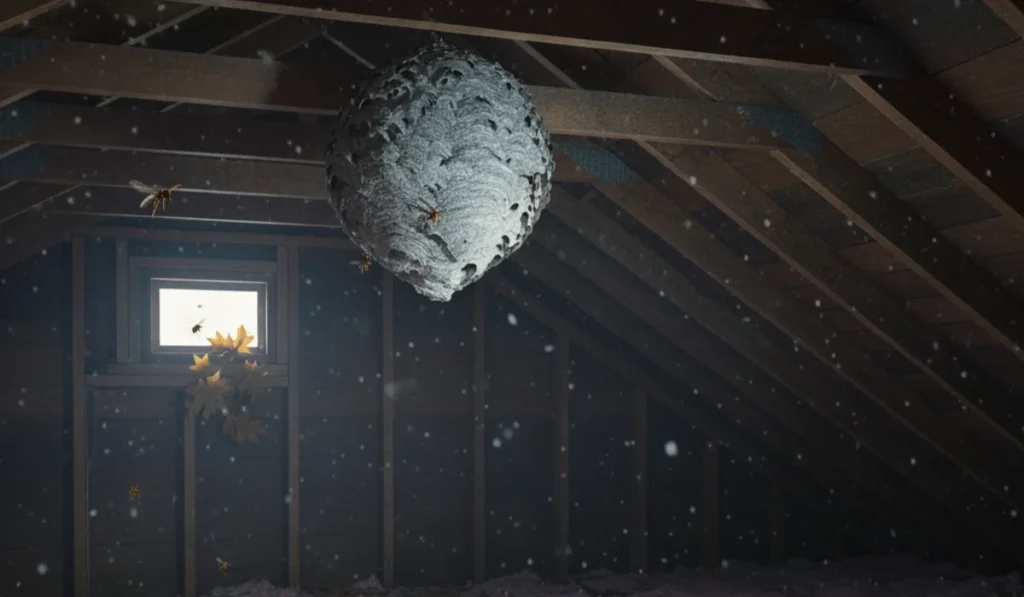
As temperatures rise in Smyrna, wasp activity increases. In early spring, many queen wasps come out of winter dormancy and start looking for sheltered areas to build nests and form a new wasp colony.
If you act early, you can reduce the chance of large wasp nests forming by late summer. If you wait too long, the wasp colony grows, increasing the risk of stings and allergic reactions.
Homeowners, tenants, and property managers can prevent wasp infestations with early wasp prevention and professional wasp control.
Key Takeaways
When wasps build nests in Georgia
Typical pattern for the Smyrna area, not exact dates from the article. Bigger dots mean heavier nest-building activity.
- Queen wasps begin building nests in early spring.
- Eaves, garages, and overhangs are common nesting sites.
- Removing small starter nests prevents large wasp colonies.
- Food sources like trash and pet food attract wasps.
- Professional wasp control treats active nests and helps prevent future stinging insect activity.
How to Stop Wasps From Starting Nests
The best time to prevent wasp nests is in early spring, before the colony grows. A few simple actions can stop the problem before it starts.
Inspect for Early Signs of Wasp Activity
In early spring, watch for early signs of wasp activity around eaves, overhangs, garages, sheds, and porch ceilings. You may notice a single wasp flying in circles or landing in the same spot under eaves or overhangs.
That lone wasp is often a queen searching for the first place to build nests. If you see this behavior often, the area will likely become a nesting site.
Call the Pros to Remove Small Starter Nests Quickly
Paper wasp nests often begin as small, open comb structures attached to beams or roof edges. At this stage, the nest may only hold a few larvae.
Removing small, newly formed nests early reduces the risk of a larger wasp infestation. However, yellowjackets and hornets behave differently. Yellowjacket nests can grow quickly and become aggressive when disturbed. If you are unsure which types of wasps you see, especially among the common wasps in Georgia, contact a professional exterminator for safe nest removal.
Monitor for Returning Queen Wasps
Even if you remove one nest, queen wasps may return to the same general area. Some social wasps prefer similar sheltered areas year after year.
Regular spring inspections help you catch new nests before they expand. Acting early may stop a wasp colony from developing in that area.
How to Seal Spring Entry and Nest Sites
Wasps look for protected, quiet spaces. Sealing common nesting spots reduces the chances of a new infestation.
Seal Gaps Around Eaves and Overhangs
Eaves and overhangs are common nesting sites for hornets and paper wasp nests. Check for small crevices or cracks where nests could attach.
Use caulk to seal gaps and repair loose trim. Sealing these entry points reduces the chance that wasps choose your home as a nesting site.
Secure Garages and Storage Areas
Garages are common nesting sites because they offer shade and protection from wind. Wasps often build nests in ceiling corners, along shelving, or on door frames.
Keep garage doors closed when not in use. Seal cracks around framing and repair damaged panels. These small steps reduce the risk of wasp infestations in enclosed spaces.
Trim Tree Branches and Remove Old Nests
Tree branches that hang near the roofline provide easy access for hornets and yellowjackets. Trim branches back to limit direct access to sheltered areas.
While wasps rarely reuse old nests, leaving old nests in place can encourage new nests nearby. Remove old nests safely to reduce new nesting nearby.
How to Reduce Spring Attractants Around Your Home
Wasps need food sources to feed their larvae. Limiting these attractants lowers wasp activity near your home or business.
Manage Outdoor Food and Trash
Open trash cans, sugary drinks, and uncovered grills quickly attract wasps. Pet food left outside is another common food source.
Keep trash bins sealed and clean up spills immediately. These small changes reduce wasp activity around patios and entryways.
Be Mindful of Pollinators
Honey bees are pollinators and play a helpful role in the environment. Unlike honey bees, hornets and yellowjackets can become aggressive when protecting nests.
If you are unsure whether you are dealing with honey bees or other types of wasps, contact a professional before taking action.
Use Wasp Traps and Repellent Carefully
Wasp traps can help reduce the number of flying wasps around seating areas. Place wasp traps away from doors and windows so they do not draw wasps closer to your home.
Some homeowners try natural repellent options or DIY wasp spray. While these may help in the short term, they do not eliminate a full wasp colony. Professional wasp control targets the entire nest, including larvae inside.
Schedule Spring Wasp Prevention in Smyrna
Spring is the best time to stop wasp infestations before they grow. At Smart Solutions Pest Control, we provide professional wasp removal and seasonal pest control services in Smyrna, including treatment for paper wasps, carpenter bees, mud daubers, hornets, and yellowjackets. Our team inspects your property for early nesting activity and treats active infestations.
Our team treats active nests, schedules follow-up visits when needed, and recommends sealing entry points if structural gaps cause the problem.
Contact us today to schedule spring wasp control for your home or commercial property.
FAQs
When do wasps start building nests in Smyrna?
Wasps begin building nests in early spring when queen wasps come out of winter dormancy and search for sheltered areas.
Are hornets and yellowjackets more aggressive?
Yes. Hornets and yellowjackets are social wasps and defend their nests aggressively, especially later in the season.
Can I prevent wasp nests completely?
You can reduce risk by sealing entry points, trimming tree branches, and removing food sources. Professional wasp prevention offers stronger protection.




