
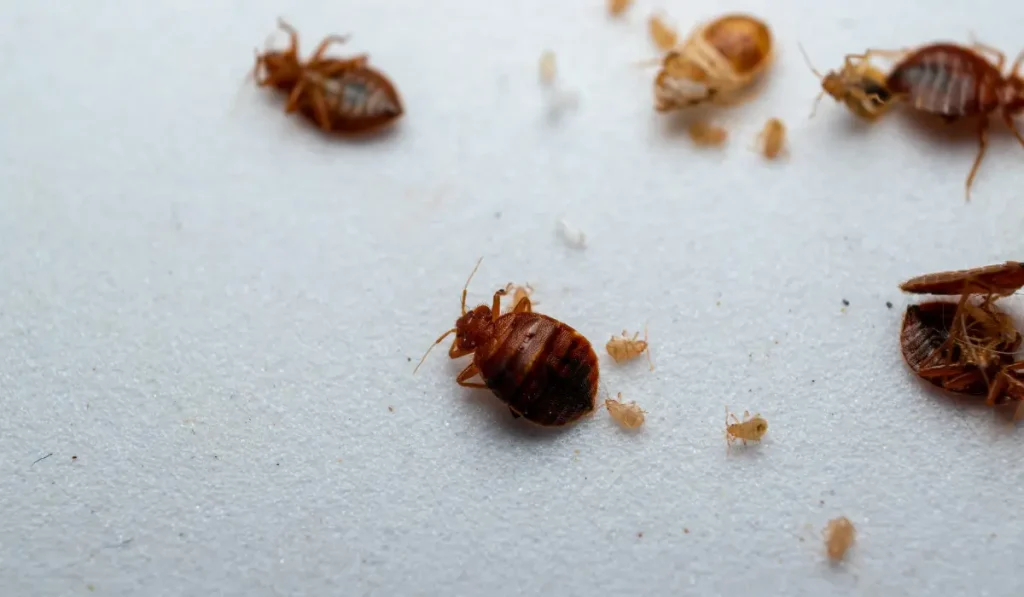
Georgia bed bugs are hitchhiking pests that reach homes in luggage, furniture, clothing, bedding, and other belongings. They are not caused by poor housekeeping. Once inside, they hide close to places where people sleep or rest, often in mattress seams, bed frames, headboards, upholstered furniture, and narrow cracks. Dark spotting, small blood marks, shed skins, eggs, live bugs, and unexplained bites can all point to activity. Knowing which signs matter and where to inspect can help you identify a problem before bed bugs spread into more hiding areas.
Georgia Bed Bugs Are Not a Cleanliness Problem
Bed bugs can appear in clean homes, hotels, apartments, condos, and other occupied properties. What matters is whether a bed bug has been carried into the space and found a suitable place to hide near people.
According to the CDC’s bed bug guidance, bed bugs can travel in luggage, clothing, bedding, furniture, and other belongings. A trip, move, overnight guest, or piece of used furniture can introduce a bug without anyone realizing it.
Clutter does not create bed bugs, although it can give them more hiding places and make inspection and treatment harder. Cleaning can improve access to affected areas, but routine housekeeping will not remove an established infestation hidden inside furniture joints, seams, or cracks.
How Bed Bugs Reach a Home
Bed bugs are easily transported because they can stay hidden while belongings move between locations. Luggage, upholstered furniture, bedding, clothing, and other personal items can carry them from an infested space into a home.
This makes bed bugs a year-round concern in Metro Atlanta. Residents travel, change apartments, move furniture, host visitors, and bring belongings between properties throughout the year. Each movement creates another opportunity for a hidden bed bug to arrive.
After an introduction, bed bugs usually settle near places where people spend long periods resting. Bedrooms deserve close attention, but couches, recliners, guest rooms, and other regularly used resting areas can also harbor activity.
Early Signs of Bed Bugs Homeowners Often Miss
Bed bugs spend much of their time hidden, so the first evidence may be something left behind rather than a live bug. Dark spotting near a mattress seam, a shed skin around a bed frame, or small marks on bedding may appear before you find the insect itself.
One mark or unexplained bite does not confirm bed bugs. Look for several signs concentrated around the same sleeping or resting area.
| Possible Sign | What to Look For |
| Dark spotting | Small dark marks around seams, joints, bed frames, or nearby furniture |
| Blood spots | Small marks on sheets, pillowcases, or other bedding |
| Shed skins | Empty skins left behind as bed bugs develop |
| Eggs | Eggs or egg material tucked into protected seams and crevices |
| Live bugs | Bugs hiding around mattress seams, frames, furniture, or cracks |
| Bites | Unexplained skin reactions that may occur in groups or lines but cannot confirm bed bugs by themselves |
Dark Spots and Blood Marks
Dark spotting around mattress seams, headboards, bed frames, and nearby furniture can be associated with bed bug activity. Small blood marks may also appear on sheets or other bedding.
A stain by itself is not enough to identify the pest. Check nearby seams, joints, cracks, and furniture for shed skins, eggs, live bugs, or additional spotting.
Finding several signs in one area is a stronger reason to arrange an inspection than any single mark on its own.
Shed Skins, Eggs, and Live Bugs
Bed bugs shed their outer skins as they develop. These cast skins can remain in protected areas such as mattress seams, furniture joints, and bed-frame connections.
A proper inspection goes beyond the exposed mattress surface. Smart Solutions technicians check mattresses, bed frames, furniture, baseboards, cracks, crevices, and other protected locations where bed bugs may remain out of sight.
If you find a suspicious insect, photograph it or contain it for identification when you can do so without carrying it through the home. A live specimen or clear image gives you better evidence than a bite pattern alone.
Bed Bug Bites Are a Clue, Not Proof
People do not all react to bed bug bites the same way. One person may develop visible irritation while another person in the same room shows little or no reaction.
The CDC advises against identifying bed bugs from bites alone. Other biting pests, including fleas in the home and some spider bites, can also leave skin irritation.
If bites raise concern, inspect the sleeping area for physical evidence. The bug, shed skins, eggs, and spotting tell you more about what is present than the shape or arrangement of a skin reaction.
Where Bed Bugs Hide in Georgia Homes
Bed bugs favor narrow, protected spaces close to places where people regularly sleep or sit. That behavior allows them to remain unnoticed even in a clean, organized room.
Begin around the bed and expand the inspection outward. Furniture, baseboards, cracks, and wall areas may become relevant when activity extends beyond the immediate sleeping area.
Mattresses, Box Springs, and Bed Frames
Check mattress seams, folds, piping, labels, and fabric edges rather than looking only across the top surface. These narrow areas give bed bugs protected places close to a sleeping person.
Bed frames and headboards contain other hiding points, including joints, brackets, screw holes, slats, and connection points. Box springs can offer shelter along fabric edges and internal framing.
Use a flashlight and work methodically around edges and joints. A quick glance at the center of a mattress can miss the areas where bed bugs are more likely to stay concealed.
Furniture and Other Resting Areas
Bed bugs are not restricted to beds. Upholstered chairs, couches, recliners, nightstands, and dressers can contain protected spaces, especially when they sit close to a sleeping area.
Inspect seams, folds, joints, drawer connections, undersides, and other narrow gaps. A couch or chair used regularly for sleeping or long periods of rest deserves the same attention as the bed.
Used furniture should be inspected before it enters the house. Upholstered pieces, mattresses, bed frames, and bedroom furniture can conceal activity in areas that are easy to miss during transport.
Cracks, Baseboards, and Electrical Areas
Bed bug activity can extend beyond furniture. Protected areas near baseboards, cracks, crevices, wall openings, and electrical outlets may also need inspection.
Smart Solutions includes these locations when technicians evaluate an infestation. Checking the wider room matters because an inspection limited to the mattress can miss activity nearby.
Finding where the bugs are hiding before treatment begins helps determine which areas actually need attention.
Why Metro Atlanta Sees Bed Bug Introductions Throughout the Year
Bed bugs move with people and their belongings, so their introduction into a home is not limited to one Georgia season. Travel, moving, apartment turnover, overnight visitors, and secondhand furniture continue throughout the year.
For homeowners, recent movement matters more than the weather. Think about luggage, visitors, furniture, and other belongings that entered the home before signs appeared.
Travel and Luggage
Suitcases and personal items pass through hotels, vehicles, apartments, and homes. A bed bug concealed in a seam or among packed belongings can make the same trip.
The EPA’s bed bug guidance recommends inspection, prevention, and careful handling of belongings as parts of bed bug management. After a trip, paying attention to luggage and where you unpack can reduce the chance of bringing a hidden bug directly into a sleeping area.
When bed bugs appear soon after travel, luggage and other belongings deserve inspection along with the bed and nearby furniture.
Apartments, Condos, and Resident Turnover
Apartments and condos have frequent movement of residents, visitors, furniture, and personal belongings. Each move-in, move-out, delivery, or overnight stay can introduce items that have spent time in another environment.
If you suspect bed bugs in a multi-unit property, avoid moving mattresses, upholstered furniture, or loose belongings into hallways or other units. Hidden bugs can travel with those items.
Report suspected activity early so the affected area can be inspected before furniture and belongings are moved around unnecessarily.
Secondhand Furniture
Bed bugs can remain hidden in furniture seams, joints, screw holes, folds, and other protected spaces. That makes used furniture another potential introduction route.
Inspect mattresses, box springs, couches, upholstered chairs, bed frames, dressers, and similar pieces before bringing them indoors. Look beyond visible surfaces to undersides, joints, seams, and connections.
Secondhand furniture does not automatically carry bed bugs. Careful inspection simply reduces the chance of bringing an unnoticed pest into your home.
Why DIY Bed Bug Sprays Often Fall Short
Bed bugs are difficult to control because the insects you see may represent only part of the activity. Bugs and eggs can remain protected inside furniture joints, cracks, crevices, and other narrow spaces that a surface application never reaches.
The EPA recommends using multiple control methods rather than depending on a single treatment. Inspection, physical removal, steam or heat where appropriate, monitoring, targeted applications, and follow-up may all be part of effective bed bug management.
Some bed bug populations are also difficult to control with commonly used products. Repellent or poorly placed applications can cause bugs to move away from treated areas, while total-release foggers do not reliably penetrate the protected places where bed bugs hide.
Killing the Visible Bugs Does Not Finish the Job
Removing several bed bugs from a mattress does not show whether more remain in the bed frame, furniture, wall areas, or nearby cracks. Eggs and developing bugs may also remain hidden.
Avoid carrying affected furniture into another room in an attempt to isolate the problem. A mattress, chair, or frame can transport hidden bugs with it.
The better first step is to determine where activity is located and how far it extends. Treatment can then focus on the actual hiding areas instead of only the bugs that happened to be visible.
What Professional Bed Bug Treatment Looks Like
Professional bed bug control begins by confirming the pest and locating its hiding areas. That inspection determines which parts of the room or property need treatment.
Smart Solutions uses an integrated process that can include HEPA vacuuming, steam treatment where appropriate, targeted treatment of hiding areas, monitoring, and follow-up based on what technicians find.
Inspection Comes First
Technicians inspect mattresses, box springs, bed frames, furniture, baseboards, cracks, crevices, and other likely hiding areas. The goal is to establish where bed bug activity is concentrated before treatment begins.
Inspection also helps separate bed bugs from other pest problems. This matters when the original concern comes from unexplained bites rather than a confirmed insect.
Customers may receive preparation instructions before service. Depending on the situation, those instructions can include laundering fabrics, reducing clutter, and keeping belongings contained so hidden bugs are not carried into other rooms.
Treatment Reaches the Hiding Areas
Smart Solutions’ process can include HEPA vacuuming to remove accessible live bugs, eggs, shed material, and debris. Steam may be used on appropriate furniture and surfaces.
Technicians can then target cracks, crevices, furniture components, wall areas, and other locations identified during the inspection. Monitoring after treatment helps show whether activity remains.
Some infestations require additional service. Follow-up is based on continued activity and inspection findings rather than an assumption that every infestation can be handled in exactly the same way.
What to Do When You Suspect Georgia Bed Bugs
If you think you have Georgia bed bugs, keep mattresses, bedding, furniture, and other potentially affected belongings in place until you understand what is happening. Moving them through the house can carry hidden bugs into another room.
Check mattress seams, the box spring, headboard, bed frame, nearby furniture, and protected areas around the room. Look for live bugs, dark spotting, blood marks, shed skins, and eggs. Photograph or contain a suspicious bug for identification when you can do so without spreading it.
Avoid applying random surface treatments before you know where the activity is located. An early inspection can confirm whether bed bugs are present and show which areas need treatment.
Addressing Georgia Bed Bugs Before They Spread
Bed bugs can reach a Georgia home in luggage, furniture, clothing, bedding, and visitors’ belongings regardless of how carefully the home is cleaned. Once inside, their ability to hide in seams, joints, cracks, and furniture makes accurate inspection the first priority.
Smart Solutions Wildlife Removal and Pest Control can inspect Metro Atlanta homes to confirm bed bug activity, locate hiding areas, and determine how far the problem extends. If you have found physical signs or keep dealing with unexplained bites, contact Smart Solutions to schedule an inspection and get a treatment plan based on what technicians find.




