
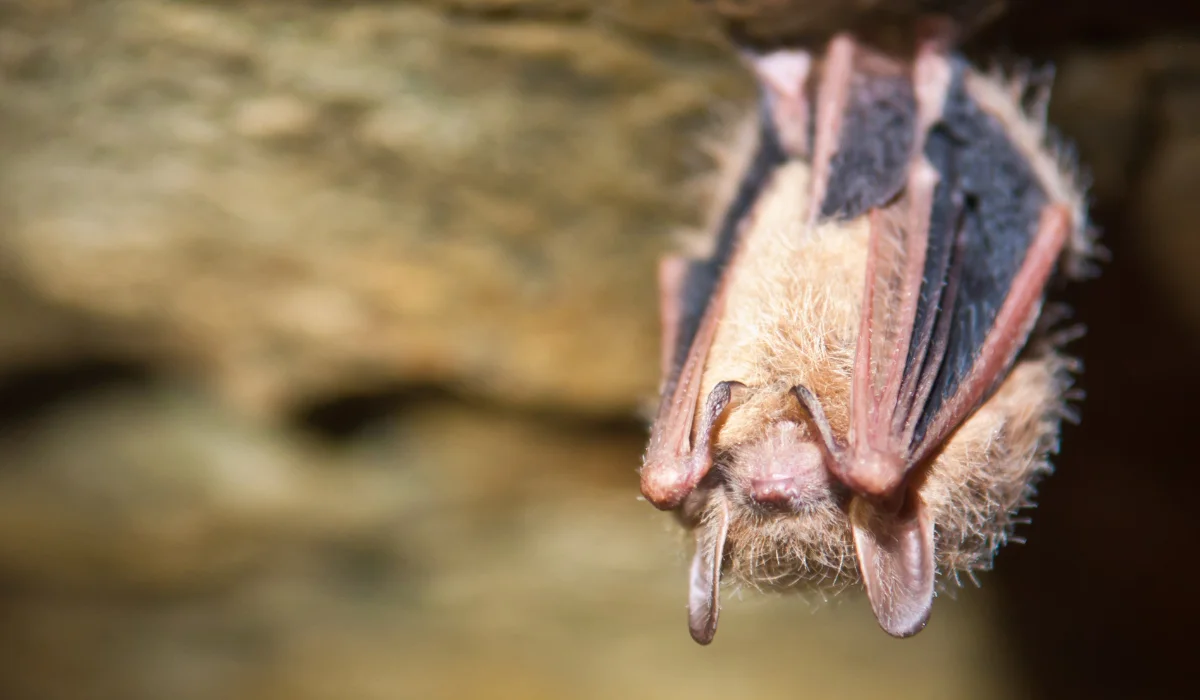
As summer ends in Georgia, bats search for safe roosts. By late August and September, you may see more bats near your attic, roofline, or nearby trees. Knowing where bats nest in Georgia before fall helps you understand their behavior and protect your home.
There are more than 16 species of bats in the state, including the little brown bat, big brown bat, tricolored bat, and endangered species like the gray bat (Myotis grisescens) and Indiana bat (Myotis sodalis).
Some have a wingspan of more than a foot, even though their bodies are small. Each species uses different roost sites, but many move into homes across Atlanta and North Georgia when natural shelters are limited.
This guide covers where bats nest in Georgia before fall, why they move into homes, the impact of white-nose syndrome, how to support bat conservation efforts, and the humane removal of bats.
Key takeaways:
- Georgia hosts 16+ bat species with varied nesting habits.
- Before fall, common roosts include attics, barns, bridges, and hollow trees.
- Homeowners notice colonies due to entry gaps and guano buildup.
- Professional, humane bat removal is the safest legal solution.
Where bats nest in Georgia before fall
Georgia bats roost in both natural and man-made spots. Before winter, colonies gather in warm, hidden places such as attics, barns, bridges, and hollow trees.
Big brown bats often form summer maternity colonies in attics. By fall, the young can fly, allowing colonies to shift to new roosts. Smaller species, like tricolored bats, often choose hollow trees near rivers.
The Georgia Department of Natural Resources (DNR) tracks and protects endangered bats. If bats are roosting in your attic, use legal and humane removal performed by licensed professionals.
Why bats move into homes and buildings
When bats lose their natural homes to development or storms, they turn to houses. Habitat loss forces them to adapt. In Roswell, Alpharetta, and across metro Atlanta, they enter through roof gaps, soffits, ridge vents, and chimneys.
Bat guano (droppings) can accumulate quickly in attics. Builds up quickly in attics. Outdoors, it fertilizes the soil, but indoors, it has a strong odor and can trigger mold growth. One bat in a home often means a nearby colony. A professional bat survey can confirm the size of the colony and locate all roost sites.
Our team at Smart Solutions Wildlife Removal often finds bat colonies that have been active for years before anyone notices. Colonies leave pheromone trails that attract new bats even after they exit. That’s why sealing every entry point matters as much as removal.
The impact of white-nose syndrome on Georgia bats
White-nose syndrome is a disease that affects bats during winter, resulting in the deaths of many bats across North America. Species like the northern long-eared bat (Myotis septentrionalis) are at high risk. In Georgia, the Georgia Department of Natural Resources and groups like Bat Conservation International study the disease to protect bats.
Even with this disease, bats remain essential. They consume thousands of insects each night, thereby reducing the need for pesticides. Protecting bats helps maintain Georgia’s ecosystems in balance.
The disease adds pressure to balance bat safety with home protection. While some people fear bat-borne illnesses, bats rarely come into direct contact with humans. The larger risk is allowing colonies to live in attics, where guano accumulates.
Supporting bat conservation in Georgia
Bats help Georgia’s farms and forests. They pollinate some plants and provide natural pest control. North Georgia farmers benefit when bats eat moths, beetles, and mosquitoes, which protects crops and communities.
Some homeowners install bat houses to give colonies a safe place outside. These houses work best when placed near water or open fields. By providing bat houses, you support conservation while keeping bats out of your attic.
School, community, and conservation programs raise awareness. By working with the State of Georgia and Bat Conservation International, communities can protect both people and wildlife.
Smart Solutions’ approach to humane bat control
If you think bats are in your attic, timing matters. Georgia prohibits bat removal from May through mid-August during maternity season. Removal can begin once the young can fly.
At Smart Solutions Wildlife Removal, our bat control process includes:
- Full inspection of attic, roofline, vents, and walls
- Photo documentation of bat activity and guano
- Humane one-way doors that let bats exit but block re-entry
- Sealing all other openings with durable materials
- HEPA vacuum cleaning and sanitation of guano
- Lifetime exclusion warranties for long-term protection
Smart Solutions adheres to the Georgia DNR guidelines for safe and humane bat control. We help homeowners in Atlanta, Roswell, and across North Georgia. With decades of experience in wildlife exclusion, we handle bat colonies of any size.
We also perform attic sanitation to remove guano and eliminate odors, and apply treatments to kill any remaining parasites. Our goal is to leave your home clean, safe, and fully sealed against future infestations.
Making the right choice for bat control in Georgia
Bats are valuable for Georgia’s environment, but they don’t belong inside your home. Acting before fall keeps colonies from settling in.
Smart Solutions Wildlife Removal offers proven methods to keep bats out for good. Our licensed team offers humane solutions designed for homes in Georgia.
Ready to protect your home this season? Contact us today to schedule your free bat inspection.
FAQs
Where do bats in Georgia usually roost before hibernation?
They roost in attics, barns, hollow trees, and under bridges. In metro Atlanta, attics are among the most common roost sites.
Are bats in Georgia dangerous to homeowners?
Bats are not aggressive, but guano can be smelly and may pose health risks indoors. Professional, humane removal fixes the issue safely.
How does Smart Solutions remove bats from a home?
We install one-way doors, seal every entry point, and clean guano. Our process is humane, legal, and backed by exclusion warranties.




