
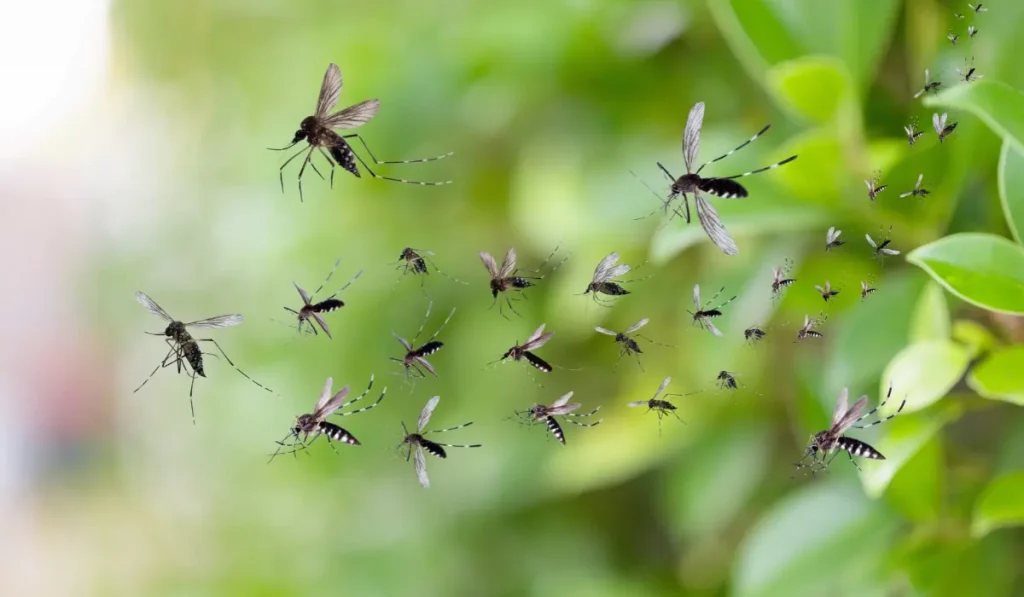
When do mosquitoes come out in Georgia? In Metro Atlanta, you can start seeing mosquitoes during warm days in March or April, with activity increasing through summer and sometimes lasting into November. Rainfall, humidity, and standing water influence how many mosquitoes appear around your home. Some bite most often around sunrise and sunset, while others are active during the day. Knowing when to expect them, where they breed, and how to reduce their numbers can help you enjoy your yard with fewer interruptions.
When Do Mosquitoes Come Out in Georgia?
Mosquito season in Georgia usually starts in early spring and continues into fall. March and April often bring the first noticeable activity, while the warmer months provide favorable conditions for mosquitoes to breed and feed.
There’s no exact start or end date. Mosquito activity varies with temperature, rainfall, and species, so a warm March may bring earlier activity than a cooler one.
Early Spring: Mosquitoes Begin Appearing
As spring temperatures rise, mosquitoes that survived winter can become active. Different species survive cold weather in different life stages, including eggs and sheltered adults.
Spring showers also leave water in gutters, flowerpot saucers, and outdoor containers. These small water sources can become breeding sites for container-dwelling mosquitoes.
March is a good time to clean your gutters, empty unused containers, and inspect areas that hold rainwater. Taking care of these problems before warm weather settles in can limit breeding opportunities.
Summer: Mosquito Activity Reaches Its Peak
Summer brings sustained mosquito activity across Metro Atlanta. Warm temperatures support development, and recurring rainfall can replenish breeding sites throughout the season.
You may encounter more mosquitoes around shaded patios, dense gardens, and wooded property edges. Adult mosquitoes often rest in sheltered vegetation, especially during the hottest parts of the day.
A yard without obvious puddles can still have a mosquito problem. Water trapped in a gutter, planter, or tree hole may be enough to support certain species.
Fall: Mosquito Activity Slows Down
Mosquitoes usually become less active as fall temperatures decline, but they don’t disappear on September 1. Warm periods in October and November can allow continued biting activity in parts of Georgia.
A single chilly night may reduce activity temporarily without ending the season. The time of year mosquitoes go away in Georgia depends on sustained weather conditions rather than a fixed calendar date.
Continue managing standing water during fall, particularly after storms. Mosquito prevention remains useful as long as you notice activity around your property.
What Time of Day Are Mosquitoes Most Active in Georgia?
Many mosquitoes bite most actively around dawn, dusk, or nighttime. However, some Georgia species also feed during daylight, so avoiding the evening hours won’t prevent every bite.
Mosquito behavior depends partly on species and local conditions. Shaded areas may remain attractive to mosquitoes even when an open lawn receives strong afternoon sunlight.
Dawn and Dusk: Common Biting Hours
Early morning and evening are common feeding periods for several mosquito species. These hours typically have less direct sunlight and milder temperatures than the middle of a hot summer day.
Certain Culex mosquitoes commonly feed during evening and nighttime hours. Because some species in this group transmit West Nile virus, protecting yourself from bites after sunset is worthwhile.
If you enjoy evening cookouts or morning walks, keep mosquito repellent nearby and consider clothing that covers exposed skin.
Daytime: When Asian Tiger Mosquitoes Bite
The Asian tiger mosquito, Aedes albopictus, readily bites during daylight hours. This species occurs in Georgia and commonly breeds in water-holding containers around homes.
Asian tiger mosquitoes can be active in shaded gardens, near shrubs, and around patios. You might notice them while watering plants or working outside in the afternoon.
Their daytime feeding habits make seasonal bite prevention useful throughout the day, rather than simply staying indoors at dusk.
How Georgia’s Weather Affects Mosquito Season
Warmth and rainfall shape mosquito season in Georgia, but they influence mosquito populations in different ways. Temperature affects development and activity, while rainwater creates places where immature mosquitoes can grow.
Humidity also matters because adult mosquitoes can lose moisture in hot, dry conditions. Shaded areas with more favorable moisture conditions may provide places for them to rest.
Warm Weather Supports Mosquito Development
Mosquito development is temperature-dependent. Within suitable ranges, warmer conditions generally allow immature mosquitoes to develop faster than they would in cooler weather.
That’s why warm spring weather can bring mosquitoes out earlier, while an unusually mild fall can extend activity beyond the main summer months.
Cold weather slows mosquito activity, but it doesn’t eliminate every species. Some survive unfavorable conditions until warmer weather returns.
Rain Creates Breeding Opportunities
Rainfall can fill buckets, birdbaths, clogged gutters, and low spots in the yard. When water remains in suitable habitats, mosquitoes may lay eggs there or immature mosquitoes may develop.
The Environmental Protection Agency’s mosquito control guidance identifies breeding-site reduction, larval management, and adult mosquito control as parts of mosquito management.
Heavy storms don’t always cause an immediate rise in mosquito numbers. Water may overflow or wash through some breeding sites. The concern is often the water left behind after the storm.
Once the rain stops, check containers and drainage areas before they become persistent breeding sites.
Why Metro Atlanta Yards Attract Mosquitoes
Many Metro Atlanta yards have the conditions mosquitoes need without homeowners realizing it. Shaded landscaping offers places for adults to rest, while small water-holding items can support developing mosquitoes.
Properties with established trees, gardens, and outdoor seating areas deserve regular attention, especially after rain.
Common Mosquito Breeding Sites Around Homes
You don’t need a pond to have mosquito breeding sites. Certain mosquitoes can develop in small amounts of standing water around residential properties.
Common problem areas include:
- Flowerpot saucers and unused planters
- Buckets, watering cans, and outdoor toys
- Birdbaths that aren’t cleaned regularly
- Gutters blocked by leaves and roof debris
- Tree holes and drainage depressions
- Uncovered containers or equipment that collect rain
The Asian tiger mosquito is a particular concern around water-holding containers. Tiger mosquito breeding in standing water can occur near homes where containers remain outdoors between rainstorms.
Check smaller containers first. They’re easy to overlook but often simple to empty or remove.
Dense Vegetation Provides Resting Areas
Mosquitoes spend much of their adult lives away from breeding water. Shaded shrubs, thick ground cover, and protected areas beneath decks can provide resting places.
You may notice more biting activity near a heavily planted side yard than in the middle of an open lawn. Landscaping that blocks direct sunlight can give mosquitoes shelter during the day.
Keep shrubs maintained, remove accumulated brush, and avoid leaving unnecessary clutter beneath decks. These changes won’t remove every mosquito, but they can reduce favorable resting areas.
Are Mosquitoes in Georgia Dangerous?
Most mosquito bites result in temporary itching and skin irritation. Still, certain mosquitoes can transmit infections, including West Nile virus, which is a documented public-health concern in Georgia.
The risk from an individual bite depends on several factors, including whether the mosquito carries a virus. Seeing mosquitoes in your yard doesn’t mean they’re infected.
West Nile Virus and Mosquito-Borne Illnesses
West Nile virus is primarily transmitted to people through infected mosquito bites. Certain Culex species play a major role in its transmission.
According to the Centers for Disease Control and Prevention’s West Nile virus information, approximately 80% of infected people have no symptoms. About 1 in 150 infected people develop severe illness affecting the nervous system.
These percentages describe what happens among infected people, not the likelihood of infection after a mosquito bite.
Other mosquito-borne illnesses also warrant public-health monitoring. However, finding a mosquito species capable of carrying a disease doesn’t establish that the disease is circulating in your neighborhood.
Protecting Yourself and Your Family From Bites
Mosquito prevention should include personal protection, especially when you’re spending extended periods outdoors.
Use an EPA-registered mosquito repellent according to label directions. Long sleeves, long pants, and properly fitted window and door screens can further reduce exposure.
You may also notice that some people attract more mosquito attention than others. Body heat, exhaled carbon dioxide, and other human cues help explain why mosquitoes bite some people more than others in Georgia.
Even with regular yard treatments, personal protection matters because mosquitoes can fly in from nearby properties.
How to Prevent Mosquitoes in Your Georgia Backyard
The most useful backyard prevention steps focus on removing standing water and reducing sheltered resting areas. These changes address the conditions mosquitoes rely on instead of targeting only the adults you see flying around.
The CDC’s mosquito control recommendations for homes advise homeowners to empty, scrub, cover, or discard outdoor items that hold water at least once a week.
Remove Standing Water Every Week
Set aside time each week to inspect your yard. Start with flowerpot saucers, unused buckets, toys, birdbaths, and containers stored outside.
Empty and scrub suitable containers rather than only pouring out the water. Some mosquito species lay eggs on container walls, and those eggs may remain after the water is gone.
Replace birdbath water regularly, cover stored water securely, and remove items you no longer use.
If standing water keeps returning to the same spot, investigate the cause. Poor drainage may need landscaping improvements, while water that cannot be removed may require another management method.
Maintain Gutters and Landscaping
Clean gutters and downspouts so rainwater can drain away from your house. Pay attention to areas that overflow during storms or stay wet long afterward.
Trim overgrown bushes near patios, walkways, and doors. Removing excess brush and yard debris can reduce sheltered areas where adult mosquitoes rest.
For lawns with recurring puddles, examine the grading and drainage. Removing water from containers won’t solve a depression that repeatedly fills after rain.
Make Patios More Comfortable
Outdoor fans are a practical addition to patios and decks because moving air makes it harder for mosquitoes to fly and approach people.
Repair torn screens and check that exterior doors close properly. When you’re hosting guests outdoors, keep repellent available and consider seating arrangements away from dense vegetation.
Avoid relying on scented candles, decorative plants, or homemade mixtures as your only mosquito prevention method. Their performance varies, and they don’t address mosquito breeding sites.
If bites continue despite regular maintenance, mosquito control around Atlanta homes may also involve targeted management of larval habitats and adult resting areas.
When Should You Consider Professional Mosquito Control in Atlanta?
If mosquitoes return week after week despite your efforts, professional treatment may help reduce activity around your property.
This is especially relevant when you have extensive landscaping, difficult-to-remove water sources, or outdoor areas where your family regularly spends time. Persistent mosquito activity around a deck or patio is a practical reason to request an assessment.
What Professional Mosquito Treatments Include
Smart Solutions Wildlife Removal & Pest Control starts with an inspection of your yard. Technicians look for standing water, shaded vegetation, and other conditions that support mosquito activity.
The company’s mosquito management process includes recommendations for removing breeding sites. Where appropriate, technicians can treat standing water that cannot be eliminated to target developing larvae.
Targeted barrier treatments can also be applied to vegetation where adult mosquitoes rest. Smart Solutions may use growth-control treatments as part of its broader mosquito management approach.
These methods target different stages of the mosquito life cycle. They work alongside regular yard maintenance rather than replacing it.
When to Schedule Mosquito Treatment
Early spring is a practical time to consider service if mosquitoes return to your property every year. You can also request an assessment when recurring bites interfere with outdoor activities.
Smart Solutions generally recommends mosquito treatments approximately every three weeks during the season, with about eight to ten visits depending on seasonal conditions and service needs.
A typical visit takes approximately 30 minutes, although larger properties may require more time. Customers receiving routine mosquito treatments qualify for a no-cost retreatment if mosquito activity occurs within the three-week service interval. One-time treatments don’t include this guarantee.
Mosquito treatment is offered separately from the company’s standard SmartGuard pest control plan, so homeowners should request details about service options and pricing.
Get Ahead of Mosquito Season in Your Metro Atlanta Yard
Mosquito season in Georgia can begin with the first warm periods of spring and continue well into fall. Removing standing water, clearing gutters, and maintaining landscaping can reduce breeding and resting areas before mosquito activity becomes a recurring problem.
Since 2008, Smart Solutions Wildlife Removal & Pest Control has helped Georgia homeowners address nuisance pests with professional services. If you’re looking for help in North Fulton County, you can review available services in Roswell and Alpharetta.
When mosquitoes continue to interrupt backyard activities despite routine prevention, contact Smart Solutions to discuss mosquito treatment. A yard inspection can help identify breeding conditions and determine which treatments suit your property.




