
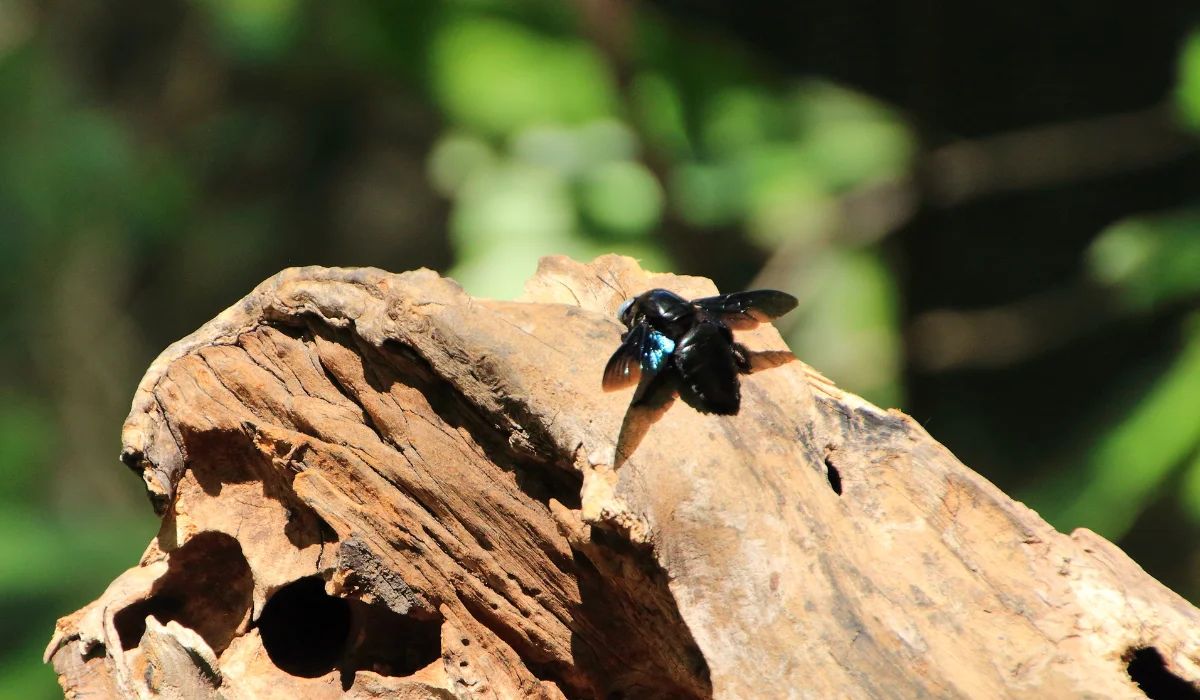
If you notice piles of sawdust near your porch, fence posts, or eaves, or see a shiny black bee buzzing around, you could have carpenter bees. In Georgia, these bees show up around wooden structures when the weather gets warm.
Knowing when carpenter bee activity starts and why can help you protect your home from damage.
Key Takeaways
- Carpenter bees in Georgia wake up in spring when daytime temperatures rise above 70°F and start nesting.
- Softwood structures like fence posts, decks, and eaves are common targets for female carpenter bees in spring.
- Homeowners should inspect wood structures, seal entrance holes, and protect surfaces to limit carpenter bee damage.
- Professional pest control is the best way to remove active carpenter bee nests and prevent serious home damage.
When Do Carpenter Bees Come Out in Georgia?
Carpenter bees in Georgia usually come out during springtime, around March and April, when daytime temperatures stay above 70°F. After they overwinter inside wood structures, the adults wake up to find mates and new nesting sites.
Let’s go over why spring is the busiest time for carpenter bees.
Warm Weather Wakes Up Overwintering Bees
Adult bees spend the cold months tucked inside old holes or untreated wood. When springtime temperatures rise, male carpenter bees, with their shiny black thorax and no stinger, start flying around looking for mates.
This early activity signals the start of the season.
The Carpenter Bee Life Cycle Starts in Spring
Carpenter bees follow a set life cycle that begins in the spring.
After mating, female carpenter bees drill an entrance hole into wood surfaces and lay eggs inside. They pack pollen around the eggs to feed the larvae.
By late summer or early fall, those eggs hatch into new adult bees, keeping the cycle going year after year.
Untreated Wood Structures Are Easy Targets
In spring, wet weather and warmer air soften untreated wood, making it perfect for carpenter bees to dig into.
Wooden structures like decks, fence posts, eaves, and porch rails made of softwood are top choices for carpenter bee nests.
If these areas aren’t protected, you might notice carpenter bee holes and piles of sawdust showing up fast.
Pollinator Activity Increases in Spring
Spring in Georgia is a busy time for pollinators. Flowers are blooming, attracting honeybees, bumblebees, and carpenter bees.
While carpenter bees are pollinators like their cousins, their habit of nesting in your home’s wood surfaces makes them a bigger problem for homeowners.
More Bees Mean More Competition for Nesting Sites
As adult bees emerge, they compete for nesting sites. If they can’t find old tunnels, female carpenter bees will start boring new entrance holes into fresh wood.
This makes spring the season when carpenter bee infestation risks climb quickly if you don’t take action.
How to Deal With Carpenter Bees Around Your Home

If you notice carpenter bee activity around your home, there are some simple steps you can take to limit the damage. But when nests are active or the damage is widespread, calling a carpenter bee control expert is the safest and most effective option.
Here’s what you can do first:
Inspect Your Wooden Structures Often
Walk around your home and look closely at fence posts, decks, and eaves for carpenter bee holes and fresh sawdust. Listen for a loud bumble sound near walls, beams, or softwood structures.
Catching carpenter bee nests early is key to stopping damage.
Seal Entrance Holes to Stop Nesting
If you find an entrance hole, fill it with putty or caulk once you know the bees and larvae are gone. After sealing it, paint or seal the wood surface.
This helps keep other female carpenter bees from coming back to the same spot.
Paint and Protect Wood Surfaces
Carpenter bees prefer bare, untreated wood. Painting or sealing your wooden structures makes them less attractive to nesting bees.
This step also helps protect your wood from other pests, like wasps and woodpeckers, that may go after the larvae inside the wood.
Hang Carpenter Bee Traps
Carpenter bee traps can help control the number of bees flying around. These traps attract adult bees looking for nesting sites.
Using traps along with sealing and painting your wood structures gives you better control over carpenter bee activity.
Protect Your Home From Carpenter Bee Damage in Georgia
Seeing carpenter bees flying around your fence posts, eaves, or decks? It’s a warning sign you shouldn’t ignore. At Smart Solutions Wildlife Removal , we know how to safely manage carpenter bee problems while protecting your wooden structures and pollinators.
Contact us today for expert bee control services.
Let’s protect your home before the next carpenter bee season hits Georgia!




