
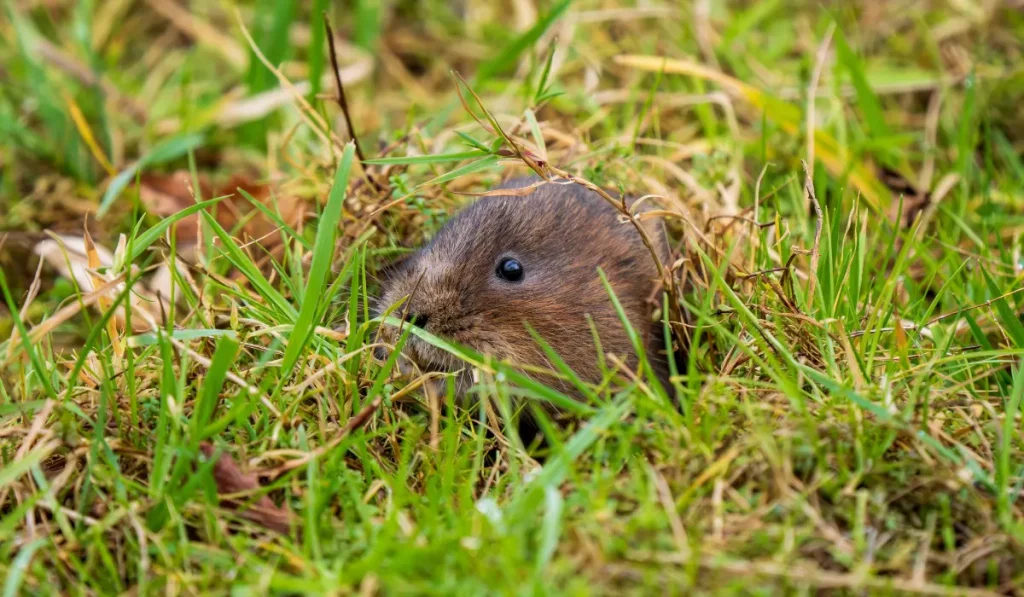
Voles in Georgia are small rodents that feed on plants and can damage roots, bulbs, shrubs, and other landscaping. They are often mistaken for moles or mice, but surface runways, small burrow openings, and plant damage can help separate a vole problem from other rodent activity. Once you know what to look for, you can determine where voles are active, reduce the cover they are using, protect vulnerable plants, and decide whether trapping is needed.
What Are Voles in Georgia?
Voles spend much of their time close to the ground and under vegetation, which makes them easy to miss even when they are damaging a yard. Smart Solutions technicians look for short tails, small or inconspicuous eyes, burrow openings, and damage to plant roots when evaluating suspected vole activity.
Unlike rodents that become most noticeable inside a structure, voles are closely associated with landscaping. Lawns, ornamental beds, shrubs, garden areas, and dense ground cover can all show signs of feeding or travel.
For Georgia homeowners trying to identify an unfamiliar yard pest, University of Georgia Cooperative Extension provides research-based information on wildlife, landscaping, and pest management across the state.
Vole vs. Mole vs. Mouse
Voles, moles, and mice can all be blamed for unexplained activity around a property, but the evidence they leave is different. Focus first on where the problem is occurring and what has been damaged.
| Sign | Vole | Mole | Mouse |
| Common problem area | Lawns, planting beds, shrubs, ground cover | Turf and soil | Homes, garages, crawl spaces, and other structures |
| Common clue | Surface runways, small openings, and plant damage | Raised soil tunnels or disturbed ground | Droppings, gnawing, food damage, and indoor activity |
| Landscape feeding | Roots, bulbs, bark, and vegetation may be damaged | Plant feeding is not the usual cause of visible damage | Less associated with concentrated landscape feeding |
| Travel evidence | Paths through grass or low cover | Underground tunneling | Movement along walls and structural edges |
The larger category of Georgia rodents includes animals that use a property in very different ways. Landscape feeding and surface travel fit a different pattern from the droppings, chewed food packages, scratching, and indoor sightings that are common signs of mice around Georgia homes.
Correct identification keeps you from treating the wrong problem. Raised soil tunnels point you toward a different investigation than clipped plants, root damage, or small openings hidden under ground cover.
What Does Vole Damage Look Like?
Most homeowners find the damage before they find the vole. Smart Solutions looks for plant-root feeding and small burrow openings when inspecting suspected activity. Its service information describes vole burrow openings in the dime-to-quarter-size range.
One small hole is not enough to identify the animal. A hole near fresh plant damage, a used surface path, or repeated feeding in the same bed gives you a much stronger pattern to investigate.
Surface Runways and Burrow Openings
Voles can use narrow paths through grass and low vegetation as they move between shelter and feeding areas. These surface runways look different from the raised ridges and pushed-up soil associated with underground mole activity.
Burrow openings may appear along those routes or beneath protected vegetation. When Smart Solutions traps for voles, active burrow sites help determine where traps should be placed, so current signs are more useful than holes left from earlier activity.
Look for a pattern that changes over time. Fresh plant loss near a used path or recently disturbed opening carries more weight than an isolated hole surrounded by undamaged landscaping.
Root, Bulb, and Bark Damage
Voles feed on vegetation, so damage can occur at several levels of a planting. Root feeding can weaken a plant below the surface, while bulbs and low plant material can be damaged where voles are active.
Shrubs and young woody plants can also show gnawing near the base. Bark removed around a large portion of a stem or trunk is often described as girdling, and serious girdling can disrupt the plant’s normal movement of water and nutrients.
When a shrub begins declining without an obvious above-ground cause, inspect the base of the plant and the nearby soil. Damage near the stem combined with small openings or surface runways can help narrow the problem.
Why Do Some Georgia Yards Attract Voles?
Voles do well where they can move between food and shelter without spending much time in exposed areas. Dense ground cover, tall weeds, overgrown bed edges, and thick vegetation can provide that protection.
Mulched beds can also give voles cover near bulbs, roots, and shrubs when the material is deep or connects directly with dense vegetation. Sheltered conditions around plants can make it easier for voles to travel and feed without crossing open ground.
Smart Solutions includes habitat changes as part of broader rodent management. When vole signs are concentrated in one bed or shrub border, start with the vegetation and cover around that area rather than making broad changes to the entire yard.
How Quickly Can a Vole Problem Grow?
Smart Solutions describes voles as rapid reproducers, so a small amount of activity can become a larger landscape problem when food and shelter remain readily available.
Direct sightings are a poor way to judge the size of the problem. Voles stay close to vegetation and burrows, which means you may see continuing plant damage without regularly seeing the animals themselves.
Track the yard instead. New holes, fresh root damage, additional runways, or activity spreading into nearby beds are more useful indicators that the problem is continuing. If those signs keep appearing after habitat changes, trapping may be appropriate.
How Can You Tell if Voles Are Still Active?
Fresh damage matters more than an old hole. New feeding, recently used runways, disturbed vegetation, and activity around a burrow can show that voles are still using that section of the property.
Where the signs appear can also reveal how the animals are moving. A runway beneath ground cover that connects two damaged planting areas is more useful for control planning than a random opening elsewhere in the lawn.
Penn State Extension provides research-based information on vole identification, landscape damage, and management options.
How Can You Make Your Yard Less Attractive to Voles?
Start where you see active damage. Thick weeds, dense ground cover, and overgrown planting areas can provide sheltered movement between feeding sites, so reducing excess cover around active areas can make the yard less accommodating.
Keep grass and weeds managed along affected beds, thin dense ground cover where practical, and watch heavily mulched areas for new openings or runways. You do not need to remove healthy landscaping across the property. Concentrate on sections where vole signs are already present.
If all the damage is along one shrub border, make that area the priority. Removing cover elsewhere will have little effect if the active travel routes and feeding sites remain untouched.
Protect Shrubs, Trees, and Planting Beds
Physical barriers can help protect individual plants when installed correctly. Guards around vulnerable woody plants can limit access to bark, while barriers placed around selected planting areas can help protect roots or bulbs.
Choose barrier materials and installation methods that will not constrict trunks or interfere with plant growth. For valuable landscaping, follow guidance from a qualified landscape professional or university Extension program rather than improvising around the plant.
Barriers and habitat changes solve different parts of the problem. A guard protects a particular plant, while reducing nearby cover makes it harder for voles to move through the area unnoticed.
When Does Professional Vole Control Make Sense?
Continuing plant damage, several active areas, or uncertainty about whether you are dealing with voles, moles, or another rodent are good reasons to bring in a professional inspection. The treatment should match the animal and the locations it is actually using.
Smart Solutions begins vole control around active burrow sites. Technicians use specialized trapping and adjust trap placement according to activity rather than placing traps randomly across the property.
Outdoor baiting may also be considered where domestic pets and other non-target animals are not at risk. The method depends on the site, the activity found during inspection, and the conditions around the damaged landscaping.
Why Trap Placement Matters
A trap needs to intersect an area the vole is actually using. That makes active burrows and fresh damage more useful than scattering traps across a lawn based on guesswork.
Follow-up observations can also show whether activity has shifted. If new signs appear in another bed after trapping begins, placement can be adjusted to match the new pattern.
Habitat work still matters during control. Removing some of the cover around active areas and protecting high-value plants can reduce additional landscape damage while the population is being addressed.
How Do You Keep Voles From Damaging More Landscaping?
Start with the evidence in the yard rather than treating every small hole as a vole burrow. Once you find a consistent pattern of surface travel and plant damage, focus prevention and control on that area.
A practical sequence is:
- Identify fresh plant damage and active runways.
- Check nearby cover for small burrow openings.
- Reduce dense vegetation around the active area.
- Protect vulnerable plants where practical.
- Watch for new feeding or burrow activity.
- Use targeted trapping when activity continues or spreads.
The most useful control plan is the one that fits the animal you actually have. Vole activity centered on landscaping requires a different response from a mouse problem inside the house or mole tunneling through turf.
Managing Voles Before More Landscaping Is Damaged
Voles in Georgia can be difficult to spot, but their activity is easier to read once you know the pattern. Small burrow openings, surface travel through vegetation, and damage to plant roots or other landscaping can help distinguish them from other rodents using the property.
If fresh damage keeps appearing or several parts of the yard are active, Smart Solutions Wildlife Removal and Pest Control can inspect the property and determine whether vole trapping is appropriate. To request help with an established vole problem or continuing landscape damage, contact Smart Solutions to discuss service for your Georgia property.




