
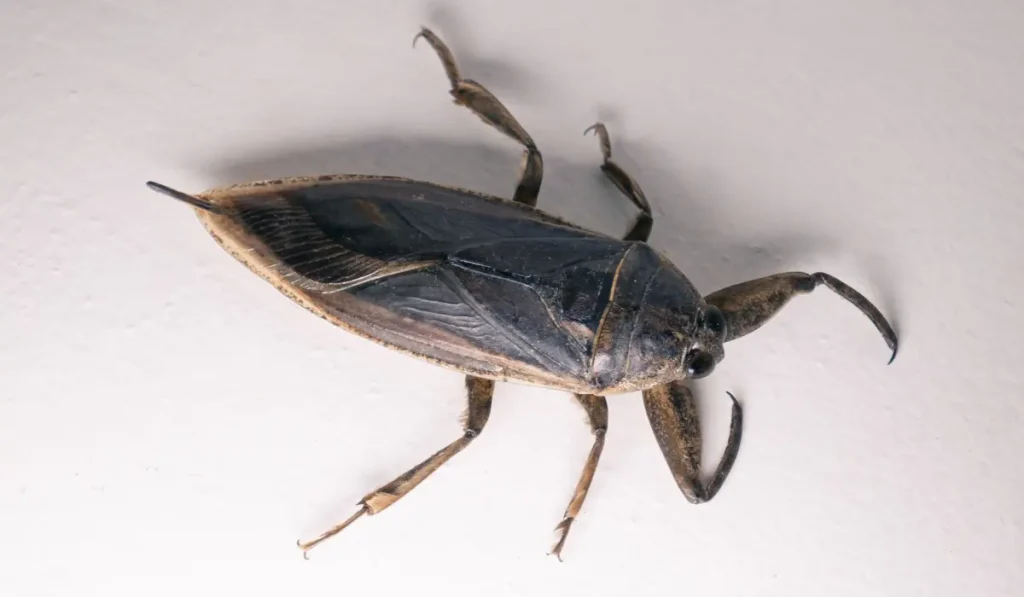
In Georgia, a “waterbug” found in your bathroom, basement, or garage is often a large cockroach, especially an American or Oriental cockroach. These insects favor damp places and may appear indoors after heavy rain, but they’re different from true aquatic water bugs. If you’re trying to identify a waterbug in Georgia, look at its color, wings, and where it was found. Those clues can help you determine what’s attracting it, whether you have an ongoing problem, and how to keep more from entering your home.
What Is a Waterbug in Georgia?
“Waterbug” is a common name rather than a precise identification. In Georgia, homeowners often use it for large cockroaches found near drains, wet foundations, and other damp areas. American and Oriental cockroaches are frequently associated with the name, although other species may be called waterbugs, too.
The confusion matters because household cockroaches and true aquatic water bugs have different habitats and behaviors. If you find several insects around kitchen plumbing or basement walls, the first step is to determine which cockroach species is present.
Are Waterbugs and Cockroaches the Same?
Sometimes, depending on how the name is being used. American and Oriental cockroaches are commonly called waterbugs, but true water bugs are a separate group of insects.
Giant water bugs belong to the family Belostomatidae. They live in freshwater habitats, where their powerful front legs help them capture prey. Unlike cockroaches, they don’t establish breeding populations in household cabinets, basements, or plumbing spaces.
Why Are Cockroaches Called Waterbugs?
The nickname reflects where people frequently encounter them. American cockroaches can live in sewer systems and damp areas of buildings, while Oriental cockroaches are associated with moist soil, drains, and basements.
You may also hear the term “palmetto bug,” especially when someone is describing a large cockroach. The difference between palmetto bugs and water bugs depends partly on local naming habits, so the insect’s appearance is more useful than its nickname.
How to Identify Common Waterbugs in Georgia
Color and wing structure provide some of the clearest identification clues. American cockroaches have reddish-brown bodies and pale markings behind their heads. Oriental cockroaches are nearly black, while smokybrown cockroaches have a more uniform dark mahogany color.
Species descriptions from the University of Florida IFAS Extension help distinguish these cockroaches by their physical characteristics and habits. Use the features below to narrow down what you’ve found.
American Cockroach
American cockroaches (Periplaneta americana) are among the largest cockroaches commonly found around buildings. Adults are usually about 1.5 inches long, with reddish-brown bodies and a yellowish marking behind the head.
They have long antennae, fully developed wings, and the ability to fly or glide short distances. Their size makes them easy to notice when one crosses an open floor.
American cockroaches favor warm, humid conditions. They may shelter in sewer systems, basements, and concealed spaces near plumbing, particularly where moisture and organic material are available.
Oriental Cockroach
Oriental cockroaches (Blatta orientalis) are generally about an inch long, with glossy dark brown to black bodies. Their darker color and reduced wings help distinguish them from American cockroaches.
Females have short wing pads. Males have longer wings that cover part of the abdomen, but neither sex is capable of normal flight.
Oriental cockroaches prefer cooler, damp locations. Look for them around wet foundations, basement drains, and sheltered ground-level spaces rather than assuming every dark cockroach is an American cockroach.
Smokybrown Cockroach
Smokybrown cockroaches (Periplaneta fuliginosa) have uniform dark mahogany-brown bodies and long wings. They’re strong fliers and are commonly associated with outdoor environments.
Tree cavities, leaf litter, and sheltered spaces around buildings can provide suitable hiding places. Openings around windows, rooflines, and doors may allow them to move indoors.
Smokybrown cockroaches are worth recognizing because Georgia homeowners sometimes mistake them for American cockroaches. The uniform body color is one useful difference among the common cockroach species found in Georgia.
What About True Giant Water Bugs?
True giant water bugs have broad, flattened bodies and large front legs adapted for gripping prey. They live primarily in freshwater, including ponds and slow-moving water.
They can fly and may occasionally turn up away from water, but they aren’t the type of insect that normally establishes a household cockroach infestation. They can also deliver a painful defensive bite, so don’t pick one up with bare hands.
Waterbug Identification at a Glance
| Insect | Appearance | Where You’re More Likely to Find It |
| American cockroach | Reddish-brown, about 1.5 inches long, with pale markings behind the head | Sewers, basements, damp structural spaces |
| Oriental cockroach | Glossy dark brown to black, about 1 inch long, with reduced wings | Damp foundations, drains, ground-level shelter |
| Smokybrown cockroach | Uniform mahogany-brown body with long wings | Leaf litter, trees, roofline openings |
| Giant water bug | Flattened body with grasping front legs | Ponds and other freshwater habitats |
If you’re unsure which insect you’ve found, photograph it from above and note the location. A clear picture showing the head and wings can help a pest control technician identify the species without relying on a common name.
Why Waterbugs Show Up After Heavy Rain in Georgia
Rain changes the places where outdoor cockroaches shelter. When soil becomes saturated and water collects beneath mulch or fallen leaves, some insects move toward drier, protected locations.
That movement can bring them closer to garage doors, foundations, and crawl space openings. Rain doesn’t automatically cause a cockroach infestation, but it can make existing activity more noticeable around a home.
Wet Mulch, Pine Straw, and Yard Debris
Pine straw, mulch, woodpiles, and fallen leaves provide sheltered spaces where outdoor cockroaches can hide. When these materials stay damp beside a foundation, insects have favorable conditions close to potential entry points.
Consider a garage with wet leaf litter against the wall and a worn bottom door seal. Cockroaches already sheltering nearby have a straightforward route indoors. Homeowners who notice repeated sightings should inspect both the outdoor debris and the door opening.
Moisture and available shelter are among the conditions that attract water bugs indoors, especially where exterior maintenance has been neglected.
Damp Basements and Crawl Spaces
A crawl space with persistent moisture can provide shelter for cockroaches even when the living areas above it look clean. Leaking plumbing, condensation, and poor exterior drainage can all contribute.
Inspect around water lines, foundation walls, and stored materials. Damp insulation, water stains, or recurring puddles suggest a moisture problem that needs attention, regardless of whether cockroaches are present.
Can Waterbugs Come Through Drains?
American cockroaches can inhabit sewer systems, but seeing one near a drain doesn’t establish how it entered the room. Openings around pipes, damaged seals, and cracks near plumbing may offer access.
If cockroaches repeatedly appear around a basement floor drain or bathroom fixture, check the surrounding connections for leaks and gaps. A plumber may need to assess a damaged drain or seal, while a pest control inspection can help locate insect activity.
Are Waterbugs Dangerous?
Household cockroaches deserve attention because they can contribute to allergen exposure and contamination. Their presence doesn’t mean someone will become sick, but repeated indoor activity is a concern, particularly around food or in homes with people who have asthma.
The risk also depends on which insect you’ve found. True giant water bugs are primarily a concern if handled, while household cockroaches raise different indoor health questions.
Cockroach Allergens and Asthma
Cockroach droppings, saliva, and shed body parts contain allergens that can trigger reactions in sensitive individuals. These materials can accumulate in household dust, including in places where insects remain hidden.
The EPA’s information on cockroaches and asthma identifies cockroach allergens as asthma triggers. Removing insects and cleaning affected areas can reduce exposure, but ongoing activity needs to be addressed at its source.
Food Contamination and Bacteria
Cockroaches may travel through waste, decaying organic matter, and other unsanitary environments. They can then carry microorganisms onto surfaces they contact inside a home.
The concern is greatest when insects move across kitchen counters, dishes, or exposed food. Discard food visibly contaminated by pests, clean affected surfaces, and store remaining food in closed containers.
Do Waterbugs Bite?
American and Oriental cockroaches don’t generally bite people. Their main household concerns involve allergens, contamination, and recurring indoor activity.
True giant water bugs are different. They can bite defensively when handled or threatened, so avoid touching an unfamiliar insect until you’re confident about its identity.
How to Get Rid of Waterbugs in Your House
Start with the conditions that let cockroaches find shelter and enter the building. Removing one insect won’t solve a recurring problem if the same damp hiding places and open entry points remain.
The EPA’s Integrated Pest Management approach emphasizes pest identification, prevention, monitoring, and appropriate control measures. For homeowners, that means combining moisture repairs, cleaning, and exclusion rather than relying on a single quick treatment.
Fix Moisture Problems First
Check beneath sinks, behind washing machines, around water heaters, and along basement walls for leaks. Repair dripping fixtures and investigate damp areas that never seem to dry.
Outside, keep gutters clear and make sure downspouts carry water away from the foundation. Standing water beside a house can leave nearby soil and building materials wet for extended periods.
If a crawl space remains damp, investigate the source before covering up water damage or simply cleaning the visible surface.
Close Off Entry Points
Inspect garage door sweeps, weatherstripping, window screens, and gaps around utility lines. A worn seal at the bottom of a door or an opening around a pipe can allow outdoor insects to enter.
Repair damaged screens, replace loose weatherstripping, and seal accessible cracks with suitable materials. Keep ventilation openings functional while ensuring their protective covers fit properly.
Focus first on locations near repeated sightings. A cockroach found beside a garage wall may have entered much closer to that spot than you expect.
Clean Indoor and Outdoor Hiding Places
Cockroaches can feed on food residue and decaying organic material. Clean beneath appliances, remove crumbs, keep garbage covered, and store pantry items in closed containers.
Outside, move firewood away from the house and clear accumulated leaves, brush, or other debris from foundation walls. Trim vegetation that creates dense shelter against the building.
These measures reduce food and shelter, but they don’t confirm whether an established cockroach population has been eliminated. Continue watching for activity after the repairs.
When Should You Call Pest Control for Waterbugs?
One large cockroach entering through an open door doesn’t automatically mean you have an infestation. Repeated sightings, however, deserve closer investigation, particularly when insects appear in different rooms or keep returning to the same damp location.
If you’ve repaired leaks, cleaned nearby hiding places, and sealed visible gaps but still find cockroaches, a professional inspection can help identify what you’re missing.
Signs That Cockroaches May Be Living Nearby
Adult cockroaches aren’t the only evidence to look for. Smaller nymphs, egg cases, and dark droppings can suggest activity beyond a single insect wandering indoors.
Check beneath sinks, behind appliances, near basement drains, and around stored materials. Record where sightings occur, whether you see small or large insects, and whether activity is concentrated near plumbing or an exterior door.
Several life stages in one area can suggest a developing population nearby. A technician can assess those clues alongside the condition of the property.
How Smart Solutions Handles Large Cockroaches
Smart Solutions Wildlife Removal & Pest Control begins by identifying the cockroach species and inspecting the places where it may be sheltering.
For American, smokybrown, and other large outdoor-associated cockroaches, technicians examine leaf litter, woodpiles, overgrown vegetation, moisture conditions, and structural openings. Interior inspection focuses on relevant cracks, crevices, and concealed areas where activity has been reported.
Treatment is selected according to the species and inspection findings. Smart Solutions also offers scheduled pest control and monitoring through its SmartGuard programs, helping homeowners manage recurring activity after the initial service.
Keep Waterbugs Outside Your Georgia Home
A large cockroach in the bathroom after a storm isn’t automatically evidence of an infestation. Start by identifying it and checking nearby drains, doors, plumbing, and damp areas. If sightings continue, look for nymphs, droppings, and possible hiding places rather than treating each insect as an isolated problem.
Reducing moisture, removing outdoor debris, and closing building gaps can make your home less inviting to cockroaches. When those steps don’t stop repeat sightings, an inspection can help determine where the insects are coming from.
Smart Solutions Wildlife Removal & Pest Control serves homeowners dealing with cockroach activity across the Atlanta area. You can find pest control services in Roswell or contact Smart Solutions to schedule an inspection for recurring waterbug sightings.




