
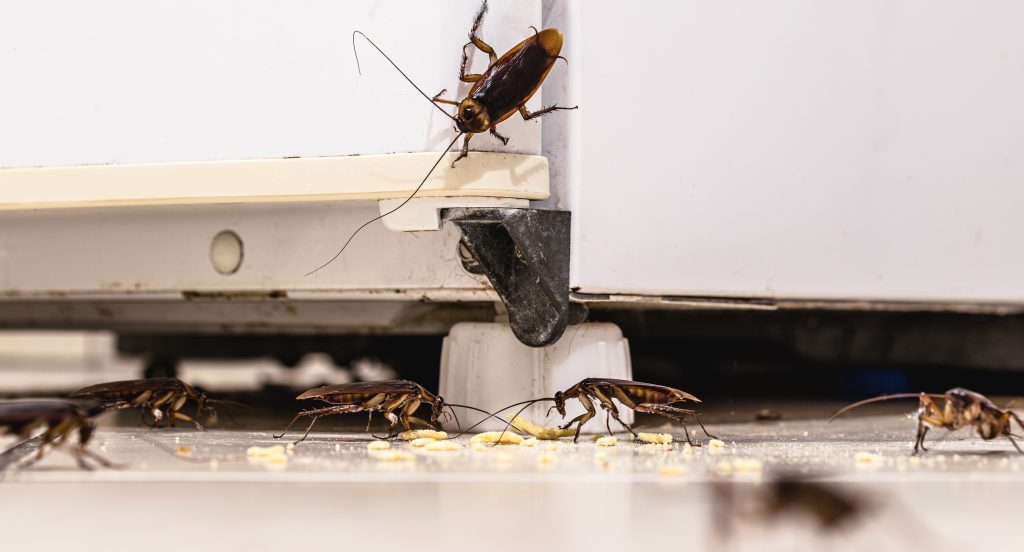
You walk into the kitchen after dark and spot a large reddish-brown insect near the refrigerator. A few seconds later, it disappears beneath an appliance before you can get a closer look. That’s often when the questions start: was it a cockroach or a palmetto bug? Understanding the palmetto bugs vs. roaches difference begins with knowing that the two terms are often used interchangeably, even though they can refer to specific types of cockroaches.
In Georgia, “palmetto bug” is a common nickname for large cockroach species, particularly those that live outdoors but occasionally find their way inside. This article explains what palmetto bugs are, how they compare to other roaches, and what their presence may reveal about conditions around your home.
Key Takeaways: Palmetto Bugs vs. Roaches
- “Palmetto bug” is a common nickname rather than a separate species. The term can refer to more than one type of cockroach, so knowing which species you are dealing with matters for control.
- Not all cockroaches behave the same way. Some species live and breed entirely indoors, while others are outdoor roaches that may wander inside occasionally. Telling them apart helps you choose the right approach.
- Roaches that enter your home can be more than a nuisance. Identifying them early and reducing the conditions that attract them are the first steps toward keeping your home clear.
How to Identify Palmetto Bugs vs. Roaches
Identifying the species is the first step toward determining whether you’re dealing with an occasional outdoor visitor or a roach population that may require attention. While dozens of cockroach species exist in North America, only a small number regularly infest homes, making accurate identification important.
Are Palmetto Bugs and Roaches the Same Thing?
The short answer is yes. A palmetto bug is not a separate insect species. In Georgia, the term is commonly used to describe large cockroach species, especially American cockroaches, smokybrown cockroaches, and Florida woods cockroaches.
The confusion comes from how the nickname is used. Many homeowners use “palmetto bug” when referring to large outdoor roaches, while “cockroach” is often associated with species that live and breed indoors. Scientifically, however, palmetto bugs are cockroaches.
According to the University of Kentucky, only a small number of North America’s cockroach species regularly infest structures. That’s one reason homeowners often confuse large outdoor roaches with the species that commonly live indoors.
How to Tell Palmetto Bugs and Roaches Apart
Palmetto Bug or Roach? Here’s the Tell
Georgia’s big outdoor roaches share a nickname, but not a look. Compare size, color, and risk before you name the culprit.
American Cockroach
Florida Woods Cockroach
Smokybrown Cockroach (Nymph)
Size and color are the quickest ways to separate the large roaches commonly called palmetto bugs. American cockroaches are about 2 inches long and reddish-brown, with light-colored edges on the pronotum. Florida woods cockroaches, another species often labeled palmetto bugs, are 30 to 40 mm long and up to 24 mm wide, according to UF/IFAS EDIS, and their color ranges from reddish brown to nearly black.
Young smokybrown cockroaches can also be mistaken for other roach types. First instar smokybrown nymphs carry a white band across their backs just behind the thorax and white bands on the tips of their antennae. Noting these markings can help you distinguish them from nymphs of other species.
How to Spot Palmetto Bug or Roach Activity Inside Your Home
Because most large roach species that earn the palmetto bug label are not common indoor colonizers, seeing one inside your home does not necessarily mean you have an established population. Look for repeated sightings in the same area over multiple nights, which may suggest a pattern rather than a one-time visitor.
Pay attention to the size and color of any roach you find. A reddish-brown roach close to 2 inches long with lighter edges on the plate behind its head matches the American cockroach profile. A darker, broad-bodied roach closer to 1.5 inches long may be a Florida woods cockroach instead.
Exterior Entry Points Palmetto Bugs and Roaches Use
Many large roaches enter through small gaps around doors, windows, crawl space vents, and utility penetrations. In Georgia homes, worn weatherstripping and unsealed utility openings are common access points. Reducing these entry opportunities can help limit encounters with outdoor roach species. repeated activity, it is worth checking the perimeter of your home for openings that may need attention.
Why Palmetto Bug and Roach Problems Develop
Not every roach problem develops for the same reason. Some species live primarily outdoors and occasionally wander inside, while others are well adapted to living and breeding within homes. Understanding that difference helps explain why some sightings are isolated and others become ongoing infestations.
The Florida woods cockroach is commonly called a palmetto bug, but the term can also refer to any large cockroach encountered as a peridomestic pest. That loose label creates confusion, because each species has different habitat preferences and different reasons for showing up inside your home.
Outdoor Nesting Areas for Palmetto Bugs and Roaches
The Florida woods cockroach is native to the southeastern United States and is considered a peridomestic organism rather than a true indoor colonizer. It lives near structures but prefers outdoor cover. Smokybrown cockroaches follow a similar pattern. They are the most common cockroach in suburban Southern neighborhoods with mature hardwood trees, where they typically live in tree holes, attics, crawl spaces, and sheds. These outdoor nesting habits mean large roaches often appear indoors only after wandering from nearby harborage.
Food and Shelter That Attract Palmetto Bugs and Roaches
The German cockroach, by contrast, lives and breeds entirely indoors. This is a key distinction from the outdoor species often called palmetto bugs. German cockroaches depend on indoor food and moisture sources, so they tend to stay once they arrive. Peridomestic species like the Florida woods cockroach or smokybrown cockroach may enter a home seeking shelter but do not typically colonize interior spaces the way German cockroaches do.
How Palmetto Bugs and Roaches Move Around Homes
Large peridomestic roaches can move between outdoor nesting sites and your home’s interior, especially through gaps around doors, windows, and utility openings. Indoor-breeding species like the German cockroach spread room to room once established. A female American cockroach and her offspring can produce over 800 cockroaches in one year, which illustrates how quickly populations can grow when conditions support breeding.
Trails and Entry Points Palmetto Bugs and Roaches Use
Peridomestic species move along exterior walls and landscaping features to find gaps that lead inside. Knowing whether you are dealing with an outdoor species wandering in or an indoor species already breeding helps determine the right approach to reducing activity in your home.
Risks From Palmetto Bugs and Roaches
Whether you call them palmetto bugs or cockroaches, the risks they bring into your home overlap more than you might expect. The label “palmetto bug” is informal and often applied to large cockroach species, so the real concern is not the name, but what these insects do once they show up indoors. Understanding the practical risks helps you decide how seriously to treat any sighting.
Health Risks Linked to Palmetto Bugs and Roaches
Large cockroaches, including those commonly called palmetto bugs, can become a public health concern because of their association with human waste and disease. American cockroaches can move from sewers into homes and commercial spaces, carrying contaminants along the way. That sewer-to-kitchen path is the core health risk, regardless of whether you call the insect a palmetto bug or a roach.
Property Damage From Palmetto Bugs and Roaches
Unlike termites or carpenter ants, large roaches are not known for causing structural damage. However, activity in crawl spaces, wall voids, or utility areas may point to excess moisture, sanitation concerns, or conditions that could attract additional pests.
University of Minnesota Extension notes that insects found around homes vary widely in their impact. While some species cause structural damage, large roaches are more often associated with contamination concerns, nuisance activity, and underlying moisture issues.
For many homeowners, the larger concern is identifying and correcting the factors that allow roaches to remain active around the property.
Food Areas and Roach Activity
Roaches that move between sewers, drains, and living spaces can contaminate surfaces as they travel. For that reason, activity near kitchens, pantries, and food storage areas should be addressed promptly. Regular cleaning and early intervention can help reduce the likelihood of recurring problems.
Their association with human waste and disease makes any activity near food preparation or storage areas a concern worth taking seriously. Keeping these areas clean and watching for signs of roach movement can help you stay ahead of the problem.
When to Look Closer at Palmetto Bug or Roach Activity
During warmer months, outdoor roach populations may grow. In the United States, during the summer, alleyways and yards can be overrun by American cockroaches, which then move toward structures looking for entry. If you notice large roaches near doorways, garages, or crawl spaces, it may be worth investigating further to understand how they are getting inside.
Professional Pest Control for Palmetto Bugs and Roaches
Successful roach control depends on identifying the species involved and locating the areas where activity begins. Outdoor roaches that occasionally enter a home often require a different approach than species that live and breed indoors. That distinction shapes both prevention and treatment recommendations.
How to Reduce Attractants for Palmetto Bugs and Roaches
Roaches are drawn to warm, dark, moist areas. During the day, they hide in cracks, water meter boxes, sewers, and crawl spaces. Reducing moisture around your home is one of the most practical steps you can take. Fix leaking pipes, clear standing water from floor drains, and keep crawl spaces dry and well ventilated.
American cockroaches, often called palmetto bugs, prefer basements, crawl spaces, floor drains, sump pumps, and sewer systems. Keeping these areas clean and dry removes the conditions they seek out. Seal cracks along foundation walls and around utility entry points to limit access.
Why Roach Control Starts With Inspection
A thorough inspection identifies the specific harborage sites roaches are using. According to the University of Kentucky, American cockroaches often congregate in floor drains, sump pumps, pipe chases, and laundry areas. Checking these spots first gives a clear picture of where activity is concentrated.
American cockroaches can occasionally forage from sewers into ground floors of buildings, especially if pipes are damaged or screens are missing. An inspection should assess drain screens, water traps, and pipe conditions so the right entry points are addressed before any treatment begins.
What to Expect During Professional Roach Treatment
When populations are high and cockroaches are moving into buildings, treatment of harborage sites may be required. This applies to American cockroaches as well as oriental and Turkestan cockroaches. A pest control professional focuses on the specific hiding spots identified during inspection rather than treating the entire home.
Targeting harborage areas such as crawl spaces, sewer access points, and floor drains keeps treatment focused where roaches actually shelter. This approach addresses the areas palmetto bugs use most, rather than relying on general coverage that may miss key spots.
What to Expect From a Pest Control Plan
A structured pest control plan starts with identifying the species involved and locating active harborage sites. Because roaches hide in warm, dark, moist areas during the day, your service professional will check cracks, water meter boxes, sewers, and crawl spaces as part of any follow-up visits.
Ongoing monitoring of entry points is important. Damaged pipes and missing drain screens can allow American cockroaches to forage into ground-floor areas again after initial treatment. Keeping those access points sealed supports the long-term results of any pest control plan. Smart Solutions Pest Control can assess your home and identify the specific harborage sites that need attention.
Palmetto Bugs vs. Roaches: Bottom Line
Palmetto bugs are cockroaches. In Georgia, the term is commonly used for larger species that often live outdoors and occasionally find their way inside. Knowing which species you’re dealing with can help you determine whether you’ve encountered an isolated visitor or a problem that deserves closer attention. If large roaches continue appearing around your home, a professional inspection can help identify the source of the activity.
If you are seeing large roaches inside your home and want a clear answer, contact Smart Solutions for an inspection.
Frequently Asked Questions
Is a palmetto bug just a cockroach?
Yes. “Palmetto bug” is a casual nickname, not a scientific classification. The term can refer to any large cockroach found around homes, so there is no separate palmetto bug species distinct from cockroaches.
Why do people use the name Palmetto bug?
The nickname likely comes from the southeastern United States, where large outdoor roaches are commonly spotted near palmetto palms and other vegetation. Over time the label stuck as a regional way to describe any big roach encountered around a home.
Do palmetto bugs live indoors?
Species often called palmetto bugs are generally peridomestic, meaning they live outdoors but may wander inside. This sets them apart from species like the German cockroach, which lives and breeds entirely indoors.
Should I treat palmetto bugs differently from other roaches?
The best treatment depends on which species is present and whether it is breeding inside your home or entering from the outside. A professional inspection can identify the roach and guide the right plan for your situation.




