
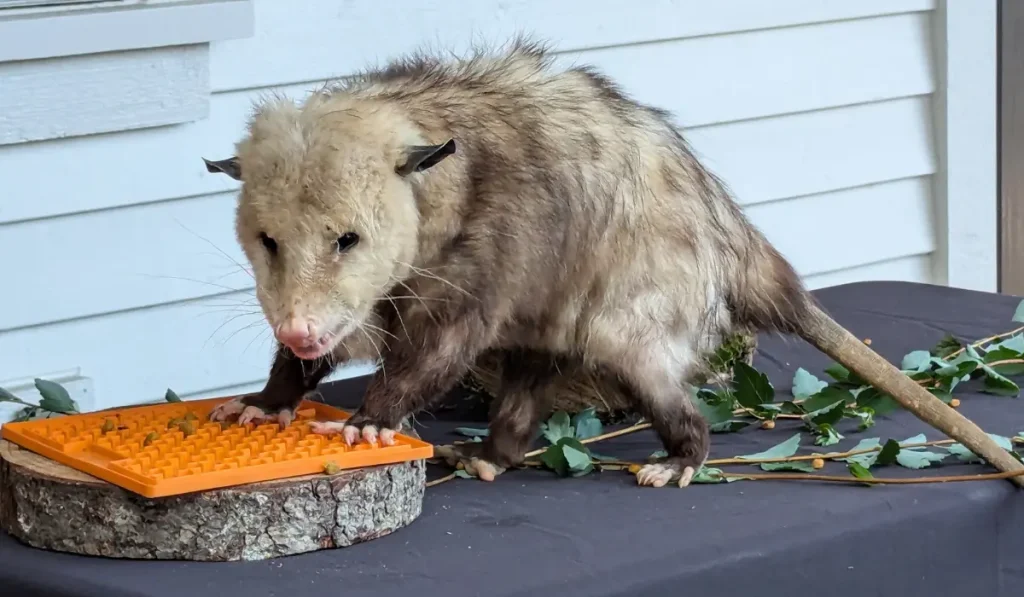
An opossum in Georgia usually does not need to be removed simply because it crossed your yard. Virginia opossums often move through Metro Atlanta properties at night while looking for food or shelter. The situation deserves more attention when one repeatedly raids pet food or garbage, dens beneath a deck, enters a crawl space, or leaves droppings and nesting debris around the home. Knowing which behavior is normal and which signs point to a nuisance problem can help you choose the right response.
What Kind of Opossum Lives in Georgia?
The species found in Georgia is the Virginia opossum, Didelphis virginiana. It is the only marsupial native to the United States and Canada. Females carry developing young in a pouch during their early development, which is one of the characteristics that separates marsupials from placental mammals.
The University of Michigan’s Animal Diversity Web profile of the Virginia opossum describes the species as an opportunistic omnivore. Its diet can include fruit, plant material, insects, carrion, eggs, and other available foods. That flexible diet also makes food around homes easy to take advantage of.
Virginia opossums have a pointed, pale face, grayish coat, dark ears, and a long, mostly hairless tail. Their prehensile tail can help with gripping and balance. Because they are primarily active at night, homeowners may first notice one near a garbage container, beneath a porch light, or on a security camera.
Why Opossums Keep Coming Back to Metro Atlanta Yards
An opossum that keeps returning has usually found something useful on the property. Outdoor pet food, unsecured garbage, fallen fruit, food scraps, spilled bird seed, and accessible compost can all provide an easy meal.
Shelter can be just as attractive. Open areas beneath decks, porches, and sheds may give an opossum a protected place to rest. A loose crawl-space door, damaged vent, or other opening can give it access to the structure itself.
The first step is to identify what the animal is using. If the attraction is food, removing it may be enough to stop repeat visits. If the opossum is regularly entering beneath a deck or into a crawl space, you need to determine whether it is denning there before closing anything off.
Remove Easy Food Sources First
Bring pet dishes indoors after feeding, especially before night. Keep garbage in containers with secure lids, pick up fruit that has fallen from trees, clean seed from beneath bird feeders, and keep food waste contained.
These changes do more than discourage opossums. Raccoons, rats, mice, and other wildlife can be drawn to many of the same food sources, so removing them reduces the overall appeal of the property.
Check Decks, Sheds, and Crawl Spaces
Repeated activity around the same opening is more significant than a single animal crossing the lawn. Look at deck skirting, lattice, crawl-space doors, foundation openings, vents, and spaces beneath sheds or porches.
Do not seal an opening simply because you saw an opossum use it. First confirm whether the space is occupied and whether young may be present. Closing an active den can trap animals where they are difficult to reach.
Are Opossums Dangerous?
Virginia opossums generally try to avoid close contact with people. A frightened animal may hiss, bare its teeth, or drool when it feels cornered. Those displays are defensive, but you should still give the animal room to leave rather than trying to grab, push, or restrain it.
Keep children and pets away from an opossum at close range, especially if it appears trapped or injured. A wild animal that cannot escape may defend itself.
Do Opossums Carry Rabies?
Opossums can contract rabies, so it is inaccurate to say they can never get it. Reported rabies infections are uncommon in opossums compared with major wildlife rabies concerns such as raccoons, bats, skunks, and foxes.
The CDC’s rabies guidance provides current information about wildlife exposure and rabies risk. If a person is bitten or scratched by a wild mammal, or a pet has direct contact with one, seek appropriate medical or veterinary advice rather than judging the risk by species or appearance alone.
What Does “Playing Possum” Mean?
An opossum under severe stress may become limp and motionless in the defensive response commonly called “playing possum.” It is not the same as an animal deliberately deciding to perform a trick.
If you find an apparently uninjured opossum lying still, avoid handling it. Keep people and pets away and give the animal time and room to recover.
What About the Tick Claim?
Opossums may eat ticks along with many other food items, but that does not make a visiting opossum a reliable tick-control method for your yard. Their diet is broad, and tick consumption is only one small part of what they may eat.
There is no reason to encourage an opossum to stay around a home for tick control. Leaving pet food, garbage, or other attractants available can create a separate wildlife problem.
When an Opossum Becomes a Nuisance
Occasional yard activity and established denning are different situations. Use the animal’s behavior and access to the structure to decide how much action is needed.
| What You Notice | What It Suggests | What to Do |
| One opossum crosses the yard at night | Normal wildlife movement | Remove obvious attractants and monitor |
| Repeated visits to pet food or garbage | A dependable food source is present | Secure food and trash |
| Repeated activity beneath a deck or shed | The space may be used for shelter | Check for an active den |
| Entry into a crawl space | Wildlife has structural access | Inspect before sealing |
| Droppings or nesting debris in an enclosed area | The space has been occupied | Address removal, cleanup, and exclusion |
An opossum using a crawl space or another enclosed area can leave droppings and nesting debris behind. Wildlife denning close to a home can also contribute to flea activity around pets and homes, which makes identifying the animal and its den site more useful than simply chasing it away.
Noises, droppings, or damaged entry points are not always caused by opossums. Metro Atlanta rodents can use structural openings at lower levels of a home, while attic activity can also result from a Georgia squirrel infestation. Correct identification prevents you from fixing the wrong problem.
Why DIY Opossum Trapping and Relocation Have Limits
Capturing an opossum does not answer several important questions: Are young present? Where did the animal get in? What will happen after capture? What current Georgia rules apply to trapping, transport, and release?
Georgia regulates nuisance wildlife activities, so homeowners should check current Georgia Department of Natural Resources wildlife guidance before trapping or relocating an opossum. Avoid relying on an out-of-state source for Georgia requirements.
A trap also does nothing to repair a crawl-space opening or remove the food that brought the animal to the property. Unless those conditions change, another opossum or a different wildlife species may use the same site later.
Do Not Seal an Active Entry Point
Closing an opening before confirming the space is empty can trap an opossum or dependent young inside. That can leave the animal in a crawl space, wall area, or another location that is much harder to access.
The safer sequence is to identify the animal, determine how it is using the structure, complete the appropriate removal process, confirm the space is clear, and then seal the access points.
How to Keep Opossums Away From Your Atlanta Property
Start with the conditions you can control. Bring pet food indoors after use, secure trash, collect fallen fruit, clean up food scraps, and remove spilled bird seed. Keep compost in a setup that wildlife cannot easily access.
Next, inspect the areas where an animal could shelter or enter. Check crawl-space doors, vents, deck skirting, lattice, foundation openings, sheds, and gaps beneath porches. Remove unnecessary debris or stacked materials close to the structure if they create protected hiding areas.
These steps can reduce problems from more than one species. Opossums are not rodents, but limiting food and closing vulnerable openings also supports broader Georgia rodent-proofing practices when several types of wildlife are using the property.
Clean Occupied Areas After Removal
If an opossum has been living in a crawl space or another enclosed area, inspect the space after the animal is gone. Droppings, nesting material, or contaminated insulation may require cleanup depending on how long the area was occupied and how much material is present.
The scope should match the conditions found during the inspection. A single sighting outside does not justify extensive sanitation work, while a regularly used enclosed den may require more attention.
What Professional Opossum Removal Should Include
Smart Solutions starts raccoon, squirrel, and opossum work with an interior and exterior inspection. Depending on the property, technicians may inspect the attic, basement, or crawl space for animal activity, damage, and contamination, then examine the roof, exterior walls, and foundation for entry points. Findings are documented with photos and used to build a plan for the property.
That plan may include trapping and removal, exclusion, sanitation, habitat changes, and preventive maintenance. Smart Solutions reports that raccoon, squirrel, and opossum trapping programs typically take three to five visits, with scheduling based on activity and the conditions at the property.
After the animals are out, exclusion and sanitation can address the parts of the problem that trapping alone cannot. Catching one opossum does not repair an opening or remove an attractant. Sealing access and correcting the conditions that brought wildlife close to the home are what reduce the chance of repeat activity.
Making the Right Opossum Removal Choice for Your Metro Atlanta Home
If an opossum is only moving through your yard, remove obvious food sources, keep pets away, and monitor the area. Repeated feeding, denning beneath a structure, entry into a crawl space, or contamination inside the home warrants a closer inspection.
When an opossum in Georgia has begun using your home for shelter, the job should include identification, removal, exclusion, and any cleanup the occupied area actually needs. Smart Solutions Wildlife Removal and Pest Control provides wildlife inspections and removal services for Metro Atlanta properties.
If you are seeing repeat opossum activity or evidence that an animal is living beneath or inside the structure, contact Smart Solutions to schedule an inspection and determine the appropriate removal and exclusion work.




