
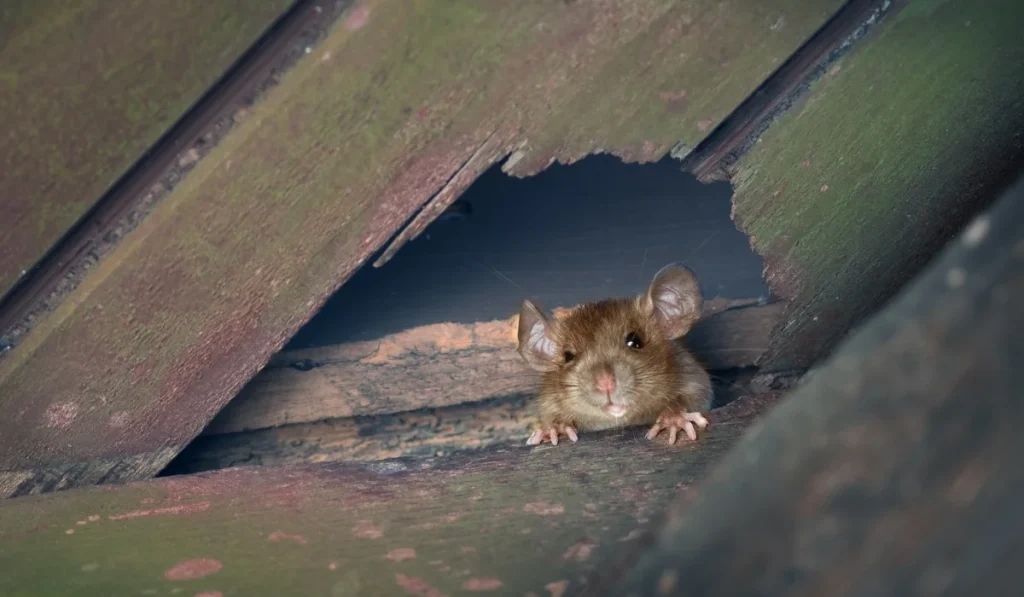
If you hear scurrying above your ceiling at night, it may be roof rats. In Sandy Springs, roof rats stay active year-round and climb with ease. Unlike Norway rats, which stay low, roof rats live high and target elevated entry points first.
Your roofline, not your basement, is often where a roof rat infestation begins. Once inside, roof rats move through rafters, wall voids, crawl spaces, and garages, often before homeowners notice signs of roof rats.
Knowing how roof rats get onto your home helps with rat control and stops a roof rat problem before it becomes a full rodent infestation.
Key Takeaways
- Roof rats use tree branches, fences, and wires to reach your roofline.
- Small gaps along eaves, vents, and roofing act as entry points.
- Signs include droppings, grease marks, gnaw marks, and scurrying.
- Professional pest control includes inspection, exclusion, and long-term prevention.
Tree and Fence Routes to the Roof
Most roof rat activity in Sandy Springs starts at ground level, where landscaping and structures create access to your roofline.
Tree Branches Touching the Roofline
Tree branches are a common way for roof rats to reach homes. When branches are close to the roofline, they can jump onto shingles or climb up and move across the roof.
Fences Connected to Structures
Fences that connect to your home act as ramps. Roof rats climb posts, cross rails, and reach the roofline, especially where fences meet garages or exterior walls.
Nearby Structures and Wood Piles
Detached structures and wood piles create step-by-step access. Wood piles serve as nesting areas. They keep them hidden and close to food sources and water sources, which raises the risk of a roof rat infestation.
Utility Lines and Structures Rats Climb
Roof rats often use elevated pathways that are easy to miss.
Electrical Wires and Cables
Roof rats travel along electrical wires from trees or poles to your home, creating a direct path to the roofline. Gnaw marks on electrical wires can increase the risk of fire over time.
Downspouts and Siding
Roof rats climb downspouts, siding, and brick walls because these surfaces give enough grip.
Deck Posts and Support Beams
Decks and porches provide vertical access routes. Roof rats climb support beams and move into soffits and rafters to reach attic spaces.
Roof Gaps Rats Use After They Arrive
Once they reach the roofline, they look for entry points into your home.
Gaps Along Eaves and Soffits
Eaves are one of the most common entry points. Small gaps or damaged wood let roof rats squeeze inside and reach attic spaces.
Roof Vents and Damaged Screens
Unprotected vents are common entry points. Roof rats chew through weak materials to reach attic nesting areas.
Gaps Around Roofline Intersections
Where different sections of the roof meet, small gaps often exist. These entry points let roof rats enter undetected.
Openings Leading to Wall Voids
Once inside, roof rats move into wall voids and chew through drywall to travel through the structure.
Poorly Sealed Repairs With Caulk
Quick fixes with caulk may fail if not reinforced. Roof rats can reopen these entry points, so rodent control should focus on long-term exclusion.
When to Schedule a Roof Rat Inspection in Sandy Springs
Roof rats stay active year-round, and once they find openings along your roofline, they can quickly move into attics, wall voids, and crawl spaces.
Spotting early signs of roof rats, such as droppings, scurrying, or gnaw marks, helps limit a rodent infestation before it worsens.
While DIY methods like rat traps may reduce activity, long-term rodent control requires sealing entry points, removing nesting areas, and managing food sources such as exposed pet food.
If you’re dealing with roof rat activity or want to prevent a roof rat problem from growing, Smart Solutions Pest Control can inspect your home and build a plan that addresses the issue at its source.
Contact us for an inspection, a clear plan, and help in reducing long-term risk.
FAQs
How do roof rats get into houses?
Roof rats enter through small openings along the roofline, including eaves, vents, and roof intersections. They reach the roof using tree branches, fences, or electrical wires.
What are the signs of roof rats?
Signs include droppings, scurrying noises at night, grease and gnaw marks, and nesting areas in attics or crawl spaces.
Are roof rats dangerous?
Yes. Roof rats carry diseases such as salmonellosis, hantavirus, and rat-bite fever, and can spread fleas. These can cause serious health risks for homeowners and businesses.




