
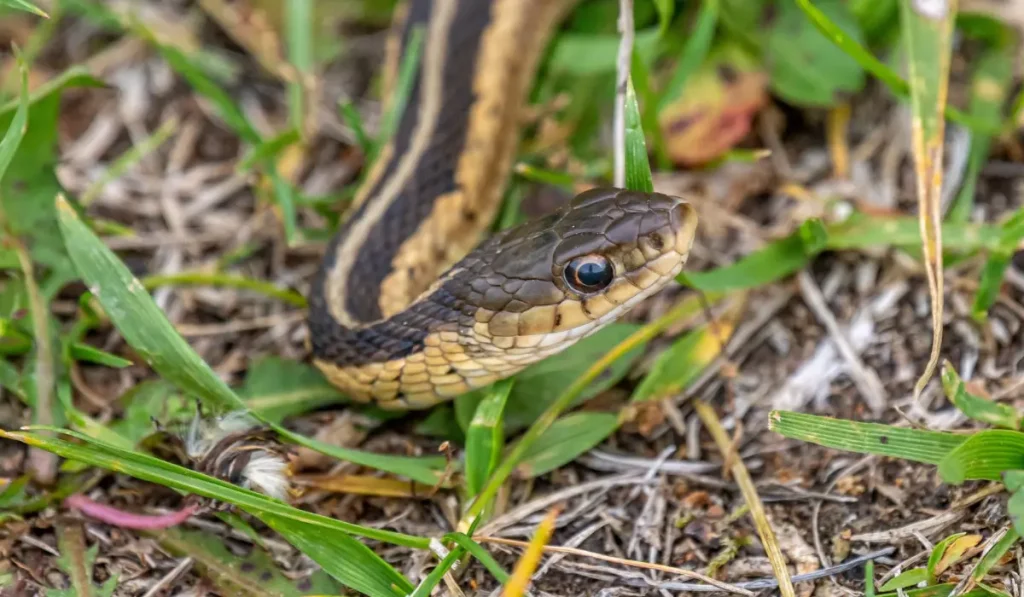
A garter snake in Georgia is generally harmless to people and is often recognized by three light-colored stripes running along its body. These snakes commonly appear in gardens, grassy yards, and damp areas where they hunt earthworms, slugs, and other small animals. If you find one outside, the safest response is usually to leave it alone and let it move away. However, other Georgia snakes have similar markings, so identification matters. Here’s how to recognize a garter snake, tell it apart from venomous species, understand what attracts it to your yard, and know when to contact a wildlife removal professional.
How to Identify a Garter Snake in Georgia
The common garter snake (Thamnophis sirtalis) has a relatively slender body with light stripes that run lengthwise rather than across its back. Color and markings vary, so a snake’s stripes are a starting point for identification, not proof of its species.
The University of Georgia’s Savannah River Ecology Laboratory herpetology resources provide descriptions of southeastern snakes and their habitats. Learning the differences between garter snakes and other local species can help you recognize a likely match without approaching the animal.
Color, Stripes, and Body Shape
Common garter snakes usually have three light-colored stripes: one down the center of the back and one along each side. The stripes may be yellowish or cream-colored, while the background ranges from brown or olive to gray or nearly black.
Some individuals have dark markings between their stripes, and others have stripes that are difficult to see. Young garter snakes resemble smaller versions of adults, making body length an unreliable way to identify the species.
Look at the direction of the stripes and the snake’s overall build if you can observe it safely. Don’t pick up a snake, block its path, or get closer for a photograph.
Garter Snake vs. Eastern Ribbon Snake
Eastern ribbon snakes are easy to mistake for common garter snakes because both have lengthwise stripes. Ribbon snakes generally have slimmer bodies and longer tails relative to their overall length.
Habitat may offer another clue. Ribbon snakes are closely associated with ponds, streams, wetlands, and waterside vegetation. Common garter snakes also use moist habitats but can appear in grassy lawns and gardens farther from permanent water.
Both species are generally harmless to people. If you see a thin, striped snake near your backyard pond, there may not be enough visible detail to distinguish the two confidently, and there is no reason to handle the animal to find out.
Garter Snake vs. Venomous Snakes in Georgia
Copperheads, cottonmouths, rattlesnakes, and coral snakes are among Georgia’s native venomous snakes. Their markings differ from those of a typical common garter snake, but identification becomes harder when a snake is partly hidden or its pattern is unclear.
Copperheads commonly have dark crossbands that form an hourglass-like pattern. A garter snake usually has continuous stripes running along its body. Cottonmouths tend to have a heavier build, and some adults become dark enough that their markings are difficult to distinguish.
The Georgia Department of Natural Resources provides information about native snakes and safe responses to wildlife encounters. These common differences can guide observation, but they should never be used to justify approaching an unidentified snake.
| Feature | Common Garter Snake | Eastern Ribbon Snake | Copperhead |
| Markings | Usually three light stripes running lengthwise | Light lengthwise stripes | Dark crossbands, often hourglass-shaped |
| Body | Relatively slender | Especially slender, with a long tail | Generally heavier-bodied |
| Habitat | Lawns, gardens, grassy and moist areas | Wetlands and waterside vegetation | Wooded and other sheltered areas |
| Risk to people | Generally harmless | Generally harmless | Venomous |
Head shape, eye appearance, and color alone are unreliable shortcuts for identifying potentially dangerous snakes. If you aren’t sure what you’re seeing, remain at a safe distance and keep children and pets away.
Are Garter Snakes in Georgia Dangerous?
Garter snakes are generally harmless to people and are not considered medically dangerous venomous snakes. They usually try to escape when someone approaches, although they may defend themselves if caught or restrained.
You don’t need to remove a garter snake simply because it passes through your lawn. Avoiding direct contact is the safest choice for both you and the animal.
Do Garter Snakes Bite?
A garter snake may bite if someone picks it up, steps on it, or corners it. Its small teeth can break the skin, although a confirmed garter snake bite generally causes limited local injury.
Wash a bite from a confidently identified garter snake with soap and running water. Contact a healthcare professional if pain or swelling increases, redness spreads, or drainage develops.
A bite from an unidentified snake requires emergency medical evaluation because a venomous bite may not produce obvious symptoms immediately. Don’t attempt to capture the snake for identification.
What Happens When a Garter Snake Feels Threatened?
A startled garter snake may disappear into grass or beneath nearby cover. If escape isn’t possible, it may flatten its body, strike, or release a strong-smelling musk from glands near its tail.
These are defensive behaviors rather than signs that the snake is hunting or pursuing people. Musk is particularly likely when a snake is handled, which is another reason to leave wildlife undisturbed.
If a garter snake appears beside your walkway, stop and give it an open route into nearby vegetation. Keep pets away until it has moved on.
Why Garter Snakes Show Up in Georgia Yards
Garter snakes use places that offer cover, appropriate temperatures, and food. A Georgia lawn with thick ground cover, damp garden soil, or vegetation near a drainage area may provide suitable habitat even when the property is well maintained.
In wooded neighborhoods around Roswell and Atlanta, snakes can move between natural habitat and residential landscaping. A single sighting doesn’t mean a snake has established a nest or that your home has a pest infestation.
Moist Soil, Ground Cover, and Shelter
Moist areas can support earthworms, amphibians, and other animals that garter snakes eat. Shaded flower beds, grassy borders, and low vegetation may also provide places for snakes to hide while moving through a yard.
Fallen branches, rocks, loose landscaping materials, and wood stored on the ground create protected spaces. These features may attract snakes looking for cover, especially when prey is available nearby.
A snake found beneath a garden pot or near an overgrown fence line may simply be resting or hunting. Its presence does not indicate that it intends to enter your house.
What Do Garter Snakes Eat?
Common garter snakes eat earthworms, amphibians, and a range of other small animals. Slugs and small fish may also form part of their diet, depending on the snake’s habitat and available prey.
Some garter snakes consume small mammals, but they aren’t primarily rodent hunters. Finding one in your garden is not reliable evidence that mice or rats are present.
Their feeding habits explain why damp gardens and areas near ponds can attract them. Earthworms in moist soil or small amphibians among plants can provide food without any household pest problem.
Are Garter Snakes Good for Your Garden?
A garter snake can be a useful part of your garden’s wildlife community. It may eat slugs and other small animals, while birds and larger predators may feed on snakes. These interactions are part of the natural food web.
However, garter snakes are not a dependable replacement for pest control. They eat a variety of prey, including animals that gardeners may not regard as pests, and their presence won’t eliminate an established infestation.
If you’ve confidently identified a garter snake moving through an outdoor garden, leaving it undisturbed is usually appropriate. Removing every harmless snake from a property is unnecessary and may increase the risk of a defensive bite during handling.
What to Do If You Find a Garter Snake
The appropriate response depends on the snake’s location and whether its identity is clear. A garter snake crossing a garden bed can often be left alone, while an unidentified snake inside your home needs a more cautious approach.
If You Find a Snake in Your Yard
Step back and give the snake room to move into nearby cover. Keep children and pets away, particularly dogs that might chase or bite the animal.
If it’s crossing a walkway or patio, wait for it to leave before returning to the area. Trying to steer it with a stick or shovel can make it feel trapped and increase the chance of a defensive response.
A snake that appears outdoors and moves away without incident generally doesn’t require removal. Watch from a distance if you want to observe it, but don’t interfere.
If a Snake Gets Inside Your Home
Keep people and pets away from the snake and avoid moving furniture or reaching into its hiding place. If you can close a room door without approaching the animal, that may help contain it.
Don’t attempt to capture an unfamiliar snake in a bucket or box. Even a harmless species can bite when cornered, and identification may be difficult indoors.
Contact a qualified snake removal professional for help. Once the snake has been addressed, check for gaps beneath exterior doors, damaged weatherstripping, and accessible openings around the structure.
If You’re Unsure What Kind of Snake It Is
Don’t use body size, stripes, or a triangular-looking head as proof that a snake is safe to handle. Observe from a distance and leave its escape route open.
A photograph taken without approaching the snake may help a qualified professional identify it, though photographs don’t always show enough detail for a confident assessment.
If the snake remains in an occupied indoor space or near a frequently used entrance, professional assistance is the safer option. Never attempt to catch or kill it to establish its identity.
How to Make Your Yard Less Attractive to Snakes
You can’t guarantee that snakes will never cross your property, particularly if you live near woods or other natural habitat. You can, however, reduce shelter and access opportunities around the places your household uses most.
Start near patios, garage doors, entrances, and the perimeter of your home rather than removing all vegetation from the yard.
Clear Hiding Places Near the House
Move firewood, unused building materials, and loose debris away from exterior walls. Store supplies neatly, and remove items that have been sitting directly on the ground for long periods.
Keep grass maintained near walkways and trim dense vegetation beside doors, sheds, and patios. This improves visibility and reduces concealed spaces where snakes and their prey may shelter.
Inspect exterior doors for damaged sweeps, and seal suitable gaps around foundations and utility openings using appropriate materials. Repairing these access points can reduce the chance of snakes and other wildlife getting indoors.
Manage Water and Potential Prey
Repair leaking outdoor faucets and correct drainage problems that leave soil persistently wet beside the house. You don’t need to remove every moist garden area, but conditions near entrances deserve attention.
Keep garbage secure and avoid leaving pet food outdoors overnight. If rodents are active around your property, rodent-proofing Georgia homes includes managing food sources, shelter, and building access.
Reducing rodents may make the property less appealing to some snake species, but garter snakes feed mainly on other small animals. Their presence alone doesn’t establish that you have a rodent problem.
Don’t rely on commercial snake repellents or household mixtures to keep snakes away. Habitat maintenance and closing entry points provide a more practical basis for reducing unwanted encounters.
Handling Snake Concerns Around Your Georgia Home
A garter snake in Georgia is generally a harmless visitor that may help consume small animals around your garden. Recognizing its lengthwise stripes and understanding where it lives can make a sighting less concerning, but an unfamiliar snake should always be given space.
For an outdoor garter snake, leaving it undisturbed is usually enough. When a snake enters your home, remains near a busy entrance, or cannot be identified safely, professional assistance is a more appropriate choice than trying to remove it yourself.
Smart Solutions Wildlife Removal and Pest Control helps homeowners throughout the Atlanta area address wildlife concerns. Based in Roswell, the company can assess snake-related problems and identify conditions around the property that may contribute to unwanted wildlife activity.
If you’ve found an unidentified snake indoors or need help with recurring encounters, contact Smart Solutions to request professional assistance. An inspection can help determine the appropriate next steps while avoiding unnecessary handling of wildlife.




